


Exclusive: Mariana Tostes and sustainable growth in iGaming

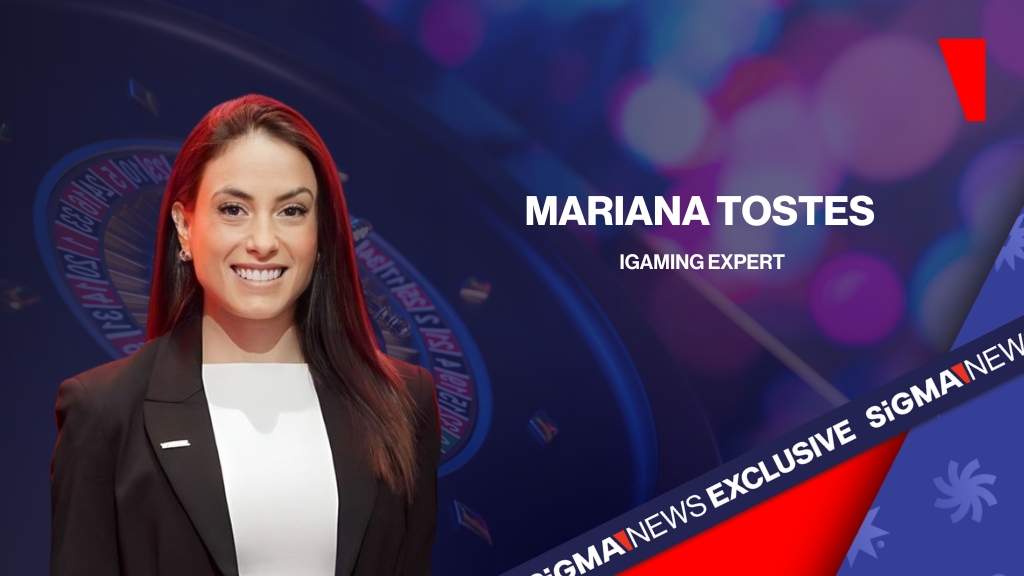
Building a career in a segment as dynamic as iGaming requires more than technical expertise. It requires contextual awareness, adaptability and, above all, a deep understanding of people. This is how Mariana Tostes, a professional with more than a decade of experience in marketing, strategy and operations, became a leader focused on structuring sustainable growth in complex and multicultural environments, and a specialist in iGaming.
Before entering the iGaming sector, Mariana began her career in environments closely related to marketing, sales strategy and customer relationship management. According to her, this foundation was decisive for her professional development. “That beginning was fundamental in forming my base: understanding people, behaviours and perceived value,” she said. It was from this perspective that she was able to quickly adapt to the demands of a highly competitive, data-driven sector.
When migrating to iGaming, the impact was immediate. Mariana realised that the sector requires an uncommon combination of skills: commercial vision, operational capability and analytical interpretation of data. Her professional evolution followed precisely this integration between areas. She moved from more commercial and global relationship roles into operational leadership positions, connecting strategy with practical execution. Today she defines herself as a professional who builds structures: “teams, processes, products and experiences focused on sustainable growth, efficiency and long-term value for the business, clients, partners and the player.”
Accelerated growth and difficult decisions
Mariana’s rise to leadership positions in a relatively short period was not the result of a single factor. For her, three pillars were key to her progression. The first is a systemic vision. “I never saw my role in isolation; I always tried to understand the impact on the business as a whole,” she explains. The second pillar is execution capability: turning ideas into clear processes, metrics and concrete results. And the third is comfort with responsibility, especially in contexts of ambiguity, which are common in regulated and expanding markets.
She also highlights the importance of exposing herself to challenges that go beyond the formal job description. This movement, according to Mariana, accelerates learning and broadens business understanding in a transversal way, which is essential for those who occupy important and strategic positions.
Unlearning is also part of leadership
Throughout her career, not everything was about acquiring new skills. Mariana says she had to “unlearn” some very common beliefs, especially at the beginning of her professional life. One of them was the idea that total control generates better results. “At the beginning of a career, the tendency is to want to be involved in everything,” she says. Over time, she learned that real leadership lies in building autonomy, clarity and responsibility within teams.
Another important point was letting go of the search for perfect solutions. In dynamic markets like iGaming, decisions often need to be made with incomplete data, short deadlines and multiple stakeholders involved. Accepting this reality was essential for her evolution as a leader.
Retention beyond the narrative
When it comes to player retention, Mariana is direct in pointing out recurring mistakes. For her, many companies confuse retention with reactivity. “Retention is not just bonuses, cashback or mass communication,” she states. In her view, retaining players means deeply understanding the player lifecycle, anticipating behaviours and acting before engagement starts to decline.
Another frequent mistake is treating all players in the same way. Ignoring context, motivation, maturity and the user’s moment within the platform compromises any long-term strategy. This is where personalisation stops being just talk and starts to generate real value. According to Mariana, personalisation only works when it is relevant and timely. The right message, at the right time, through the right channel. Otherwise, it becomes just a superficial layer applied to generic offers. “True personalisation requires well-structured data, behavioural analysis and alignment between product, CRM and operations.”
In the competition for attention and loyalty, bonuses and promotions still play a role, but they do not sustain relationships in the long term. For Mariana, the player experience weighs more, especially over time. Unstable platforms, confusing journeys or inefficient support undermine any attempt at retention. “Today, players compare experiences between platforms, not just offers,” she says. Fluidity, trust and a sense of control are important elements in creating a bond.
International leadership and the weight of culture
Leading operations across different regions brought Mariana a very important lesson: corporate culture directly impacts performance. Mariana highlights that what motivates teams in Europe is not necessarily what engages teams in Latin America. Therefore, processes need to be clear but flexible, and leadership must balance firmness with adaptability. Actively listening and contextualising decisions, according to her, is just as important as setting goals.
Looking to the future of iGaming, Mariana sees opportunities at the intersection of data, experience and emotion. Intelligent gamification, predictive use of data to anticipate behaviour and more relational, less transactional loyalty models are, in her opinion, the future market model. Even so, she reinforces that growth is not sustained by technology or investment alone. People and culture are the true pillars. Without well-prepared teams, with clarity of purpose and autonomy, technology becomes a cost and investment becomes pressure.
When talking about the behaviour of the Latin American player, Mariana highlights the weight of the social and emotional side. Relationships, recognition and proximity have a direct impact on retention. For Latin America to become a global reference, she believes less improvisation and more structure are needed, with investments in compliance, data, user experience and the development of local talent. “When the region stops being seen only as volume and starts being treated as strategy, it becomes a reference.”
This article was first published in Portuguese on 11 February 2026.
Sign up HERE to receive the SiGMA Top 10 news list and the SiGMA weekly newsletter to stay up-to-date with the latest iGaming news from the world’s largest iGaming community and take advantage of exclusive subscriber offers.


