


Watch: Future of banking and fintech with AI agents

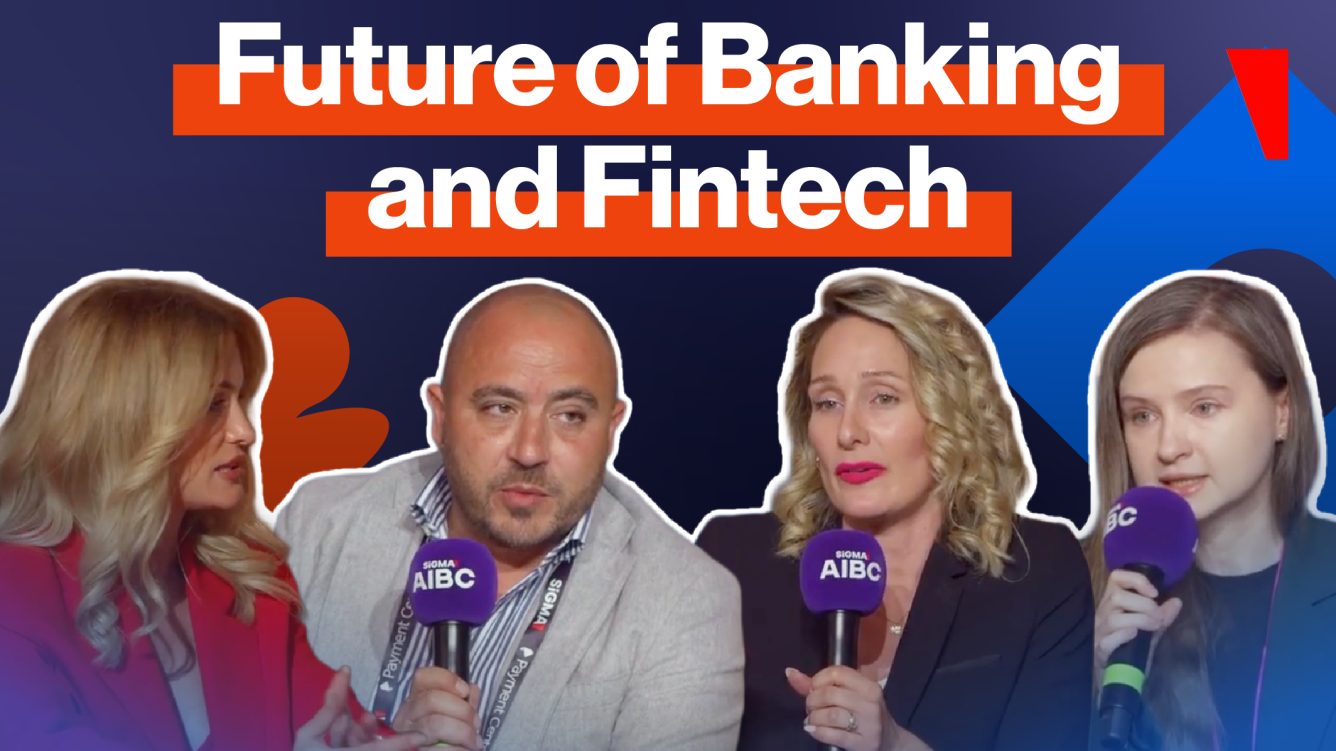
The SiGMA Central Europe Summit in Rome hosted a compelling panel on the role of artificial intelligence in banking and fintech, focusing on security, compliance, and customer experience. Moderated by Olga Yaroshevsky, AIBC Managing Director at SiGMA, the session featured insights from Emily Freeland, Director of Value Consulting at Zendesk; Mark Curmi, Non-executive Director at Sparkasse Bank Malta; and Tatiana Botskina, CEO of Deriskly.
Rethinking compliance with AI
Mark Curmi highlighted that AI is often seen narrowly as a tool for KYC and KYT processes. He argued for a broader perspective: “If we continue to look at artificial intelligence as being, you know, that next KYT tool or the onboarding process… we need to look at how we utilise the underlying data and therefore the governance around that data to improve the task happening.” AI, he suggested, should enhance the customer experience while simultaneously reducing operational risk.
Emily Freeland stressed the importance of governance frameworks in financial services. She emphasised the need for AI governance committees, regular testing, and transparency. “Truly being able to understand what your AI model is doing, what it’s thinking and how it’s processing, so that we can challenge that and govern down to the granularity of its responses,” she said, highlighting a careful, structured approach to AI deployment.
Bridging technology and human oversight
Tatiana Botskina shared research demonstrating the impact of unclear financial communications on compliance. Her team found that roughly 20% of content across top UK banks was unclear, correlating with higher complaint volumes. Using AI, Botskina explained, firms can detect systemic risks before they escalate and automatically route mitigation strategies across compliance, customer support, and experience teams.
The panel agreed that AI should not replace human oversight, particularly for decision-making or fraud detection. Instead, it should complement human judgement, offering explainable, traceable models rather than opaque large language models. Freeland added that AI also safeguards employees by monitoring compliance and operational practices in real time, enhancing the reliability of business processes.
Shaping the bank of the future
Looking ahead, Mark Curmi outlined a vision for AI-driven banking: predictive, data-informed, and seamlessly integrated with human advisors. “The future of the bank… is utilising the data that has been collected with sound governance models to give intelligent responses together with the human elements, but to preempt and not reactively use these tools,” he noted. Examples include behavioural analytics in high-risk industries or insurance, where AI predicts exposure and optimises profitability.
On the customer experience side, Freeland and Botskina highlighted hyper-personalisation. AI enables real-time, secure interactions tailored to user profiles, risk tolerance, and preferences, moving beyond simple automation to more sophisticated, predictive engagement. Botskina emphasised that AI can often be more secure than humans in handling sensitive customer data, if systems are appropriately designed.
The value of AI for financial services
Panellists concluded that AI’s immediate benefits include reducing compliance and operational costs, enhancing customer experience, and protecting profit margins and reputation. As Botskina noted, “Right now, the regulated industry spends $200 billion annually… AI can optimise this and increase profit margins.” Freeland added that AI allows firms to process large volumes of sensitive data while remaining agile, protecting both growth and compliance.
The discussion underscored that AI in financial services is not just a tool for automation but a multifaceted enabler that integrates governance, risk management, and hyper-personalised customer engagement. With continued refinement, the bank of the future will be intelligent, secure, and fundamentally customer-centric.
For more insights on AI, banking, and fintech, visit the SiGMA website here.
The content presented on this page is strictly informational and intended for B2B purposes only. SiGMA Group is not responsible or liable for any business decisions, commercial agreements, or activities conducted by attendees, exhibitors, or third parties during or after the event. All participants are responsible for ensuring compliance with applicable laws and licensing requirements, including those of the Agenzia delle Dogane e dei Monopoli (ADM) in Italy. Our events are restricted to adults aged 18 and over.


