


Walking the fine line: player safety in iGaming growth

The iGaming industry is expanding faster than ever, with global revenues expected to reach nearly US$79 billion in 2024 and projected to double by 2030. Growth is being driven by digital innovation, AI-powered gaming, and rising participation across Asia, Europe, and North America. Although the industry’s rapid growth is impressive, it also brings along some significant challenges, especially in ensuring that responsible gaming and player protection evolve at the same pace.
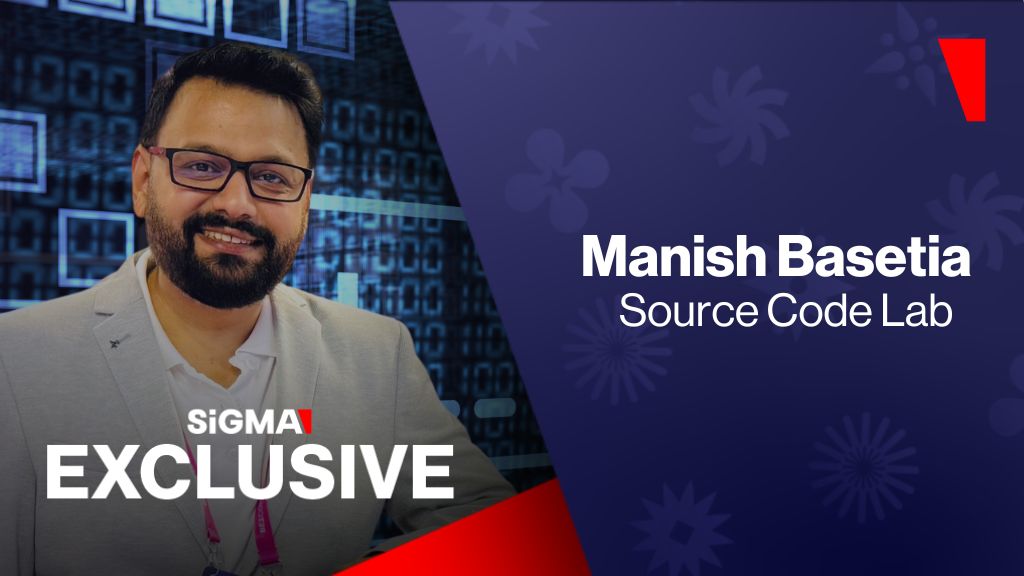
As the market continues to expand, more industry leaders are emphasising that true, long-term success relies not only on innovation and revenue, but also on building trust and prioritising player wellbeing. In an exclusive interview with SiGMA News, Manish Basetia, Vice President of Sales at Source Code Lab, emphasised that growth cannot come at the expense of trust. “Every time I step into a conference hall, whether it’s in Malta, Manila, or Barcelona, I feel the energy of an industry growing faster than anyone expected. But growth without responsibility is a ticking time bomb,” he said.
Citing data from the World Health Organization, he noted that over 60 percent of gambling losses come from harmful play. “Behind every number is a person, often a family, struggling because we as an industry didn’t step in early enough,” he said.
Basetia believes the industry is at a pivotal moment, stressing that “this is why responsible gaming and player safety are no longer just buzzwords. They’re survival strategies.”
AI as a first line of defence
AI in the industry has become a key tool for promoting safer gaming, and it works. It can flag unusual spikes in deposits, overnight playing streaks, or players chasing losses long before a human could, and can even predict risks days in advance. Interventions can take the form of nudges, pop-ups recommending breaks, reminders about limits, or enforced cooldown periods.
“But let’s be real. AI isn’t a silver bullet,” Basetia said. He emphasised that technology alone cannot solve the challenges of responsible gaming. He said, “I’ve seen operators excited by dashboards that look impressive, but players don’t care about fancy charts. They care about how interventions feel. If it feels like punishment, they’ll resent it. If it feels like support, they’ll respect it. That’s where technology must meet empathy.” While AI can identify risk patterns, the way players experience these interventions is critical. “AI may be the first line of defence, but it is only one part of the story,” he added.
Fraud prevention & player protection
Basetia further stressed on the strong connection between compliance and player protection. He explained that detecting multi-account abuse helped protect the business while also preventing vulnerable players from bypassing self-exclusion. Monitoring suspicious payments not only met anti-money laundering (AML) requirements but also safeguarded players from their own impulsive behaviour. He said, “The overlap is huge, and the lesson is simple: every investment in fraud prevention should also be seen as an investment in player protection.”
He added that embedding responsibility into compliance practices strengthens trust with both regulators and players. Operators who view safety as an integral part of their business model are better positioned to maintain long-term credibility.
Lessons from global markets
Going deeper into the global approach to responsible gaming, Basetia said that different markets are at varying stages, each offering important lessons. In the UK, their “frictionless financial checks” provide a masterclass in balance — over 530,000 affordability scans were conducted, with 95 percent going unnoticed by players, demonstrating how protection can be implemented without disruption.
In Sweden, responsible gaming has been made structural and mandatory through measures such as deposit caps, bonus restrictions, and the Spelpaus system, with players respecting the transparency these practices ensure.
In North America, responsible gaming is directly tied to licensing, meaning no operator can enter the market without clear tools in place. In Asia, the regulatory landscape remains fragmented, but countries like India are starting to enforce stricter rules, compelling operators who previously operated in grey zones to reconsider their strategies.
He said, “Each market reminds us of one truth: responsibility is becoming the entry ticket, not a nice-to-have.”
RG3P: A framework for safer gaming
Moving further into addressing the challenges of regulatory fragmentation, Basetia highlighted the RG3P Framework, or Responsible Gambling Practice & Policy Pillars, as a global benchmark. The framework outlines six pillars: education, informed choice and harm prevention; risk detection and intervention; support, treatment and recovery; gambling environment, product and marketing responsibility; ethical industry accountability and transparency; and research, evaluation and sustainable funding.
He noted that the framework offers operators clear, practical guidance, with AI systems focused on risk detection, product and marketing decisions aligned with player protection, and transparency measures upholding ethical accountability. “It’s not abstract; it’s actionable,” he said.
Gamification for positive behaviour
Basetia highlighted that gamification had the potential to do more than enhance engagement, it could also encourage responsible play. He cited initiatives such as awarding badges for sticking to self-set limits, dashboards celebrating voluntary breaks, and rewards for safe gaming behaviour. “If we can make safety part of the fun, we’ll change the game,” he asserted.
Culture and training
Beyond technology, Basetia emphasised the importance of organisational culture. He said that responsible gaming must be embedded in staff training, player education, NGO partnerships, and public reporting. Companies should treat responsible gaming not as a feature add-on but as a central operational principle.
“Trust isn’t built overnight. It’s built by consistent, visible effort,” he said. Integrating safety into the company culture can ensure that interventions are both effective and ethically applied, gaining players’ trust and respect.
Trust as the ultimate measure
For Basetia, success was measured not only in revenue but in trust. “Would I let my own family play on the platforms we’re building? If the answer is yes, then we’ve done our job. If not, we have work to do. The real jackpot isn’t revenue. It’s trust,” he said.
He also warned of the heavy cost of neglecting responsibility. “Compliance fines are the smallest problem you’ll face if you ignore responsibility,” he noted. While UK fines can reach tens of millions and AML-related penalties have cost industries hundreds of millions globally, Basetia emphasised that the more serious risk is reputational. He said, “But the real cost is reputation. Once players stop trusting your platform, no amount of marketing spend can buy that back.”
This perspective reflected his approach: the industry could innovate, grow, and profit, but only by acting responsibly, ethically, and keeping player safety at the centre.
Looking ahead
Basetia identified five key shifts expected to shape responsible gaming over the next five years. These included combining AI with behavioural science to support healthier gaming journeys, introducing cross-platform exclusion IDs to prevent players from bypassing self-exclusion, employing AI-driven monitoring to ensure vulnerable groups are not targeted, using blockchain for transparent and provable fairness, and establishing global safety alliances where anonymised data can be shared to detect risks early.
“These are not futuristic fantasies—they’re being discussed and piloted today. The real question is, who will lead adoption?” he said.
Step inside the world’s biggest iGaming community. Join HERE for weekly updates from the world’s iGaming authority and unlock subscriber-only offers.


