

Germany received minimum tax revenues in the third quarter

In the third quarter of 2025, German operators paid €559.5 million in gambling tax, which is 6% less than in the same quarter last year. The total amount for this quarter is the lowest quarterly gambling tax amount in Germany in the previous year.
In total, Germany earned €1.82 billion in gambling taxes in the first three quarters of 2025, down from €1.85 billion in the same period in 2024.
Gambling tax comparison: Q3 2025 vs 2024 (€)

Source: Gaming Intelligence.
Online slots were the only growing sector
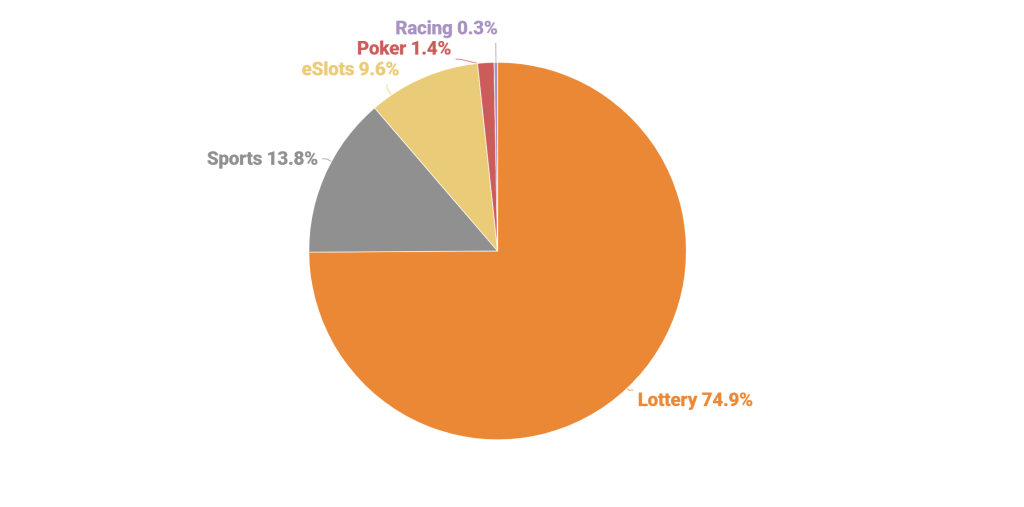
In particular, tax revenues from the lottery fell by 2% to €418.9 million. This amount was the lowest quarterly figure in two years. At the same time, German lotteries accounted for 75% of the total taxes collected in the third quarter of 2025.
Tax revenue by product (€, millions)

Source: Gaming Intelligence.
Revenues from sports betting fell by 24% to €76.9 million and accounted for 14% of the total quarterly figure, while the corresponding figure for horse racing fell by 5% to €1.9 million.
Gambling tax revenue share Q3 2025 (%)
Source: Gaming Intelligence.
The only sector that showed growth in tax revenues was online slots. The sector’s revenues for the third quarter increased by 4% to €53.8 million. In turn, state budget revenues from online poker fell by 3% to €8 million.
The impact of illegal operators
In September, the German Sports Betting Association (DSWV) reported that, according to data from the Joint Supervisory Authority for Gambling in the German Federal States (GGL) for 2024, there are at least 382 illegal German-language sports betting sites in the country and only 34 legal ones.
‘In the online space, the ratio is 11:1 in favour of the black market, and this puts players at risk,’ said Matthias Dams, president of the DSWV, at the time. The association chose the timing of this warning not at random. With the start of the Champions League, the second most popular sporting event for betting in Germany after the Bundesliga, the volume of bets is growing rapidly.
Last year alone, GGL identified 212 unlicensed operators running 858 gambling sites with an estimated revenue of €600 million. That represents about 4% of the total legal gambling market in Germany, both online and land-based.
However, the impact of these operators is significantly greater in high-risk segments. According to GGL, unlicensed operators now account for around 25% of the market for so-called high-risk gambling, which includes sports betting, online poker, online horse racing betting, and virtual slot machines. As a result of their activities, legal operators are seeing an outflow of players and a corresponding decline in tax revenues.
State regulation that contributes to the outflow of players
In March, GGL issued new guidelines strengthening the provisions of the 2021 State Treaty on Gambling (GlüStV 2021). The primary focus is on combating gambling addiction and closing regulatory gaps. The country is stepping up its fight against offshore sites, while making legal platforms less attractive to players.
In particular, the deposit limit of €1,000 per month, controlled by the LUGAS system, has been confirmed. At the same time, responsibility for compliance with the limit is placed on operators, who are obliged to block further deposits if it is exceeded. For high-income players, there is the possibility of increasing the limit to €10,000, and in exceptional cases, to €30,000 per month.
However, increases in limits for German players are only available after a strict financial check, including the provision of bank statements, tax returns, and a credit assessment. Only 1% of the operator’s active customers are eligible for the maximum limit. Approval is not permanent and is subject to regular reassessment.
These measures are part of a significant regulatory reform. Since 2021, GGL has issued more than 1,500 warnings and initiated 25 criminal cases against violators. Germany, like other countries, is facing a rise in illegal gambling, which requires prompt action by regulators to protect consumers and preserve tax revenues.
This article was first published in Russian on 24 October 2025.
All roads lead to Rome, 03–06 November 2025. SiGMA Central Europe takes centre stage at the Fiera Roma, uniting 30,000 delegates, 1,200 exhibitors, and 550 speakers. This is where legacies are built, and the future takes shape. Connect with the innovators’ driving change.


