


How to prepare your website for the December Google update - expert guide

Article co-authored with Olha Maksymova
In 2025, SEO finally ceased to be a matter of keyword mechanics. In the era of semantic and expert search, Google and AI models evaluate not just text, but meaning, depth, and brand authority. Each update to Google’s algorithms, especially the upcoming December core update, reinforces this trend. Search is becoming comprehensive: it takes into account user behaviour, content virality, author reputation, and brand mentions on different platforms. Today, Google is looking for answers to two main questions: Who said it? Can it be trusted?
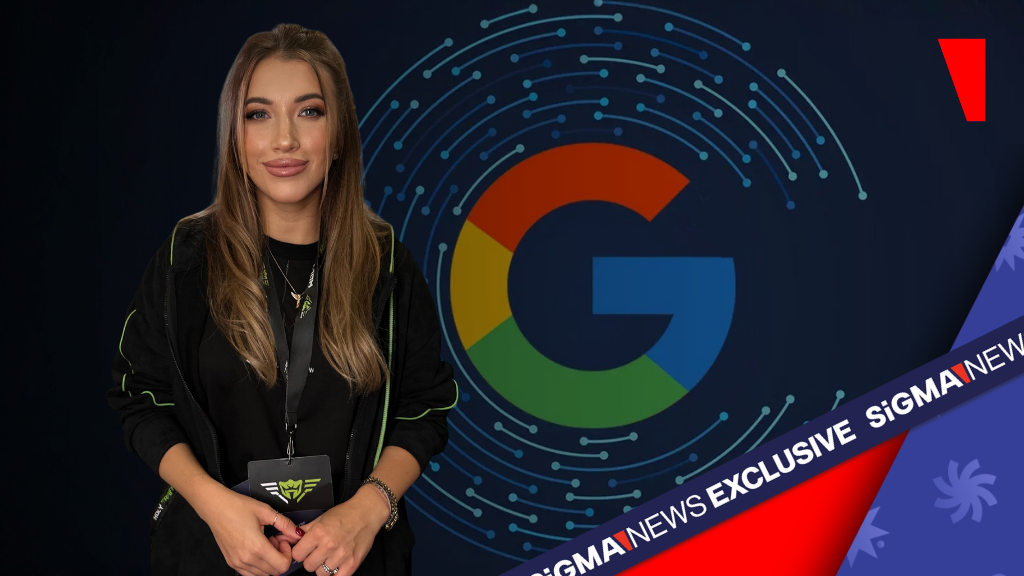
Olha Maxymova, founder and CEO of HolyTraff, an affiliate marketing media arbitrage company, presented recommendations for Google’s December SEO algorithm update. She also explained how brands can prepare for the search rules of 2026. In her opinion, SEO has already changed: now, meaningful content, author expertise, and brand signals in the digital ecosystem are decisive.
AI Summary and brand reputation
This year, Google is finally shifting its focus from simply matching key phrases to understanding the meaning of the query and the quality of the material. Today’s algorithms analyse the context of the query, the depth of coverage of the topic, the author’s citation rate, the structure of the article, and the brand’s reputation.
AI Summary snippets continue to capture a portion of clicks, but at the same time, they filter out superficial traffic. The Topical Authority metric reflects the degree to which a site or author is recognised as an expert on a topic, while AI citation reflects situations where search assistants and models use materials as a source.
It is essential to understand that SEO is no longer just about working with a website. It is about working with the entire digital footprint of a brand.
Impact on traffic and reaction after the update
A drop in traffic after Google updates is to be expected; however, a decrease in clicks does not always mean a deterioration in business performance. AI Summary and similar features tend to absorb simple informational queries, whose users rarely become customers, so the remaining traffic becomes more relevant and conversion rates may increase.
Brands are advised to check the data in Google Search Console for the period before and after the update and analyse the queries that have dropped. If these were short questions, everything is fine. It is also worth checking how structured the materials are: articles that are easy to scan have an advantage in ranking.
Practical recommendations for improving content
Olha advises moving away from a ‘keyword-oriented’ approach and shifting the focus to thematic depth: provide context, case studies, data, and conclusions so that algorithms recognise real expertise. In each publication, it is essential to indicate the author and confirm their competence with links to their LinkedIn profile, YouTube channels, or other public confirmation of their experience, as the author’s personal brand has become one of the most significant signals of trust for Google.
Content should be multi-format: a combination of text, tables, images, videos, and graphs helps neural networks better understand the material and increases the chances of being cited. Internal linking should create an ecosystem of knowledge on the site: related articles, thematic sections, and links to research reinforce the thematic context.
Write as if you are answering a specific question: clearly, structurally, and with conclusions. This format is convenient for modern search models. Finally, it is important to track hits in AI Summary and instances where AI references materials, and to include these metrics in analytics.
Tools and metrics
To adapt your SEO strategy, it is helpful to use analytical tools that show AI metrics and help optimise content for new search engine requirements. Analytical platforms provide insight into the appearance of AI blocks in search results and lost clicks. At the same time, content optimisation services allow you to assess the depth of the topic and the structure of the text.
Tools that already show AI metrics
- Ubersuggest – mentions, AI Summary impact, organic visibility;
- Google Search Console (AI Impact Report) – which pages are used by AI;
- Ahrefs (AI SERP Features) – where AI Blocks appear, what CTR is lost;
- Semrush (AI Visibility Index) – how visible content is in AI zones of SERP.
Services for improving the AI-friendliness of content
- SurferSEO – AI-friendly text structure;
- MarketMuse – expertise, Depth Score;
- WriterZen – Topical Authority;
- Frase.io – relevance to search queries.
Monitoring brand signals used by AI
- Brand24 / Brandwatch / Mention – brand mentions, tone, social networks;
- Talkwalker – particularly strong on YouTube and trends;
- Reddit Trackers – key source of trust signals for AI.
- Checking whether AI uses the site as a source
- Perplexity.ai – shows links to sources;
- Bing Chat / Copilot – displays cited pages.
It is necessary to monitor brand signals on social networks and video platforms separately: mentions, discussions, and author activity on YouTube, TikTok, and LinkedIn become evidence of expertise for algorithms and AI.
Expected timeframe for results
SEO development has become a long-term strategy: the first positive signals can be seen within 3-6 months, and a sustained increase in thematic authority usually takes 6-12 months.
Stable traffic and the chance of getting into AI Summary rarely appear earlier than 12-18 months, and regular AI citations and consolidation in the top rankings require 18 months or more.
The speed at which results are achieved depends on the regularity of publications, the strength of the authors’ personal brands, the quality of the content, the number of external mentions, and activity on video and social networks.
In conclusion
According to Olha Maksymova, modern SEO is about ecosystem, trust, and expertise, not a set of keywords. Brands need to strengthen the personal brands of authors, produce in-depth, multi-format content, and systematically track how AI uses their materials as sources. The faster companies build such an expert ecosystem, the more often they will be cited by ChatGPT, Perplexity, and Google in 2026 and beyond.
This article was first written in Russian on 19 November 2025.
Be part of the action at SiGMA South Asia, 30 Nov – 02 Dec 2025. Colombo becomes the heart of gaming as 5,000 delegates, 100+ speakers, and 1,000 operators gather under one roof. With high-value traffic, game-changing insights, and unforgettable networking, this is where new markets meet new horizons.


