


Expert explains how viewership data shapes global esports

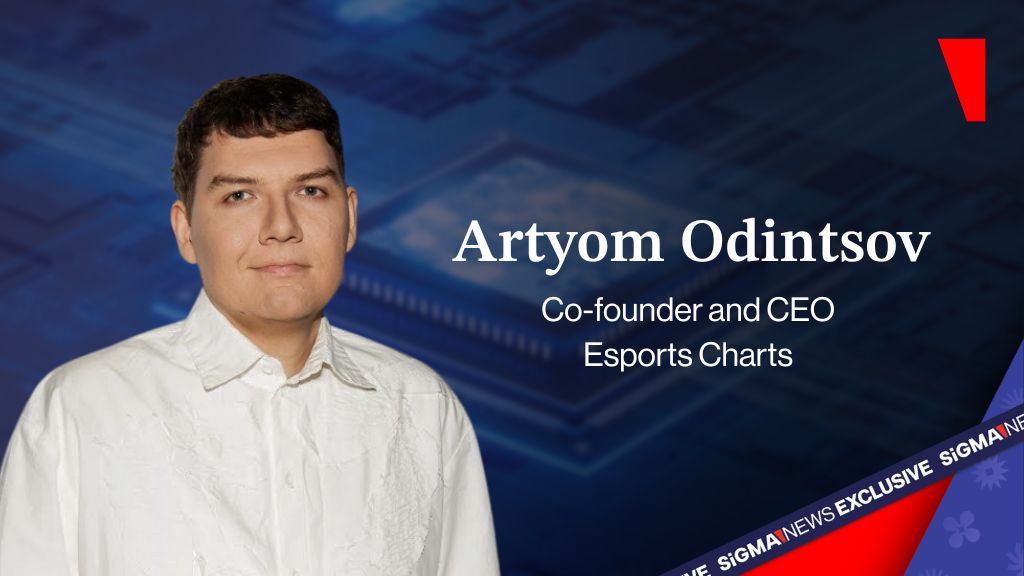
The esports ecosystem is evolving faster than ever and tracking audience behaviour is now a crucial component for tournament organisers, sponsors, and betting operators. In an exclusive interview with SiGMA News, Artyom Odintsov, co-founder and CEO of Esports Charts, shared insights from his platform, which aggregates live viewership data for esports, traditional sports, and entertainment events across the globe.
Insights on market trends
Odintsov spoke about record-breaking events, unusual market trends, and how viewership data can support responsible gambling. He noted that blockchain and Web3 games still require better audience education, but said early spikes in interest and well-structured competitive formats could help them gain traction. He also discussed changes in the streaming landscape, referencing platforms such as TikTok, Kick, and local services in South Korea in relation to Twitch and YouTube.
SiGMA News: Honor of Kings has just set a Guinness World Record with 62,196 live spectators at the King Pro League Grand Finals in Beijing. What online viewership figures did your platform track for this event, and how does the in-person-to-online viewer ratio compare with Western titles like League of Legends or CS2?
Artyom Odintsov, co-founder and CEO of Esports Charts: According to Esports Charts data, the King Pro League Grand Finals in Beijing reached 119,800 peak viewers on Western streaming platforms, nearly a six-fold increase compared to previous KPL records in the West. While KPL is one of China’s most popular esports leagues, with a domestic audience estimated in the tens of millions, the market is closed and exact figures are not publicly available. Still, such growth on Western platforms is a meaningful indicator of rising international interest in a league traditionally focused on its home market.
When comparing offline attendance to online viewership, the KPL finals are unusual even within China. Unlike Western circuits, China’s major leagues, such as the LPL, do not consistently publish official in-person attendance figures, making direct ratio comparisons difficult. What we can say is that Chinese esports generally lean far more heavily towards massive online audiences. LPL broadcasts, for example, regularly draw millions of viewers domestically (and around 100,000–200,000 outside mainland China), even for standard-season matchdays.
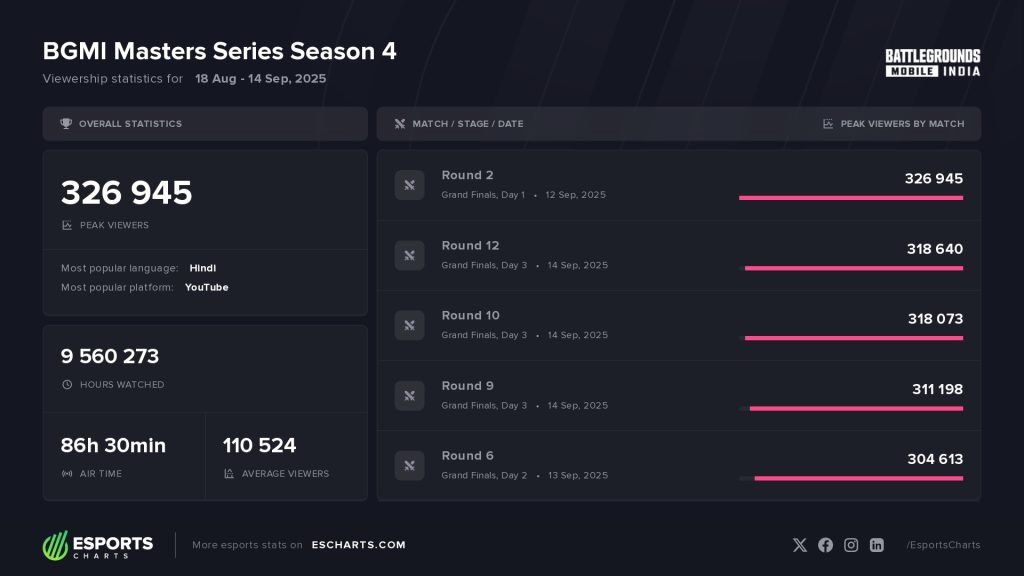
SiGMA News: BGMI has been posting record viewership numbers in India throughout 2025. What specific patterns differentiate Indian mobile esports viewership from other major markets you track, and does India’s consumption behaviour signal opportunities or challenges for tournament organisers and sponsors?
Odintsov: India’s mobile esports ecosystem behaves differently from any other major market we track. It is a truly mobile-first region, which creates a massive, accessible audience base and consistently strong competitive talent.
One defining pattern is extreme market fragmentation. India’s linguistic and cultural diversity directly shapes viewership: tournaments that provide simultaneous streams across multiple regional languages unlock entirely separate audience segments. This is why Battlegrounds Mobile India (BGMI) events often outperform global benchmarks in total hours watched, multilingual formats multiply reach rather than dilute it.
The BGMI ban confirmed this dynamic. When the title disappeared, we saw a huge volume of dormant, unmet viewership demand, which immediately returned once BGMI came back. India’s resurgence in 2025 signals both opportunity and pressure for organisers. Success now depends on two strategic factors:
- Meaningful prize pools, which attract top-tier teams and guarantee stable, high-quality content.
- Professionalisation of the competitive calendar, moving from scattered events to a predictable, long-term circuit that reduces volatility and improves ROI for sponsors.
Overall, India does not just represent a recovering market, it is a high-growth environment where multilingual content strategies and sustained investment can generate outsized returns for both organisers and brand partners.
(Source: Esports Charts)
SiGMA News: With esports betting expanding in regulated markets like India and parts of South East Asia, what real-time viewership metrics are operators prioritising, and how do sudden viewership spikes or drops influence live betting integrity monitoring?
Odintsov: Esports betting operators in emerging regulated markets are increasingly focused on real-time audience indicators, and the core metrics they prioritise are average viewers and peak viewers. These numbers give them a reliable sense of how many people are concurrently watching a match at any given moment, which directly correlates with potential betting activity.
From a behavioural standpoint, audience size has a tangible impact on live betting dynamics. When a match attracts a large, hype-driven audience, operators typically see higher conversion into the live feed. A bigger audience means more engagement with the live feed, more visibility of in-broadcast prompts or odds updates, and ultimately more activity across betting markets.
High viewership also expands the depth of available markets. With more users following the match in real time, operators can offer richer live-feed options not just match winners, but micro-events such as next-round winners, first kills, or player performance props. These additional categories drive both engagement and revenue.
As for integrity monitoring, sudden spikes or drops in viewership are essential signals. A sharp increase can indicate a pivotal in-game moment that may influence player behaviour or betting patterns, while an unexpected drop might point to technical issues or irregularities. Operators often cross-reference these fluctuations with betting activity to ensure that odds movements and wagering volume remain consistent with what is happening on the broadcast.
SiGMA News: Given your work with betting operators, how is viewership data becoming essential for responsible gambling initiatives in esports? Are there specific red flags in viewer engagement patterns that help detect match-fixing or manipulation attempts?
Odintsov: Viewership data is becoming increasingly valuable for responsible gambling efforts in esports, but often in a way that is opposite to what people assume. High viewership itself does not create integrity risks, rather, strong audience numbers are what make esports attractive for regulated gambling markets, and that investment ultimately supports the broader ecosystem.
When it comes to red flags, the focus is often on the tier-two and tier-three esports’ scenes. These segments are substantial in size, but that very scale makes them more susceptible to match-fixing and manipulation. With a higher volume of matches and players, it becomes inherently more challenging to monitor activity and ensure the integrity of every contest.
There are also regional challenges tied to local betting regulations. In parts of Asia, for example, players may compete without sponsor logos from betting companies on their shirts, and in some countries gambling operators with casino-style elements are fully prohibited. As a result, certain language broadcasts or country-specific streams do not allow any betting presence at all. These restrictions create distinct engagement patterns that operators and integrity teams have to factor in when analysing audience behaviour.
Stay in the loop and join the biggest iGaming Community in the world with SiGMA’s Top 10 news countdown. Subscribe HERE for weekly updates from the world’s iGaming authority and exclusive subscriber-only offers.


