


Dmitry Starostenkov: How hybrid solutions tackle sports betting seasonality

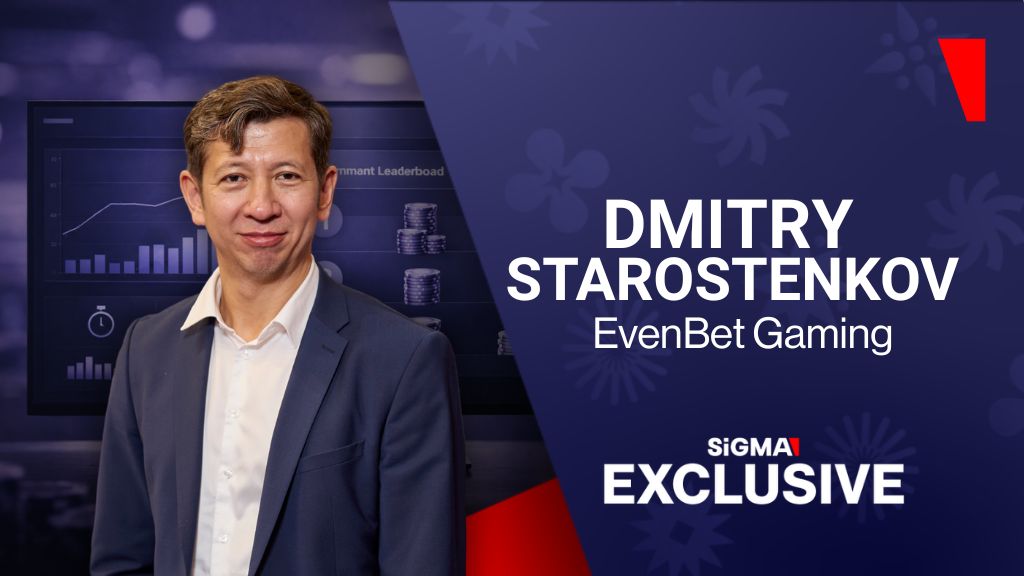
Operators are challenged by the seasonal nature of sports betting since user interest and revenue decline during times of inactivity between big athletic events. In an exclusive interview with SiGMA News, EvenBet Gaming CEO Dmitry Starostenkov discussed how hybrid models combining multiple verticals could help sportsbooks maintain consistent activity throughout the year.
Off-season volatility disrupts operator performance
When asked why operators are still concerned about this cyclical pattern, Starostenkov explained that sports betting’s seasonal swings disrupt key KPIs, creating revenue volatility that is compounded by high acquisition and reactivation costs during low-activity periods.
“This uncertainty makes forecasting a real challenge. It is difficult to commit to investment in marketing campaigns, product development roadmaps, and managing internal resources with no guarantees that revenue spikes during busy months will offset the quiet periods.”
According to Starostenkov, the lack of product diversity leaves smaller, single-vertical operators particularly vulnerable, though even large, multi-vertical brands can feel the effects of seasonality without proper preparation.
Finding balance in AI-driven player personalisation
As operators learn to balance relevance and intrusion, Starostenkov observed that AI customisation is changing player retention. SiGMA News then asked the following: What information does research provide on AI personalisation aimed at casual gamers who are not engaged following events?
Dmitry Starostenkov (DS): “Research consistently highlights that AI-powered personalisation, when done right, is one of the most effective tools for re-engaging casual bettors between sporting events. There is a thin line between well-timed, tailored recommendations and intrusive communications that feel wide of the mark. There is also an issue of over-personalisation. When a player’s user interface becomes too personal, it can impact the visibility of new revenue-driving offerings, games, and sports, which can lead to reduced lifetime value in the long term.”
The EvenBet Gaming CEO also pointed out that when first introducing cross-vertical offers like EvenBet Spins to sports bettors, tailored messaging must highlight fast-paced gameplay and skill elements to feel relevant. Delivering the right content at the right time drives meaningful reactivations during post-event lulls.
Data reveals 29% sports-poker overlap operators ignore
Starostenkov cited research showing 29% crossover between sports bettors and poker players. This cross-vertical interest led to our next question: What data indicates that hybrid designs can help mitigate seasonal gaps in sports betting?
DS: “Our data and extensive research highlight that there is an overlap between verticals, with 29% of sports bettors also engaging with poker products. Few operators are capitalising on this potential as they simply do not have the solutions to cater to these audience demands. Despite the cross-vertical interest, traditional poker formats demand greater commitment than most casual sports bettors can afford to give, which is where bespoke solutions come in.”
Starostenkov’s figures show Spin & Go – EvenBet’s quick 3-player poker tournaments with random prize pools – took 94% of France’s Sit & Go revenue in 2024. Hybrid formats that combine elements of poker skill with fast-paced casino-style games and random multipliers are emerging as an optimal solution to close this gap.
Cheaper to keep them: acquisition vs retention
Starostenkov explained how saturated markets are pushing sportsbooks toward vertical convergence.
To understand these competitive dynamics better, SiGMA News then asked: How do competitive pressures affect vertical convergence in betting and gaming?
DS: “An increasing number of iGaming markets are becoming saturated, and the response of many sportsbooks has been to increase spending on acquisition strategies to capture the attention of players during off-peak periods. However, retaining an existing customer is far more cost-effective than acquiring a new one, and operators’ focus should shift to reflect that”.
According to EvenBet’s executive director, hybrid formats such as Spins Poker cut through regulatory complexity and poker costs, enabling sportsbooks to diversify beyond a single vertical. This keeps users engaged for a longer period of time, which automatically promotes vertical convergence and stabilises revenue during off-peak times without requiring any further resources.
iGaming 2026: regulation and competition top growth barriers
Dmitry concluded with his 2026 predictions, citing recent research: EvenBet’s “iGaming Future 2026: Core Trends and Challenges’ research report” (October 2025, 700+ respondents) revealed that competition and regulation were the main barriers to growth.
“Gamification is proving an early frontrunner as the industry focus pivots from acquisition to retention, with engagement drivers such as tournaments, leaderboards, and tiered rewards systems extending session duration and boosting player lifetime value.”
Vertical cross-platform methods could be positioned as iGaming’s answer to off-season revenue declines, as player-versus-player (PvP) mechanisms generally outperform casino games in retaining casual users.
This article was first published in Spanish on 26 January 2026.
Be part of the action! Join the world’s biggest iGaming community with SiGMA’s Top 10 News countdown. Subscribe HERE for weekly updates, insider insights, and exclusive subscriber-only offers.


