


"We want a new and modern gaming law": AIEJA drives Mexico's gaming transformation

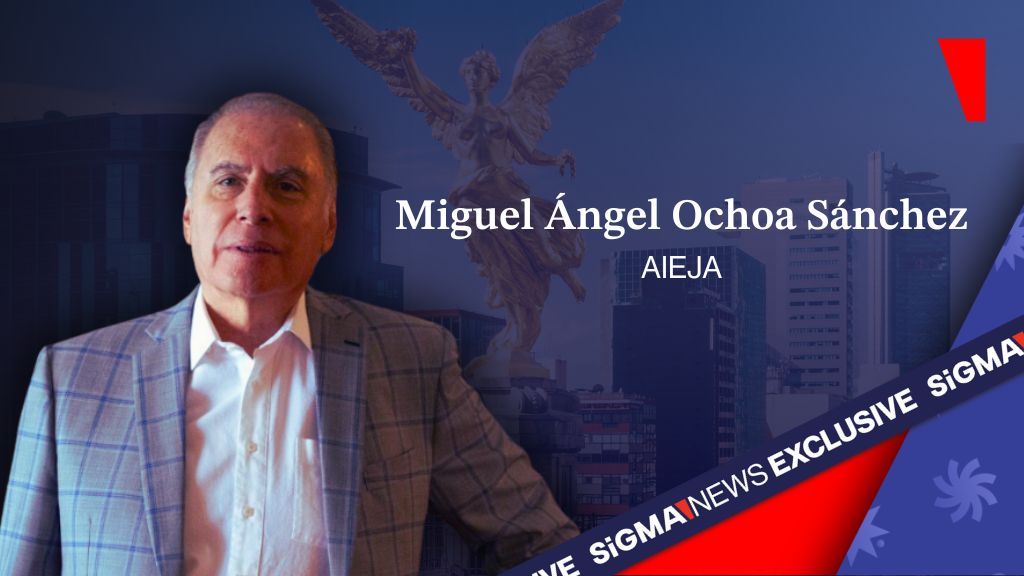
In a conversation rich with diverse viewpoints and subtle meanings, SiGMA News spoke with Miguel Ángel Ochoa Sánchez, President of AIEJA, the Association of Permit Holders, Operators and Suppliers of the Entertainment and Betting Industry in Mexico. With a calm but passionate tone, Ochoa Sánchez exclusively shared his diagnosis of a sector that, although rooted in nearly eight decades of legal framework, seeks renewal to face the challenges of the digital era.
The long road to a modern law: Mexico between tradition and urgent change
As our conversation commenced, Miguel Ángel recalled the weight of Mexico’s outdated regulations. “Mexico has gambling as a legal framework, gambling in the country is legal,” he stated, “But the Mexican Federal Law of Gaming and Raffles was enacted on 31 December 1947… and although it may seem surprising, there has been no substantial reform to date.”
“In 1947, there was no internet, no social media, no mobile phones… that is why it is imperative to update this law,” he stated firmly, emphasising the stark difference in technology between then and now. He admitted that just a few small changes and rules released in 2004 had added to the 1947 statute. “We are talking about a framework nearly 78 years old without changes. That is not feasible for a modern market, so we hope that in February Congress will receive the bill that will provide greater legal certainty and clear rules for those who want to invest in Mexico, both nationals and foreigners.”
He also emphasised that although the law is obsolete, “the legal framework in Mexico is still in perfect condition to operate because we have covered many areas such as the anti-money laundering law, prevention of gambling addiction and tax compliance.” But that framework needs a profound renewal to give certainty and confidence to a growing market.
AIEJA and the alliance with SiGMA Group: building bridges for Mexico as a global hub
With contagious enthusiasm, Ochoa Sánchez celebrated the recent alliance with SiGMA Group: “This commercial agreement we signed with SiGMA Group a couple of months ago allows us first to recognise this company that has great worldwide prestige in gaming… Mexico feels very honoured by SiGMA Group’s arrival.” He explained how the collaboration with SiGMA Group and other international partners has transformed AIEJA from a national association into a gateway for international investors and operators: “We have created a clearer path to Mexico, with official information and events that bring all the players together.” Ochoa further highlighted the focus on communication and promotion, which facilitates entry and expansion in the Mexican market, Latin America, and even influences North America and Europe.
He stated: “Today we can say that Mexico is a very stable market, with great growth opportunities, and these international alliances are a key part of consolidating that regional position.”
Demographic changes transforming the profile of Mexican players
During the interview, a striking fact emerged: the strong female and older presence in physical casinos. According to Ochoa: “Seventy per cent of people who go to casinos are over 40 years old, and two out of three are usually women, women in their 40s, 50s, 60s, even up to 80 years old. For this sector, especially older women, there is no other calm entertainment activity they enjoy as much.” He described a social environment where these people find fun, music, and companionship, something difficult to find in other leisure options.
This contrasts with the profile of online players, younger, between 18 and 35 years old: “Online gaming is easy, economical and accessible. You have it at hand on your phone, your iPhone, your computer. It is the natural form of entertainment for youth.” This coexistence, he said, shows a diversified market that must be regulated and promoted with an integrated vision.
Transparency and technology for real-time regulation
The leader expressed pride in the technical and fiscal advances implemented, placing Mexico as a pioneering regulatory model: “We connect the machines in physical casinos in real time with the SAT, the Mexican tax administration system… This allows full control over transactions and the detection of suspicious operations to prevent money laundering. And we have achieved this without sanctions or closures for more than 12 years.”
He also stressed rigorous compliance with labour, health and gambling addiction prevention regulations: “The legal framework has been more than complied with. This generates confidence among investors, authorities and society.” He recognised that this level of control and transparency is fundamental for the industry to legitimise itself and grow responsibly.
Gaming industry: a key source of income with a promising future
With frank and realistic words, Ochoa addressed a topic that generates debate: the rising taxes in the sector. “Something that we do not like has saved us, but it is reality: the government and states have increased taxes. That means they see us as an important source of revenue.” In spite of the industry’s widespread stigma, his perspective emphasises how this tacit acknowledgement supports the industry’s sustainability.
Specifically, he cited precise figures: “Currently, we have 38 authorised permit holders with more than 430 venues across the country, more than 120 legal online gaming operators and a fleet of over 100,000 machines in casinos. We are present in 30 of the 32 federal entities.” Mexico is shaping up, in his words, as “a stable and very attractive market, both for national and international players.”
The future, he said, is ambitious: “We believe we can easily double visits to physical casinos from 8 million to 16 million, and online gaming from 20 million to 40 million users. This is an enormous potential that does not demand immediate further reforms.” He foresaw significant sector growth towards 2030, “it will be one of the most important economic and cultural pillars.”
With an optimistic smile, Miguel Ángel concluded that Mexico is on the threshold of profound change. His personal commitment and that of AIEJA are to drive that future with an updated legal framework, social responsibility and international alliances that strengthen the country as a regional and global reference in gaming and betting.
This article was first published in Spanish on 26 November 2025.
Stay in the loop and join the biggest iGaming Community in the world with SiGMA’s Top 10 news countdown. Subscribe HERE for weekly updates from the world’s iGaming authority and exclusive subscriber-only offers.


