


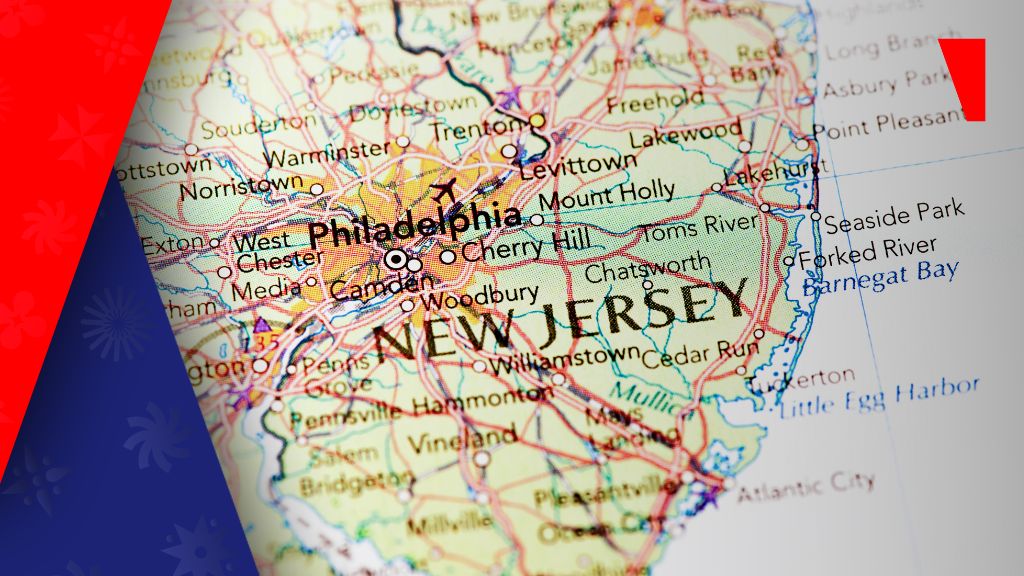
Governor Phil Murphy of New Jersey signed bills A5447 and S4282 into law, outlawing sweepstakes casinos in the state on 15 August 2025. Gaming activists criticised the ruling, claiming it prioritises the interests of long-standing casino firms over those of customers. There are concerns about how the new law would affect players, operators, and the future of online gambling in New Jersey.
Background of sweepstakes casinos
Sweepstakes casinos use a dual-currency system, which sets them apart from conventional online gambling sites. Sweeps Coins, which can be obtained through purchases or promotions and exchanged for cash, and gold coins, which have no monetary worth, are used by players for free play.
This concept enabled Virtual Gaming Worlds (VGW)-operated platforms such as Chumba Casino, LuckyLand Slots, and Global Poker to operate in states where internet gambling is not strictly regulated. Legislators saw it differently from gamers, who saw it as a way to access casino-style games without directly wagering cash.
New Jersey legislation explained
According to New Jersey’s enacted legislation, Bill A5447, sweepstakes gambling is generally defined as marketing or promotional activities in which participants have the chance to win rewards, especially when using dual-currency systems. It imposes strict rules, such as requiring that free and paid entrants have equal chances of winning and capping monetary purchases linked to entry at $20.
The new law now classifies companies who offer redeemable rewards as unlawful gaming suppliers. The Division of Gaming Enforcement is in charge of enforcement, and multiple infractions can result in fines of up to $250,000.
NOW LAW: Legislation (A5447) strengthens enforcement against unregulated gambling schemes, bans sweepstakes models that mimic casino games & imposes penalties on bad actors. It also directs recovered funds toward compulsive gambling prevention, education & treatment programs. pic.twitter.com/SM1FgE5PkV
— NJ Assembly Democrats (@njassemblydems) August 15, 2025
Penalties and enforcement
S4282 supports A5447 by detailing how enforcement will be carried out and updating state laws to address illegal gambling operations. It expands the definition of gambling to include newer practices such as proxy sports betting and prediction exchanges.
First-time offenders face a punishment of $100,000, while repeat offenders face a fine of $250,000. The Division of Gaming Enforcement and the New Jersey Division of Consumer Affairs are in charge of enforcement and have the power to ask the court for orders to stop unlawful activities.
Political and economic motivations behind the ban
Some critics argue that the ban on sweepstakes casinos is driven more by economic and political interests than consumer protection. They point to efforts to shield New Jersey’s licensed online gambling industry from competition, maintain tax revenue following recent increases to 19.75 percent, and prevent gambling-related funds from moving outside state oversight.
Industry reactions
The decision has faced opposition from several groups. The Social Gaming Leadership Alliance criticised the law, calling it an example of excessive regulation that limits legal entertainment options for adults.
SGLA Executive Director Jeff Duncan said, “This law is a textbook example of government overreach that strips away entertainment choices from adults who should be free to make decisions about their entertainment.”
Virtual Gaming Worlds stated they will discontinue sweepstakes promotions in New Jersey and continue only with free-play formats using gold coins. Joe Brennan Jr., co-founder of Prime Sportsbook and board member of American Bettors’ Voice, stated on social media that the legislation could lead to betting funds leaving New Jersey and moving into unregulated markets.
Consumer impact
For players in New Jersey, the new law means that sweepstakes coins can no longer be redeemed after 24 September 2025. Gameplay will be limited to gold coins, which have no cash value. This change reduces entertainment options, even for those who play responsibly.
New Jersey joins several other states, such as Connecticut, Michigan, and New York, that have already banned sweepstakes casinos. The trend reflects growing efforts to regulate alternative gambling models, often influenced by traditional iGaming operators.
Legal loopholes
The law also bans proxy betting involving wagers over $1,000 with commissions above 10 percent. It broadens definitions of illegal activity to include event rigging in sports and misuse of betting accounts. But some promotional sweepstakes remain legal if they offer free entry with equal odds, tie entry to low-value purchases under $20, and avoid cash-equivalent prizes.


