


North American Gaming regulation in focus: How are companies navigating legal and cross-border challenges?

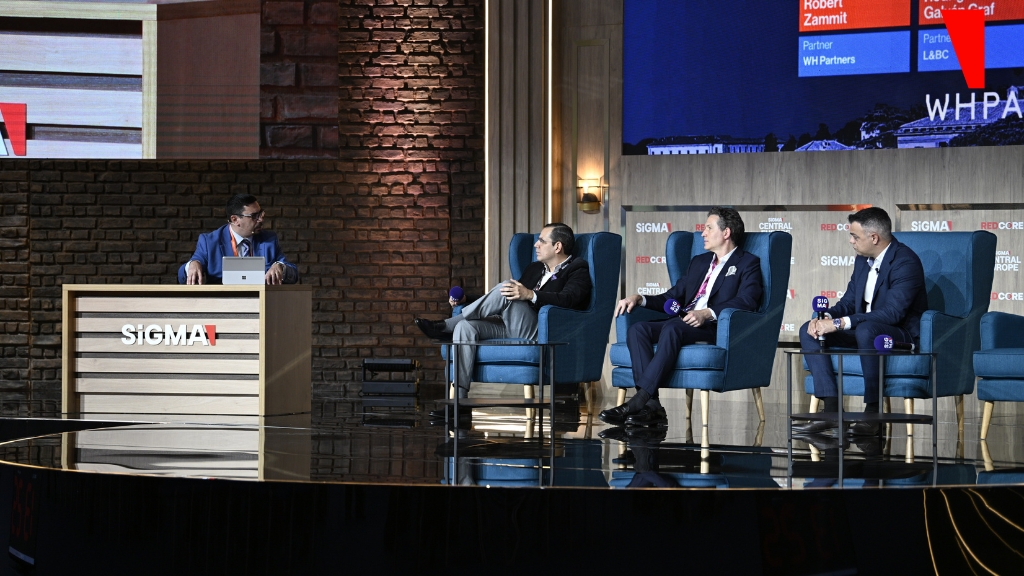
At SiGMA Central Europe in Rome, a focused panel discussion illuminated the shifting regulatory landscape that shapes the North American gaming market. Supported by WH Partners and hosted on Stage 1 of the Regulatory Briefing, legal experts analysed how companies respond dynamically to evolving rules, compliance risks, and regional nuances defining this landscape.
Robert Zammit, Partner at WH Partners in Malta and a visiting lecturer in gaming law at the University of Malta, brings extensive expertise spanning gambling business licensing, regulatory compliance, intellectual property, and data protection. Ron Segev, Founding Partner at Segev LLP in Vancouver, is a leading gaming and licensing lawyer with over a decade of experience advising on gaming, technology, and finance law across North America. David Yatom Hay, General Counsel at Soft2Bet, specialises in online gambling legal strategy, focusing on licensing, AML, and GDPR compliance within both North American and European markets. Meanwhile, Rodrigo Galván Graf, Partner at L&BC, offers over 20 years of legal advisory in constitutional and administrative law in Mexico, serving regulated and non-regulated sectors with a focus on mitigating risks and securing rights.
Evolving regulation across North America
The panel opened with a review of Mexico’s cautious regulatory evolution. Rodrigo Galván Graf detailed a permit-based system now influenced by a forthcoming tax rise from 30% to 50%, effective next January, accompanied by stringent anti-money laundering and counter-terrorism financing obligations. A new gaming bill under legislative review signals imminent transformation. “Newer forms such as sweepstakes and skill-based games challenge markets to balance innovation with regulation,” observed Rodrigo Galván Graf, Partner at L&BC, underscoring emerging trends beyond traditional betting.
In the United States, David Yatom Hay described a phase of “careful expansion” post-PASPA repeal, with states embracing sports betting regulation cautiously and considering iGaming for its taxable benefits. He contrasted this with Europe’s trajectory toward stricter, more closed markets, where operators face intensifying regulatory burdens.
Ron Segev outlined Canada’s unique split framework: Ontario leads with a regulated market, while other provinces maintain monopolistic controls, fostering a large grey market. Alberta’s anticipated adoption of Ontario’s lighter-touch model could simplify compliance and open one of North America’s most valuable gaming markets.
Key insights
- Mexico’s gaming regulation is evolving cautiously, focusing on tax reforms and anti-money laundering compliance.
- US states expand sports betting cautiously, facing cultural and regulatory challenges; Europe trends towards stricter frameworks.
- Canada offers a split regime, with Ontario leading, and Alberta poised to adopt similar lighter regulations.
- Innovation in gaming products and crypto payments is emerging, but tightly regulated across jurisdictions.
Addressing cross-border compliance challenges
Managing multi-state licences remains a significant hurdle. David Yatom Hay explained how varying US state regulations impose substantial operational and compliance burdens, while Europe’s fragmented rules exacerbate market entry challenges. Ron Segev noted Alberta’s expected licensing framework will closely mirror Ontario’s standards, potentially recognising Ontario licences temporarily while differing in advertising rules.
Innovation versus regulation in product offerings
Beyond sports betting, innovation flourishes under regulatory pressure. New products like sweepstakes, predictive markets, and skill games invite regulatory scrutiny. Rodrigo highlighted the Mexican focus on permit integrity rather than product innovation, whereas Canadian sweepstakes remain legal but strictly regulated. “Highly restrictive environments push providers to innovate and challenge traditional boundaries,” said David Yatom Hay, emphasising the delicate balance between creativity and compliance.
The speakers also discussed emerging sectors such as crypto’s future in payments. David Yatom Hay sees cryptocurrency adoption contingent on robust KYC and AML controls. “Stablecoins are accepted in US casinos, while Canada maintains stringent policies on direct cryptocurrency use,” Ron Segev noted, reflecting regional differentiation. In Mexico, pending legislation could clarify crypto licensing and taxation, while Canada maintains stringent policies; Ontario prohibits direct cryptocurrency use, allowing deposits only via approved third parties.
Integrity and responsiveness in regulated markets
Responding to scandals, particularly involving prop and novelty bets, David Yatom Hay stressed operator responsibility to proactively mitigate fraud, as regulatory reaction tends to lag. Ron Segev outlined cooperation between sportsbooks, integrity platforms, and leagues as critical to maintaining player trust and preventing government clampdowns. “Cooperation among sportsbooks, betting integrity platforms, and leagues is necessary to prevent abuse,” he affirmed.
This panel from SiGMA Central Europe provides essential insights for operators, regulators, and stakeholders navigating the complex and shifting North American gaming regulatory environment. Additional keynotes and discussions await those wishing to deepen their understanding of global gaming developments.
The content presented on this page is strictly informational and intended for B2B purposes only. SiGMA Group is not responsible or liable for any business decisions, commercial agreements, or activities conducted by attendees, exhibitors, or third parties during or after the event. All participants are responsible for ensuring compliance with applicable laws and licensing requirements, including those of the Agenzia delle Dogane e dei Monopoli (ADM) in Italy. Our events are restricted to adults aged 18 and over.


