


Over 1,200 arrests mark a breakthrough in Africa’s cybercrime fight


Earlier in the year, law enforcement authority in Africa joined forces with INTERPOL to take down a network of cybercriminals. The operation, dubbed ‘Operation Red Card,’ was launched in November 2024 and ran until February 2025, resulting in the arrest of 306 suspects. Authorities identified more than 5,000 victims caught up in mobile fraud, web-based casinos, and digital investment schemes during this sweep.
These joint initiatives among African countries highlight the realisation of the urgent need to come together as a collective opposition to the growing menace of cybercrime, especially as it directly impacts the gaming sector and electronic financial institutions.
The prevalence of cybercrime in Africa
Operation Red Card uncovered extensive involvement in cybercrime across seven African countries, including Rwanda, Zambia, Nigeria, and South Africa. Multiple cybercrime attacks, such as phishing and fraud, were used to take advantage of the victims. The director of cybercrime at INTERPOL, Neal Jetton, pointed out the implications of such crimes, explaining, “Fraudsters know no borders and can devastate individuals and communities.” Operation Red Card revealed that Nigeria had the highest arrests, with 130 suspects taken into custody, including 113 international nationals.
In South Africa, authorities confiscated over 1,000 SIM cards and 53 computers, while also rounding up 40 more suspects. INTERPOL also reported that authorities seized up to 1,800 electronic products, along with property and vehicles linked to crimes in participating countries.
Progress in cybersecurity initiatives
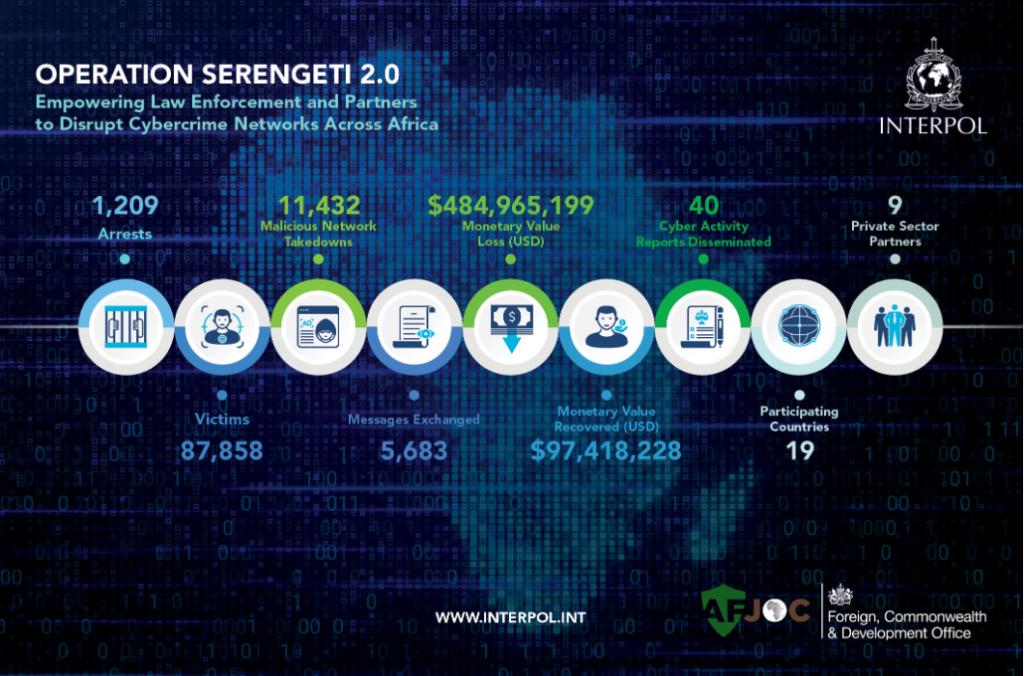
Later in the year, between June and August 2025, INTERPOL launched ‘Operation Serengeti 2.0,’ which marked a significant advancement in Africa’s cybersecurity landscape. This operation focused on tracking and apprehending cybercriminals who threaten the stability of international financial systems. A notable achievement was shutting down several illegal cryptocurrency mining centres operating across the continent.
TRM Labs reports that law enforcement officers utilised “actionable blockchain intelligence to expand Operation Serengeti 2.0’s scope and accelerate action against cybercrime infrastructure.” They gained key leads from TRM about ransomware and fraud operations in Seychelles and Ghana, which helped in ensuring a successful operation.
By 22 August, INTERPOL’s initiatives culminated in the apprehension of 1,209 cybercriminals, the dismantling of 11,432 illicit digital infrastructure networks, and the recovery of more than $97 million. 18 countries, among them Angola, Benin, Nigeria, and South Africa, engaged in close collaboration, thereby illustrating a robust regional commitment to the enforcement of cybersecurity measures.
Foreign nationals and new challenges
One of the key takeaways in this operation is the involvement of Chinese nationals in cybercrime cases. For instance, according to African Defence Forum, Angola shut down 25 unauthorised cryptocurrency mining operations being run by 60 Chinese nationals. The authorities seized equipment worth more than $37 million and also made arrests of illegal power stations that were draining the power grid in the country.
This foreign interference raises concerns that foreign cybercriminals may exploit Africa’s growing digital markets. Incidents like the wave of fraud and illegal online gaming by Chinese nationals later in 2024 have heightened concerns of foreign criminal interference. Cybersecurity specialists warn that current legislation and financial guidelines are struggling to keep pace with the rapid rise of internet infrastructure across the continent.
Nigeria’s role in the fight
Nigeria has also seen considerable progress. According to the BBC, fifty Chinese nationals were implicated and arrested for their involvement in cybercrime activities within Nigeria. Ola Olukoyede, Chairman of Nigeria’s Economic and Financial Crimes Commission, emphasised the persistent challenge, stating, “Foreigners are taking advantage of our nation’s unfortunate reputation as a haven of fraud to establish a foothold here to disguise their atrocious criminal enterprises.”
Through INTERPOL collaborations, Nigeria has successfully disrupted several of its largest cybercrime global syndicates based in-country. Officials now also express hope in Nigeria’s cybersecurity future, viewing these arrests as a catalyst for restoring confidence in the country’s digital economy.


