
Philip Fenech on SiGMA’s impact on Malta’s economy

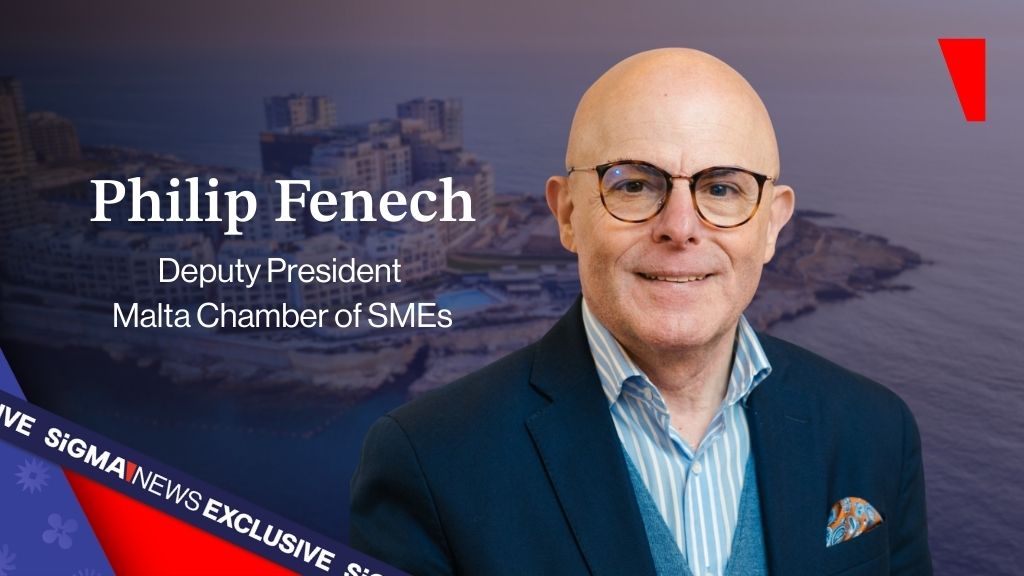
For Philip Fenech, the annual SiGMA Euro-Med summit has become one of the clearest indicators of how rapidly Malta’s events economy is evolving. The Deputy President of the Malta Chamber of SMEs says the conference is now driving significant revenue across the island, strengthening small businesses and pushing Malta to refine its logistical backbone as visitor numbers continue to rise.
A growing industry with widening impact
Malta’s iGaming sector is undergoing one of its most transformative periods, and few conferences illustrate this better than the SiGMA Euro-Med summit. Drawing thousands of visitors each year and generating significant activity across multiple industries, the event has become a cornerstone of the island’s economic strategy.
Philip Fenech, Deputy President of the Malta Chamber of SMEs, described the country’s event-driven growth as deeply consequential. “Our economy has many different segments, and the events segment is a very important one. We’ve seen it being nurtured; it’s growing beautifully, and it’s creating a great deal of added value for our economy”, he said.
Fenech emphasised that the changes brought by major international conferences are not superficial: they are reshaping how Maltese businesses operate and how the island prepares its workforce. “We are even preparing our people to handle it better from an educational point of view, so that human resources will not be as difficult to find as they are, and have been.”
For Malta, which has seen its economy grow from €7 billion to €24 billion in recent years, the question is shifting from expansion to sustainability. “Can we sustain?” Fenech reflected, adding that the events sector is one of the most promising ways to support continued, high-value growth without the environmental strain seen in other industries. “It is one of those segments that will give a high value-added chain, and the collateral damage is minimal”.
An economic ripple effect
According to Fenech, SiGMA Euro-Med and similar conferences have a distinctive economic profile: they create immediate demand, they pay premium rates, and they spread income across a wide range of local businesses.
He stressed that their role extends far beyond hotel bookings and venue rentals. “You have lawyers, you have accountants, and then you have all the other small businesses that literally eat from this business. You have all the IT providers, the technicians, the suppliers”.
Foreign professionals who temporarily base themselves in Malta for these events also feed directly into the leisure sector. Fenech described them as “sort of permanent tourists, using our restaurants, our bars, our clubs, our boutiques, also real estate renters”.
Hotels, in particular, feel the impact. “These conferences pay better rates because they’re here for a short time, and they also ask for the best services. They are not regarded as an average tourist.”
For small businesses, often operating with tight margins, the injection of spending during SiGMA is especially powerful. The demand is wide-ranging: designers, lighting specialists, sound technicians, taxis, caterers, and food vendors all benefit from the surge.
And the economic effect does not end when the conference closes its doors. Delegates frequently explore Malta’s cultural spaces, visit historical sites, and stay out in nightlife districts. “In those four days, the intensity of this conference is such a win-win… they come here to learn, to do business, and to enjoy themselves, and in so doing, they take an experience with them which they can carry to family and friends.”
Logistical pressure on a small island
While the benefits are substantial, Malta’s size presents challenges, ones that Fenech believes require more proactive planning.
He noted that SiGMA’s scale had previously pushed Malta’s capacity to its limits. “We saw it with the 2024 SiGMA Summit in Malta. It was a bit too big for the size of our island, and in fact it was split between Malta and Italy.”
To sustain growth and maintain Malta’s reputation as an efficient host, Fenech argues that the island must continue investing in infrastructure and planning. “We are also encouraging the development of a good expo venue that is being negotiated and expanded to be able to host a larger number of people.”
Traffic management is another issue. He said that while improvements had already been made, more decisive measures might be needed. Road closures, he insisted, should be accepted when necessary. “If needed, close certain roads purposely for this segment. It’s worth the sacrifice… what’s a bit of a sacrifice when you know that they’re giving so much return? The millions are unbelievable.”
Vision 2050 and Malta’s long-term strategy
Fenech, who contributed to Malta’s Vision 2050 policy, sees major events as central to the island’s future economic model. In a maturing economy, he argued, Malta can now be “picky and choosy” about which sectors to prioritise.
SiGMA’s success, he added, could also pave the way for new international events of similar scale. “They are encouraging other setups that are as big as they are… we’ll be increasing that segment as another important part of our economy for the vision.”
Be part of the action at SiGMA South Asia, 30 Nov – 02 Dec 2025. Colombo becomes the heart of gaming as 5,000 delegates, 100+ speakers, and 1,000 operators gather under one roof. With high-value traffic, game-changing insights, and unforgettable networking, this is where new markets meet new horizons.


