


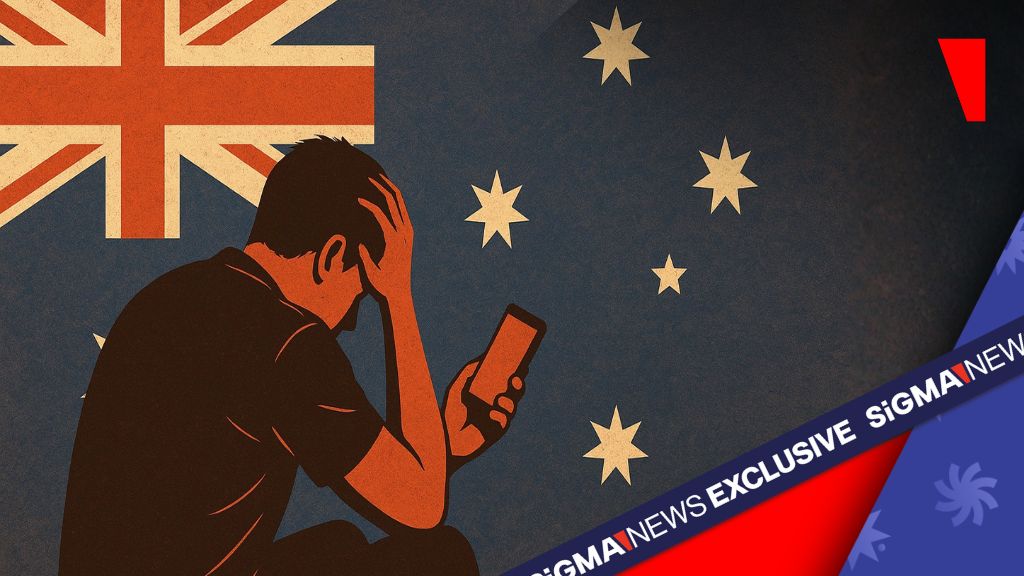
Australia’s gambling scenario is entering a period of intense scrutiny as policymakers, public-health advocates, and industry leaders warn that problem gambling is becoming the next major national challenge. The shift comes amid strong growth in online gambling, increasingly strict regulations, and widespread concern about the frequency of gambling advertising across media channels. Many now argue that Australia is approaching a decisive moment on consumer protection.
Industry researchers forecast that the country’s online gambling segment will continue rising, expanding at a Compound Annual Growth Rate (CAGR) of 5.9 percent between 2025 and 2033, according to projections by the IMARC Group. The sector is expected to grow from $5.2 billion in 2024 to nearly $8.9 billion by the end of the forecast period. While sports betting and lotteries remain culturally familiar, digital-first behaviour has largely reshaped how Australians engage with gambling products.
Recent participation studies suggest that online wagering has overtaken venue-based gambling for the first time, driven heavily by mobile usage. Operators who have invested in responsible-gambling tools, identity checks, and compliance systems have captured much of this growth, while business models focused on physical venues are finding adaptation difficult. Analysts say the divide reflects a wider technological transition, rather than a short-term trend.
Regulation has tightened in response. Authorities have introduced more extensive requirements around anti-money-laundering protocols, customer verification, and advertising standards. The government has also banned social media for those under the age of 16.
Penalties have escalated sharply, earlier this year, Tabcorp was fined AU$4.6 million ($3 million) for repeated breaches of gambling rules. Regulators argue these measures are necessary as more indicators now suggest gambling harm is increasing, especially among younger demographics.
Gambling advert: centre of the debate
At the centre of the national debate lies the issue of advertising. Campaign groups, parliamentary committees, and several public-health organisations warn that persistent exposure across live sports broadcasts, stadium signage, social media, influencer channels, and streaming platforms has blurred the line between entertainment and wagering. Critics say visual saturation risks normalising betting behaviour and encourages the perception that gambling is inherently linked to sporting culture.
In response, the federal government is now considering the introduction of a phased ban on gambling advertising, including the possibility of removing sponsorship deals from major leagues and restricting advertisements during live sports programming. Some states have already moved ahead by imposing promotional curfews during hours typically associated with family audiences.
But the proposals have generated notable pushback. Industry figures argue that an abrupt restriction would push bettors towards offshore gambling, unregulated platforms, which operate outside Australia’s consumer protections. They warn that such sites lack identity checks, dispute-resolution services, and taxation obligations. Sporting organisations also caution that any significant reduction in sponsorship revenue would affect grassroots programmes and the financial health of professional competitions. Media networks, including Nine Entertainment, have suggested that taxpayers may need to compensate broadcasters if a complete ban is enforced.
Problem gambling jolts Australia
Surveys indicate that approximately 73 percent of Australian adults gambled at least once in the past year, and 38 percent gamble weekly. The proportion of adults who meet criteria for problem gambling ranges between 0.7 and 1.0 percent, small in percentage terms, but significant in impact. Among monthly gamblers, indicators of high-risk behaviour have also increased.
More strikingly, new data from research firm Roy Morgan suggests that nearly 3.5 million Australians now fall into the problem or at-risk category, with more than 600,000 identifying a pattern of compulsive behaviour. The findings represent a 22 percent increase over the past year and are based on responses from almost 17,000 adults. Researchers have also identified concerning signs of gambling-related harm among minors aged 12 to 17, prompting calls for more decisive intervention.
Policy balancing: the need of the hour
While several operators publicly support tightening controls, many emphasise that policy must remain balanced. They argue that overly restrictive measures could destabilise regulated platforms and direct activity underground. However, experts maintain that public-health risk must take precedence.
Speaking exclusively to SiGMA News, Monica Shafaq, former Chief Executive Officer (CEO) of the support charity Gordon Moody, said problem gambling is not determined by frequency alone. Instead, she described the condition as one in which gambling “starts to dominate someone’s thoughts, decisions, or emotions”.
“Problem gambling thrives in silence. The more open we are about it, the easier it becomes for people to seek support,”
– Monica Shafaq, Former CEO, Gordon Moody
She explained that while most people gamble socially with clear spending boundaries, some gradually develop a compulsion even as relationships, work performance, and personal finances deteriorate. “When the balance tips and gambling starts to control the person, rather than the other way around, that’s when it becomes a serious issue,” Shafaq said. She added that the condition often develops quietly, concealed by shame or denial, which is why early intervention and open discussion are essential.
Shafaq acknowledged the influence of constant exposure, particularly when gambling is “glamorised” or positioned as a regular part of sporting culture. She stated, “Advertising absolutely can have an influence, especially when it glamorises gambling or makes it feel like an everyday part of sport and entertainment. Constant exposure, particularly to young people, can normalise gambling and blur the line between enjoyment and risk.”
However, she stressed that the issue is not solely driven by messaging. Shafaq noted, “We can’t put all the blame on advertising’s door. Problem gambling has existed for decades, long before the current level of promotion we see today. The reality is that gambling harm is complex. Like other forms of addiction, it’s often rooted in what’s happening beneath the surface – stress, loneliness, financial pressure, trauma, or poor mental health. For some, gambling becomes a way to escape or cope, rather than simply a response to an advert.”
She urged policymakers to support strategies involving education, early-intervention resources, and public awareness campaigns. “Understand that gambling is designed to keep you engaged; the odds are never in your favour.” She added, “Setting limits on time and money, using blocking tools or self-exclusion, and taking regular breaks are all practical steps that help keep control.”
In the end, she concluded, “If you find yourself gambling to escape something else, that’s a sign to pause and reach out for help… Problem gambling thrives in silence.“
So, with participation on the rise, advertising deeply embedded in sporting culture, and growing evidence of harm among younger audiences, pressure on Canberra is mounting. Lawmakers may have to chart a course soon to protect vulnerable consumers without pushing bettors toward the offshore black market. As consultations continue and political momentum builds, the coming months may determine whether Australia opts for incremental reforms — or a sweeping overhaul of its gambling framework.
The world’s fastest-growing iGaming market meets in Colombo, 30 Nov – 02 Dec 2025. SiGMA South Asia unites over 5,000 delegates, 100+ speakers, and 850+ affiliates in the heart of a $7.5 billion market. This is where new markets unlock new horizons. Don’t miss it.


