
Sri Lanka’s Parliament passes Gambling Regulatory Authority bill

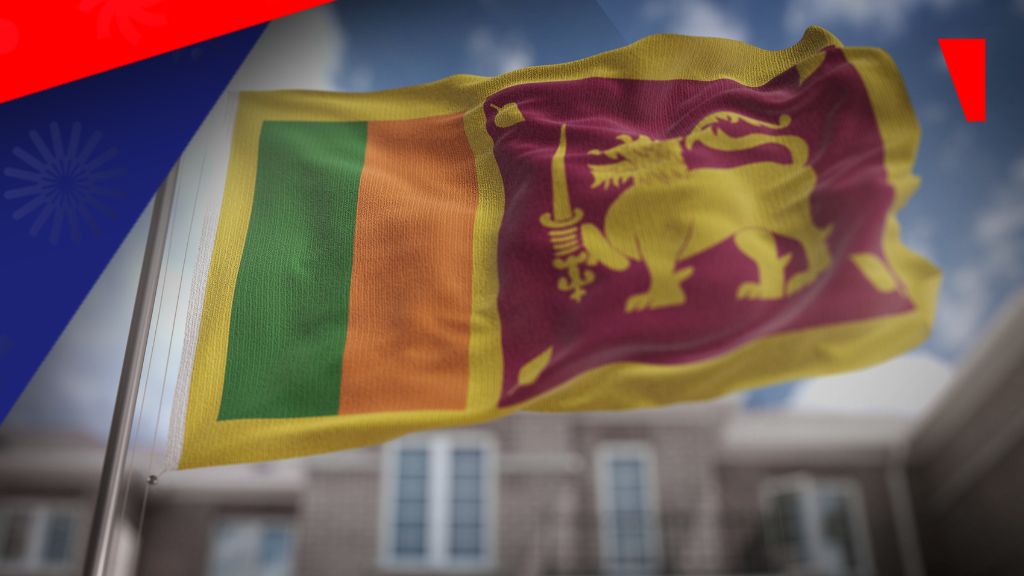
After a long wait, Sri Lanka’s parliament has unanimously passed the Gambling Regulatory Authority Bill with changes, clearing the way for the creation of an independent organisation to govern the country’s gambling industry. Once approved by the Speaker, the Bill will become the Gambling Regulatory Authority Act.
The move comes shortly after the opening of City of Dreams Sri Lanka, the country’s first international casino resort developed by John Keells Holdings and Melco Resorts & Entertainment.
New era for gambling regulation
The new law repeals three older legislations – the Horse Racing Betting Ordinance, the Gambling Ordinance, and the Casino Ordinance – consolidating them into one comprehensive framework.
The Gambling Regulatory Authority (GRA) will handle licensing for casinos and other gambling businesses, collect gambling-related revenue, act against illegal gambling, and ensure clear and fair practices. It will also focus on reducing social harm while helping to develop tourism and support economic growth.
Minister outlines safeguards
Deputy Economic Development Minister Anil Jayantha Fernando told Parliament, “The regulator will ensure that casinos operate according to rules and concerns about money laundering is also addressed.”
Existing casinos, including Bally’s, Bellagio, Casino Marina, and Stardust, which have been operating under provisional registrations since 2013, will now be required to come under the new regulator.
Parliamentary path to approval
The Bill was first gazetted in May under the directives of President Anura Kumara Dissanayake, in his capacity as Finance, Planning and Economic Development Minister. It received approval from the Committee on Public Finance (CoPF) on 12 August after multiple rounds of discussions.
During the second reading in Parliament, several opposition lawmakers urged the government to bring in stronger mechanisms to regulate online gambling, citing concerns about rising addiction linked to digital platforms.
Separately, the Parliament’s Committee on Public Finance also approved foreign exchange regulations relating to the gaming sector.
Structure and governance of the GRA
The GRA will have a board that includes senior officials such as the Secretary to the Ministry of Finance, the Commissioner General of Inland Revenue, the Head of the Financial Intelligence Unit, and the Inspector General of Police or their representatives. Three additional members will be appointed by the Finance Minister for three-year terms.
Under the new regulations, Sri Lankan residents will need to pay a $50 entry fee to access casinos, which was later increased to $100 under the 2025 budget. Taxes on gross gambling revenues have also been raised from 15% to 18%.
Criticism over independence
While the creation of a formal regulator has been welcomed as an important reform, experts have raised concerns about the GRA’s independence.
Research consultant Sudaraka Ariyaratne warned, “If you look at the theory of regulation, it is very clear that the regulator has to be an independent body which gives credibility. That is not the case with this Gambling Authority Bill. The danger with this bill is that it won’t even give a perception of integrity, if the Minister of Finance can basically do whatever he or she wants.”
The Advocata Institute, a Colombo-based think tank, also stated, “The independence of a regulatory body is non-negotiable. Without it, we risk creating a framework that lacks credibility, is vulnerable to political interference, and cannot deliver on its mandate. In its current form, the Bill does not create a regulator. This bill creates a proxy, not a regulator.”
Earlier last month, a local media outlet compared the GRA Act with Singapore’s gaming laws, stating, “[The bill’s] primary shortcomings lie in its weak provisions for regulatory independence, its vague suitability criteria for operators, its profound lack of robust and specific harm-minimisation tools like a comprehensive exclusion system, and its technologically outdated enforcement powers against online gambling.”
Online gambling left unchecked
Concerns have been raised over shortcomings in the regulations, especially the failure to address online gambling, which is growing quickly. Opposition MPs underlined the need for tighter rules in this area.
Revenue collection under the current system depends largely on self-reporting by casino operators, which some experts consider ineffective. Ariyaratne noted, “At present, the Inland Revenue Department (IRD) is responsible for revenue collection, and they go by what is self-reported by casino operators. They have no way of tracing these incomes.”
Penalties for non-compliance under the Act are also seen as lower than international standards, raising concerns about enforcement.
Government’s growth strategy
The government has defended the Bill as a key step towards boosting tourism, attracting foreign investment, and increasing tax revenue. President Anura Kumara Dissanayake has framed it as part of Sri Lanka’s post-crisis economic recovery strategy.
Sri Lanka’s gambling market, valued at $293.93 million in 2020, is projected to grow to $410.04 million by 2026. Regional competition is also intensifying, with countries such as the UAE and Thailand moving quickly to open their gambling markets.
Advocata cautioned that delays in implementing clear and credible regulations could see Sri Lanka lose investment and tourism revenue to regional competitors.
The road ahead
The passing of the Gambling Regulatory Authority Bill is seen as a key change for Sri Lanka’s gambling sector. It brings all regulations under one framework, but experts and policy groups are still asking for changes to make the regulator more independent, include online gambling, and strengthen revenue monitoring.
Whether the new regulator can balance economic growth with social safeguards and credibility will be key to shaping the future of Sri Lanka’s gambling industry.


