

Finding the “magic point of resonance” in lottery marketing

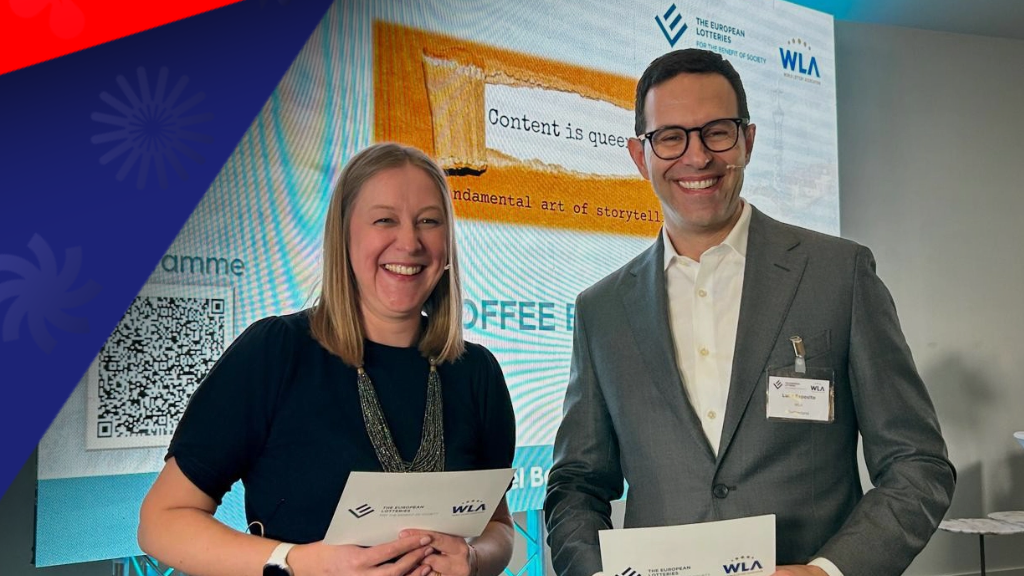
At the end of January, Barcelona hosted a seminar organised by the World Lottery Association (WLA) and the European Lottery Association (EL). The event, entitled ‘Content and the art of storytelling’, focused on marketing for operators and was attended by over 200 representatives of lotteries and agencies from more than 40 countries. The organisers discussed the role of content in strengthening trust in lotteries and promoting their social mission.
The two-day event was moderated by WLA Executive Director Luca Esposito and the EL Communications Officer Lucy Liner-Matiesson (pictured). The seminar’s highlights were published on the WLA blog.
The magic point of resonance
Lotteries must be able to clearly state their core mission, which is raising funds for good causes. At the same time, they must operate within the law and maintain transparency. Workshop participants noted that effective storytelling connects numbers with the real stories of beneficiaries. This helps the audience understand the meaning behind lottery activities.
Keynote speaker Jack Murray, CEO and founder of MediaHQ and All Good Tales, called for a mission-driven approach. According to him, storytelling is a process in which the intersection of an organisation’s interests, themes, and audience expectations creates a magic point of resonance. Hana Barochova from Allwyn International added that the message is more important than the channel, but excessive political correctness can undermine authenticity.
Murray explained that storytelling is a journey, not a destination. When it is mission-driven, every player can become the change they want to see. If you ask the question, “What does great storytelling look like?” “What do we want to talk about?” and “What does the audience want to hear?” – the intersection of the answers will be the magic point where the story resonates.
One good example of storytelling is the El Gordo lottery – Spain’s Christmas lottery. The campaign demonstrates a deep cultural connection and strong emotional engagement across all age groups. However, people from Germany said that cultural and regulatory differences mean that different approaches are needed. In many countries, lotteries are restricted in their advertising messages and must seek alternative means of communication.
Best practices from the United States
The panel of US lottery executives confirmed that the most compelling stories come from the beneficiaries themselves. Leaders from Tennessee, Georgia, and North Carolina talked about how scholarship recipients, new schools, or individual winners can promote brands. This makes the audience trust the operator more and feel more emotionally connected to the brand.
For example, the Tennessee Education Lottery funds educational programmes: college scholarships, grants, preschool programmes, and extracurricular initiatives. Rebecca Paul, President and CEO of the Tennessee Education Lottery Corporation, noted that the lottery needs to be present alongside players to tell them different stories.
Some US lotteries offer sports betting, and large sports arenas provide an opportunity to bring the lottery’s story to a wide audience. For example, the multi-state lottery MUSL has found a way to associate itself with sports through sponsorship of athletes and NASCAR drivers. MUSL is also collaborating with the American Football Association to develop a new game.
Emotional connection takes centre stage
The seminar participants made a key conclusion: authenticity and emotional connection are more important than format. Stories should be mission-oriented and focused on real results, and in different regulatory environments, lotteries need to be flexible in adapting their communications. The organisers noted that developing quality content remains a priority for strengthening public support and long-term trust in the industry.
The discussion also highlighted cultural and regulatory differences in Europe. A good story is perceived differently in Germany and Spain. Building a lottery story requires trust. First, products and credibility are established, and then messages are aligned with the brand. Lotteries must take customer interests into account and include information about products and services in their stories, meeting the expectations of their audience.
This article was first published in Russian on 17 February 2026.
Table Mountain has the views; we’ll bring the deals. SiGMA Africa lands in Cape Town from 03–05 March 2026 and draws 3,000 minds to a rising frontier of innovation and ambition. It’s shaping the continent’s future. Be there.


