

Taxation of iGaming in Brazil: experts warn of impact on competitiveness and investment

This article was first published on 5 March 2025.
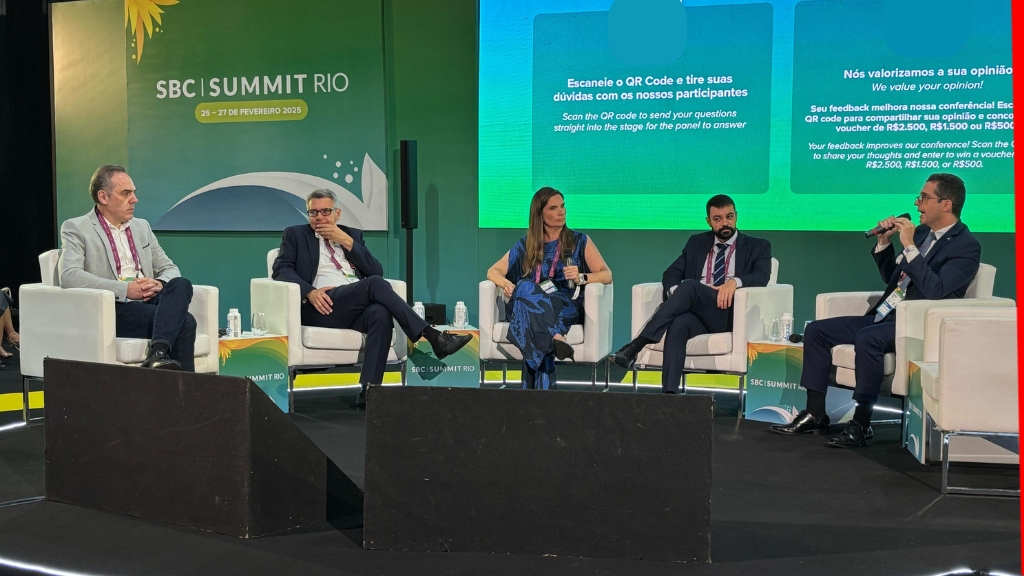
During a panel at the SBC Summit Rio, industry experts discussed how an efficient tax model can be a competitive differentiator while ensuring sustainable revenue for the state.
The debate took place at a crucial moment as Brazil progressed in regulating the sector, aiming to balance tax revenue, competitiveness, and legal security. During the discussion, it became clear that the tax model adopted in the country could determine the future of national iGaming, influencing everything from foreign investment levels to consumer protection and market integrity.
The panel featured Rodrigo Verly, a tax auditor at the Federal Revenue Service; Tiago do Vale, a prosecutor at the National Treasury; Ricardo Saadi, director of investigations and the fight against organised crime at the Federal Police; and Alessandro Maciel Lopes, coordinator-general for the repression of corruption and financial crimes at the Federal Police.
Taxation and sustainability of the sector
One of the main points addressed was the impact of the tax burden on market competitiveness. Experts pointed out that in countries with a balance between revenue generation and sector incentives, such as the United Kingdom and Malta, iGaming grows sustainably.
“Taxation needs to be a stimulus for the regulated market, not a barrier. If the burden is excessive, operators seek alternatives in less restrictive markets, which harms the country itself, as it loses revenue and control over the activity.”
Due to its complex tax system and high fiscal burden, Brazil needs to adopt a differentiated strategy. The primary concern of the experts is that an excessively costly model could drive operators to seek alternatives in the parallel market, leading them to avoid paying taxes and reducing consumer protection.
Moreover, the digital nature of iGaming requires closer attention to avoid fiscal distortions. Unlike traditional industries, the sector operates without physical goods or territorial distribution, making it entirely mobile and sensitive to regulatory changes.
“If we apply a traditional tax model, we will be ignoring the nature of the sector and hindering its development. The goal must be modern legislation aligned with best international practices.”
Comparison with other jurisdictions
The panel presented examples of how different countries handle iGaming taxation and what lessons Brazil can learn to avoid common pitfalls.
- United Kingdom: The country is one of the most successful models, applying taxes on Gross Gaming Revenue (GGR), allowing companies to operate profitably while still contributing to tax revenue.
- France and Germany: Both countries are examples of markets that opted for higher taxation models. Operators report difficulties in maintaining healthy profit margins while the parallel market has grown, reducing the effectiveness of regulation.
“Countries that got taxation wrong are still facing difficulties in correcting course. International experience shows us that a poorly calibrated model can have irreversible consequences, driving away investment and harming long-term revenue.”
In addition to the tax burden, a crucial factor mentioned was the predictability of rules. Many foreign investors hesitate to enter Brazil due to constant changes in tax legislation, which creates uncertainty and financial risks.
“If we want to attract major global operators, we need to offer stability. No company invests heavily in a market where the rules can change overnight.”
Paths for Brazil
There are still some solutions that, in theory, create an excellent scenario for the betting market in Brazil. Among the main proposals discussed are:
1. Progressive taxation model
Adopting a tiered tax structure, with rates proportional to revenue, could be a solution to balance revenue generation and competitiveness. In this way, smaller companies would not be overwhelmed by excessive taxes early in their operations, allowing the sector to develop healthily.
“If we want Brazil to be a competitive market, we need to ensure that small and medium-sized businesses can establish themselves. Otherwise, only the large operators will survive, which limits innovation and market diversity.”
2. Incentives for regularisation
The panel also discussed the importance of creating incentives for companies to move into the regulated market. One possibility would be reducing the initial tax burden for operators entering legality alongside simplifying the licensing process.
“If we want to combat the illegal market, we need to offer a viable path for regularisation. If the cost is too high, companies simply won’t comply.”
3. Clear rules and predictability
Another key point is ensuring that tax legislation is clear and stable. Many global investors consider legal uncertainty one of the most significant risks of entering Brazil.
“Without predictability, there is no investment. The sector needs well-defined, long-lasting rules so operators can plan their operations in the long term.”
4. Dialogue between the public and private sectors
It is also essential to have open communication between the government and companies in the sector to ensure an efficient tax model. Countries that adopted a joint construction process between regulators and operators have created healthier and more prosperous environments for iGaming.
“The government needs to understand that the industry is not the enemy. On the contrary, it is a major source of revenue and economic development. But for this, we need constant dialogue and fair regulation.”
Shaping Brazil’s iGaming future through taxation
The tax model to be adopted in Brazil will be decisive for the future of iGaming in the country. If well-structured, it could turn the sector into one of the major drivers of the national economy, generating jobs, innovation, and revenue. On the other hand, a poorly planned model could drive away investment and strengthen the illegal market.
“It’s not just about collecting more; it’s about ensuring that the sector grows sustainably and generates benefits for the country. The opportunity is right in front of us, but we need to make the right choices.”


