


Inside Asia’s integrated resorts: Part one with Sudhir Kalé

In the fast-evolving landscape of Asia’s integrated resorts, internal marketing and employee engagement have become critical to sustaining service quality and organisational growth. With workforces of tens of thousands across gaming, hotels, F&B, security, and loyalty programmes, operators face the challenge of keeping diverse teams aligned under one culture while adjusting to market and regulatory changes.
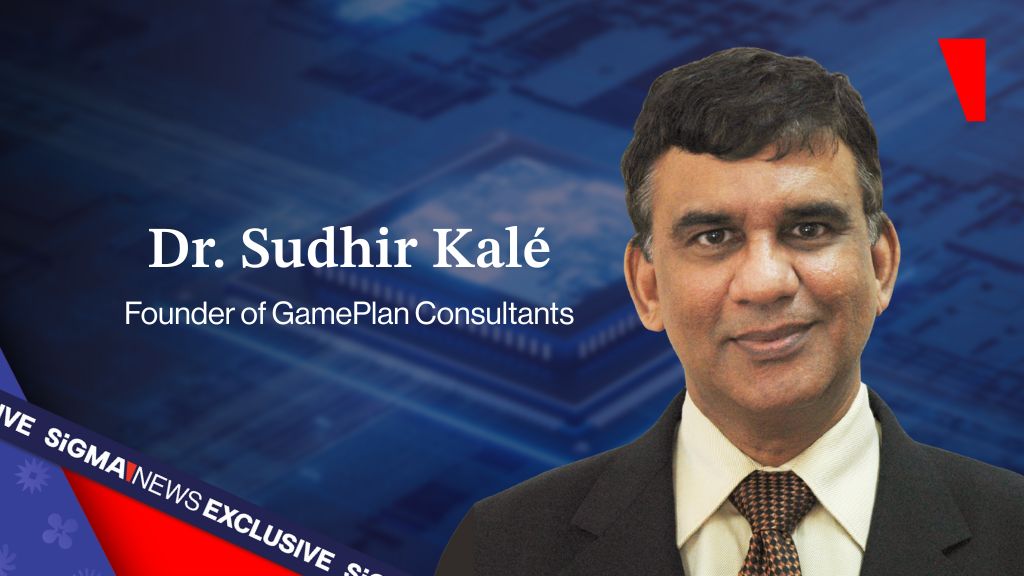
To gain deeper insights into how the industry is addressing these challenges, SiGMA News spoke with Dr. Sudhir Kalé, Founder and Principal of GamePlan Consultants. A globally recognised expert on organisational culture, customer experience, and service quality, Dr. Kalé has advised leading operators including Marina Bay Sands, Sands China, Crown Casino, Galaxy Macau, and Okada Manila.
In this first part of a two-part series, Dr. Kalé shares his insights on the most effective internal marketing practices, the role of culture in large resorts, approaches to reducing turnover, and how casinos can align staff with evolving priorities.
SiGMA News: Looking at the development of integrated resorts across Asia, what internal marketing strategies stand out as most effective for engaging employees and aligning them with organisational goals?
Industry Expert Dr. Sudhir Kalé: Unlike Western Europe and the United States, the casino industry is relatively new in Asia. Macau is an exception, where casino gambling has existed since 1850. However, until 2002, when the government of Macau SAR decided to open up the industry to foreign competition, the casino industry in Macau was a monopoly and quite shady in character. The first Sands property in Macau, Sands Macao, opened on 18 May 2004. This event marked a significant moment in the development of Macau’s gaming industry and the introduction of Las Vegas-style integrated resorts.
The first legal casino opened in the Philippines in 1977. But it wasn’t until 2008, when the Philippine Amusement and Gaming Corporation (PAGCOR) lost its monopoly and the government opened up the industry to foreign participation.
As such, in Asia, involvement of foreign and world-class brands in the casino industry is a fairly recent phenomenon. The foreign companies that entered Asian markets introduced integrated resort-style properties, and their casinos found eager patronage all over Asia. These brands, understandably, also imported their own management to run the casinos. You will therefore find that in most integrated casino resorts in Asia, while the bulk of the workforce is local, the management tends to be Western, typically white. This creates cultural barriers between the management and staff, making employee engagement and internal marketing very difficult tasks.
What has worked, in my experience, are initiatives that reduce the power distance between the foreign-dominated management and the local workforce. Providing the expatriate workforce with plentiful opportunities to learn the local language and local culture goes a long way in creating the right platform for internal marketing. Fast-tracking capable local employees into the senior management cadre also has a demonstrable impact on workforce morale and engagement.
All activities and programs designed to minimise the “us vs. them” sentiment about senior management seem to work very well in enhancing the employee experience and increasing employee involvement.
SiGMA News: How can large resorts, with diverse departments such as gaming operations, hotels, F&B, security, and loyalty marketing, foster a unified culture and ensure consistent communication internally?
Dr. Kalé: Creating a unified culture across an integrated casino resort is difficult at the best of times. Traditionally, there has always been a chasm between the hotel division and the gaming division. Employees come into an integrated resort with their own background and life experiences, which makes it hard to create a cohesive culture. Organisational culture issues get magnified when operating in foreign environments. Imagine the difficulty involved in creating a unifying culture in a company like Sands China Limited in Macau with around 30,000 employees drawn from all over the world.
The “culture work” begins with crafting a proper mission and vision for the company that most employees will readily buy into. The company vision forms the backbone of all major corporate decisions and should become the underpinning for HR management. Senior leaders should voice the company’s vision at every opportunity with the employees. Middle management forms the conduit of communication between the senior management and the frontline employees. A key item in the job description of middle managers should be to communicate the company’s mission, vision, and values to frontline employees.
Breaking down management silos is another way to build a unified culture. These silos can be departmental, geographic, team-based, rank-based, or communication channel-based, to mention but a few. If it is not possible to break down well-entrenched silos, a conscious attempt should be made to create functional stovepipes across them. It is important that executives and managers, regardless of division or background, speak the same lingo and resonate with the same corporate ethos.
Before any attempt to break down cultural clashes is made, the company needs to invest in a scientific assessment of its existing culture. Such an assessment will uncover points of major disconnect across the enterprise. We have reliable and valid measures of corporate culture measurement. It is a pity that most organisations do not access these resources.
SiGMA News: Employee turnover is often high in casino operations. What practical approaches have you seen in Asia to improve retention and staff loyalty through internal marketing and engagement initiatives?
Dr. Sudhir Kalé: The most effective internal marketing initiatives in Asia blend cultural sensitivity, employee empowerment and brand alignment. It is vital that employees see a clear path for their growth and feel connected to the company’s mission and values. Corporate Social Responsibility (CSR) is another effective mechanism to engender employee retention. A research study of Macau casinos discovered that CSR initiatives, especially those directed at various stakeholders and society, significantly reduced turnover intentions. These initiatives enhanced employees’ brand preference, making them more loyal to their employer.
- CSR activities in this study included community outreach, environmental sustainability programmes, and employee volunteering.
- Managers who perceived their casino as socially responsible were more likely to stay and become active brand advocates.
Employee development is another tool to reduce attrition. Macau operators like MGM China and Sands China have invested in internal marketing through:
- Leadership development programmes tailored to local talent.
- Recognition platforms that celebrate employee achievements across departments.
- Wellness initiatives, including mental health support and fitness programmes.
Such efforts foster a sense of belonging and pride, reinforcing the brand internally.
Some Philippine casinos, such as Okada Manila and Resorts World Manila, offer cross-training programmes for their employees. This mechanism allows employees to rotate across departments. The benefits of this initiative are better-skilled employees, enhanced job satisfaction, a broader pipeline for internal promotions, and reduced employee boredom and burnout.
Integrated resorts in Asia have also harnessed technology to reduce employee attrition. Marina Bay Sands in Singapore uses a digital HR platform to streamline internal communication. Through this platform, employees have mobile access to records such as payroll, benefits, and rostering. Employees also have easy access to self-service tools for shift swaps and vacation requests.
Providing employees with greater work-life balance also has a big impact on employee loyalty. Okada Manila has introduced a five-day week for its frontline employees, provided they meet certain criteria such as perfect attendance.
SiGMA News: In your work with Sands China and other integrated resorts, what employee engagement practices were most successful in enhancing service quality while also driving business outcomes?
Dr. Kalé: When it comes to improving service quality and increasing revenues/profits simultaneously, recognition and rewards programmes seem to have the utmost impact. At Wynn Macau, the back-of-house corridors are decked with walls—extending several kilometres—publicising employees who went out of their way to resolve customer issues. At the Hann Casino Resort in the Philippines, the Hann Service Hero Programme celebrates top-performing employees during monthly departmental meetings. Such recognition boosts morale, reinforces desired behaviours, and improves service consistency.
Designing service blueprints with the involvement of employees at each level also has a demonstrable impact on service quality and revenues. A service blueprint, as you may recall, is a powerful visual tool that depicts how employee and technology inputs at every customer touchpoint contribute to creating a seamless customer experience. When employees have a role in designing service blueprint documents, they work hard to ensure that the service delivered matches what the blueprint document dictates.
SiGMA News: How can internal marketing help employees adapt to evolving operational priorities, such as new service protocols, technology adoption, or organisational restructuring in casinos?
Dr. Kalé: In the fast-paced world of integrated resorts, where fortunes literally swing back and forth across jurisdictions, internal marketing is vital for aligning staff with evolving priorities, whether adopting new technology, updating service protocols, or undergoing corporate restructuring. Internal marketing isn’t about breakroom posters—it is a strategic narrative that turns staff into champions of transformation. It metamorphosises change from disruption into momentum.
Bruce Temkin, Chief Humanity@Scale Officer at TemkinSight and former Chief Experience Officer at Temkin Group (later acquired by Qualtrics), talks about the 5Is of employee engagement: inform, inspire, instruct, involve, and incent. “Inform” and “Instruct” clearly play a huge role when it comes to managing any sort of change.
Clear messaging to the rank and file explains the “why” behind change, reducing resistance and framing it positively. It reinforces brand values while linking employee actions to the guest experience. This is what some Asian casinos did to gain staff support for pandemic safety measures and digital tools.
The “Instruct” component works only if the training is made inspiring. Training should be positioned as an aspirational experience, not as an obligation. Creative themes and gamified learning help ensure that new protocols, technology, or restructuring gain employees’ buy-in. Marina Bay Sands in Singapore, for example, gamifies technology training to boost adoption.
Dr. Kalé’s insights make clear that for Asia’s integrated resorts, strengthening workplace culture and engaging employees are as vital as expanding facilities. His examples reinforce that prioritising people is essential for sustainable growth.
Stay tuned for Part Two, where he will discuss how upcoming regulations in Sri Lanka, Thailand, and India, as well as growth in EGMs and large-scale projects like Marina Bay Sands, are shaping the future of employee engagement and internal marketing across the region.


