


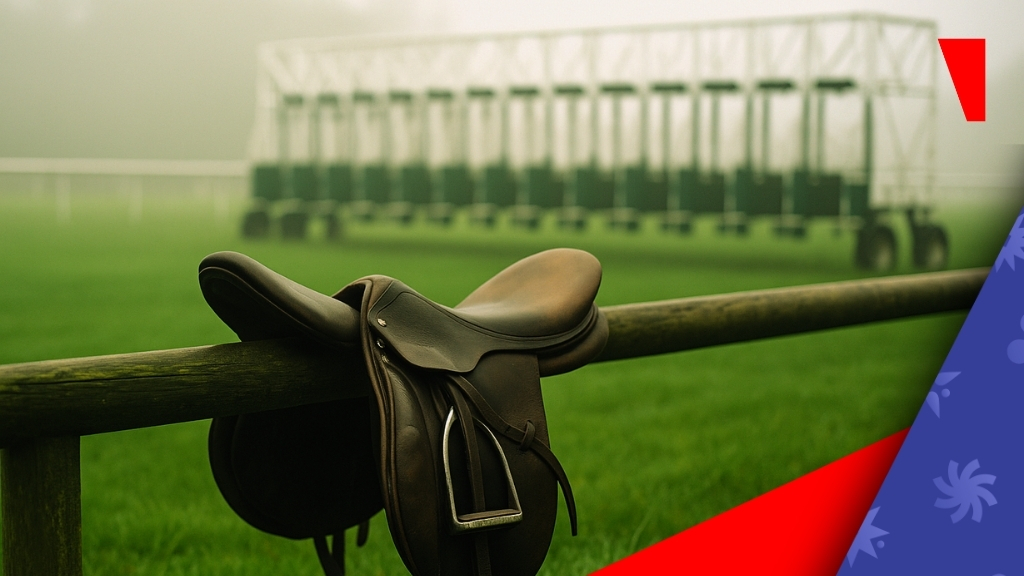
For the first time in its long and storied history, a British horseracing strike will bring the sport to a deliberate standstill. On 10 September, fixtures at Lingfield Park, Carlisle, Uttoxeter and Kempton Park will not take place. Instead, industry leaders, trainers, jockeys and owners will head to Westminster in protest.
Racing has escalated its campaign against the Treasury tax plan to change how betting on the sport is taxed with this extraordinary decision. As part of the ‘Axe the Racing Tax’ campaign, the British horseracing strike highlights what participants see as an existential threat to one of Britain’s most historic sports.
Racing usually fills the calendar on 363 days of the year. Cancellations occur only in exceptional circumstances, such as war, equine disease outbreaks, severe weather disruptions, or the COVID-19 pandemic. This time, the silence on the turf will be deliberate. It is a political statement, aimed squarely at Chancellor Rachel Reeves and the Treasury.
Breaking down the government tax plan
The Treasury has consulted on merging all online gambling duties into a single band. Sports betting, including horse racing, is currently taxed at 15 per cent of operator profits. Casino and slot games face a twenty-one per cent rate. Under harmonisation, betting would be raised to match gaming.
Officials frame the proposal as a simplification. They argue it is a way of cutting bureaucracy, not a raid on racing. A Treasury spokesperson said: “We are consulting on bringing the treatment of online betting in line with other forms of online gambling to cut down bureaucracy. It is not about increasing or decreasing rates, and we welcome views from all stakeholders.”
Racing does not accept that characterisation. Independent modelling commissioned by the British Horseracing Authority (BHA) suggests that the change could cost the sport £330 million over a five-year period. The analysis also warns of 2,752 jobs lost in the first 12 months alone.
The calculation is straightforward. If betting operators face higher tax rates, they will likely pass the costs on to punters by reducing bonuses, cutting marketing expenses, or offering less competitive odds. Racing fears that reduced turnover will flow directly into lower levy contributions, falling prize money, and job losses across training centres and rural communities.
Why refuse to race? Industry response
In an official statement, the British Horseracing Authority called for the cancellation of fixtures in protest at the government’s potential tax plans. Brant Dunshea, the BHA’s acting chief executive, said the planned British horseracing strike was the most effective way to highlight the severity of the risk.
“We have decided to cancel fixtures on 10 September to show the government the consequences of the Treasury’s tax proposals, which threaten the very future of our sport. This is the first time British racing has chosen not to race because of government policy.”
The move has drawn backing from some of the sport’s leading trainers. Ralph Beckett described the move as “brilliant, really good news” and argued it should have happened earlier. John Gosden warned that harmonisation could “kill communities” by removing the economic lifeline that racing provides to towns and villages. Sir Mark Prescott captured the mood simply: “Your own troops have to feel you are doing something,” a reminder that solidarity can lift spirits as surely as prize money.
Two giants of the turf, the Jockey Club and Arena Racing Company, guardians of more than thirty courses, have shuffled the fixture list to keep the rhythm of the season alive. Jim Mullen of the Jockey Club said, “We hope the government will take a moment to reflect on the harm this tax will cause. After this pause, we hope the full implications will be understood and we can prevent irreparable damage.”
For once, a sector often divided on governance and funding, as seen in past debates over whether racing is being taxed into decline, has found a rare consensus. Owners, trainers, jockeys and course operators are standing side by side. On 10 September, the action will shift from the racecourse to Westminster.
Economic and social consequences of the British horseracing strike
Analysts estimate the immediate cost of the British horseracing strike at about £700,000. That covers lost betting revenue and operational disruption. In the longer term, the stakes are far higher.
Each year, the industry delivers £4.1 billion into the UK economy. It supports 85,000 jobs. Nearly 5 million people attend race meetings annually, making it Britain’s second most popular sport after football. Racecourses drive tourism, sustain pubs and hotels, and keep rural communities alive.
Betting firms have warned of knock-on effects. Flutter, the parent of Sky Bet and Paddy Power, said a tax rise would force it to rethink its racing investments. Its racing strategy director, Sebastian Butterworth, added that some commitments are already under review and warned that any increase would hit funding hard.
The Betting and Gaming Council (BGC), which represents licensed operators, has taken further action. In a strongly worded statement, it called the strike a “futile political gesture” and complained of a lack of consultation. “Higher costs and avoidable disruption risk driving customers to the unsafe, unregulated black market, which pays nothing to racing or the Treasury and offers no protection for consumers,” the BGC said. Some MPs have echoed those concerns, warning that tax hikes could unintentionally hand more power to unregulated markets.
Operators point to their own contribution. The regulated industry generates £6.8 billion for the economy, with £4 billion in tax, and £350 million directly to horseracing each year. They argue that antagonising the Treasury will not protect that flow of money.
Historical context
Racing has endured interruptions before, but never like this. Prize money disputes led to boycotts at Newbury in 2022 and at Lingfield and Fontwell in 2019. In 1975, stable staff went on strike. None of those events cancelled the entire sport for a day.
By custom, racing authorities agree to leave deliberate blank days in the calendar at Christmas. The British horseracing strike is the first voluntary stoppage aimed at influencing government policy.
Other sports have used strikes as leverage. Major League Baseball in the United States lost its entire 1994 season. The National Football League has faced stoppages over pay and conditions. Welfare disputes in Australia have led to the shutdown of racing. The difference is that British racing is protesting not its own governance, but a government tax policy.
The politics of sport
The timing is deliberate. The strike comes the day before the St Leger Festival at Doncaster, one of the most prestigious meetings in the calendar, which ends with Britain’s oldest classic horse race. First run in 1776, the St Leger carries the weight of centuries. It closes the season’s great quintet of Classics, the last of the five to thunder into the record books, and its stretch of turf runs longer, deeper, than any of the others.
Prime Minister Keir Starmer attended the St Leger last year with his wife Victoria, a keen racing fan. Yet racing’s demand this September goes far beyond being heard in passing. It is a call for action, not ceremony. Instead of shaping policy through handshakes at private functions and closed-door dinners, politicians must take the warnings of communities and seasoned stakeholders seriously.
The plan to harmonise tax rates was first floated under Rishi Sunak’s Conservative government. Labour has carried it into office. This continuity reveals how Treasury thinking transcends party lines. For racing, that makes the battle harder, since it cannot rely on a change of administration to shift policy.
Yet the strike shows racing is unwilling to leave the argument behind closed doors. For decades, sport has lobbied quietly. This time, it is staging a public protest to expose what it sees as a “tax grab.” The rhetoric echoes recent farmers’ protests across Europe, where tractors rolled into capitals to block roads. Like them, racing wants visibility, not secretive deals.
Critics argue that sport should not dictate tax policy. But supporters see it differently. They claim that the government has misjudged the importance of racing to rural economies and heritage. The strike is therefore not just about tax; it is about power, leverage, and cultural value.
What happens next
The four lost meetings have been rearranged across the week of the strike. Lingfield will now run on 8 September, Carlisle on 9 September, Uttoxeter on 11 September, and Kempton on 15 September. The Kempton evening meeting, initially planned for 15 September, will now take place on 18 September.
The Westminster rally will run on 10 September. Industry leaders will present their case directly to politicians. Petitions and campaigns to email Members of Parliament are already live. The Axe the Racing Tax portal urges fans to tell MPs the consequences for jobs and communities.
The ultimate decision rests with the Treasury. Chancellor Rachel Reeves will deliver the Autumn Budget in October. That is when the government must decide whether to push ahead with harmonisation, adjust the rate, or find a compromise. Options include raising both betting and gaming duty but adjusting the Levy to protect racing. Think tanks have even suggested a fifty per cent rate for gaming and twenty-five per cent for betting, though that proposal is not policy.
If no compromise is found, this strike may just be the first of many. Some trainers warn that without progress, direct action could become part of racing’s playbook. Others warn that further disruption will alienate punters.
A message beyond the turf
The British horseracing strike will be remembered as a watershed moment. It is the day a centuries-old sport stopped itself to confront fiscal policy. Only time will show whether the government bends.
What is certain is that horseracing has changed the conversation. By moving from quiet lobbying to public protest, it has put the Treasury on notice. The question now is whether those in power will see the strike as an irresponsible gesture or as a defence of heritage, community and economic survival.
On 10 September, the racecourses will fall silent. For British horseracing, the decision is unprecedented. A sport that runs almost every day of the year has chosen to stop itself.
This protest defends more than fixtures. It fights for funding, jobs, and the survival of a sport rooted in rural Britain. It also challenges the betting operators who sustain that funding, now under pressure from higher costs and harder choices.
Whether ministers treat this as a serious intervention or a stunt, the stakes could not be more obvious. The silence of the racetrack may yet prove the loudest message Westminster hears.


