
Canada’s sports betting activity shows notable decline: report


Canada saw a modest decline in sports betting, with engagement falling more sharply than in the United States, according to a recent market report by Leger. Sports betting, which allows individuals to place wagers on the outcome of sporting events, has become a mainstream form of entertainment in North America over the past decade.
However, new data suggests that Canadian engagement is still declining, while the United States continues to lead in overall participation.
Participation falls sharply
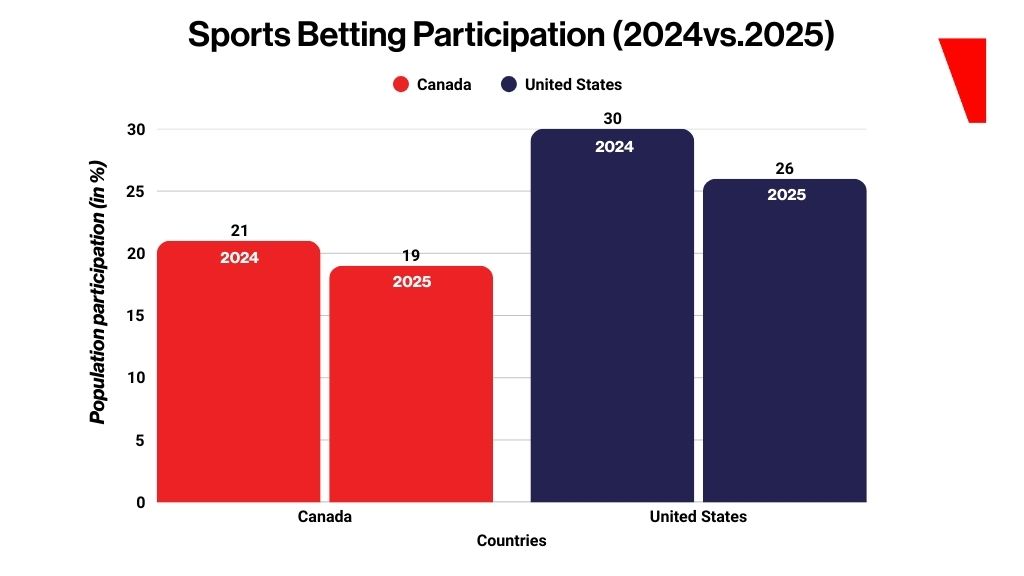
In the first few months of 2025, 19 percent of Canadian adults, or approximately 5.9 million people, reported placing a sports bet. This marks a decrease from 21 percent, or 6.6 million adults, in 2024.
By comparison, 26 percent of American adults, or 68.4 million people, engaged in sports betting during the same period, which is still down from 30 percent the previous year. While both countries have seen a decline, the reduction among Canadians is proportionally greater.
Different sports, different preferences
The types of sports that attract bettors also differ between the two nations. In Canada, ice hockey dominates, with 59 percent of sports bettors wagering on the National Hockey League.
On the other hand, 72 percent of American gamblers wager on NFL games, indicating that the league is their top attraction. There have been some changes over the past year, according to trends: Major League Baseball has become more popular among Americans, while NFL betting has decreased across Canada.
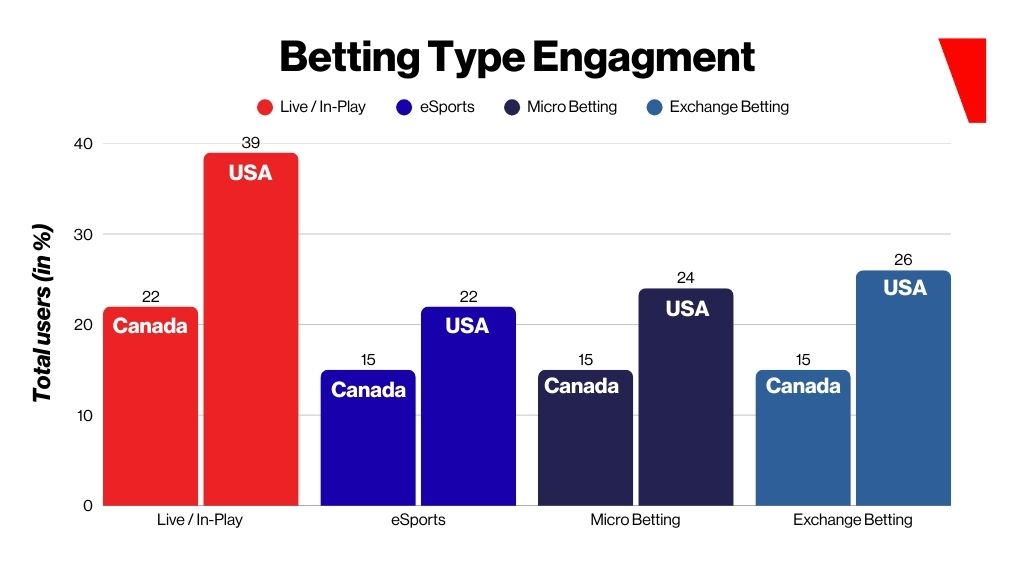
Beyond traditional bets, American players are more likely to engage in alternative and niche betting types. Live or in-play betting gained far more traction in the United States, where 39 percent of bettors participated, compared with just 22 percent in Canada. American players are also more engaged with newer forms such as eSports, micro betting and exchange betting, suggesting a wider appetite for varied wagering options.
Advertising, demographics and online betting
Attitudes toward advertising and media partnerships also differ. Canadians are more likely to feel overwhelmed by sports betting promotions, with 75 percent of those exposed to adverts saying the volume is excessive. In the United States, 59 percent of bettors shared this sentiment. A majority of Canadian bettors, 51 percent, also oppose alliances between sports television channels and betting companies, a view held by just 30 percent of Americans.
Despite these differences, some influences are consistent. Nearly half of sports bettors in both countries say that seeing real-time odds on screen increases their likelihood of placing a wager, 49 percent in Canada and 48 percent in the United States.
Men continue to dominate the sports betting market in Canada, making up 75 percent of all bettors, compared with 62 percent in the United States. However, Canadian bettors are also more likely to be employed, with 80 percent employed against 67 percent in the US, and on average they report higher household incomes.
The decline in Canada comes despite a growth in online betting. According to a 2022 report, following the launch of a regulated online gambling market in Ontario, one-third of adults in the province report being registered on at least one betting platform, which is slightly above the national average of 30 percent. However, the market is increasingly getting saturated, suggesting that engagement may be more driven by advertising than sustained participation.


