


Crypto goes global; expertise hasn’t: Industry leader

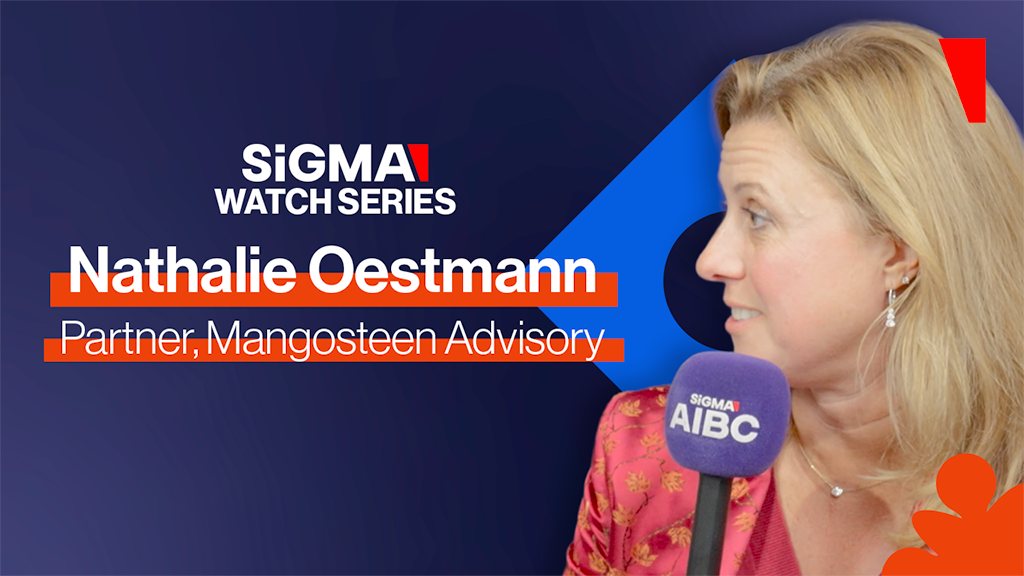
Crypto payments are rapidly entering the financial mainstream, yet most businesses still lack the expertise to use them effectively, said Nathalie Oestmann, Partner at Mangosteen Advisory, at the SiGMA Central Europe 2025.
This comes at a time when crypto adoption across gambling, gaming, and digital commerce is accelerating at a record pace, reshaping payment expectations and regulatory priorities worldwide.
Oestmann, who has spent years advising global firms on digital payments, said the most striking shift today is how crypto has moved from a fringe technology embraced by “anarchist” degens (a slang term referring to early crypto builders and enthusiasts) to an accepted, practical method of moving money worldwide.
“At first, crypto payments were the on-the-side, not very accepted digital form of money,” she said. “Now, things have changed. The benefits of crypto payments have been understood by the traditional world. It is a new form of how to pay. It gives you a lot of flexibility across the world. It’s global.”
Industry momentum reinforces her point. Crypto gambling alone is projected to push the market to $81 billion in 2025, driven by stablecoins, blockchain interoperability, and expanding play-to-earn ecosystems. This surge has normalised crypto as a mainstream payment rail, especially among younger, mobile-first consumers who now expect faster, borderless transactions.
The knowledge gap
Despite adoption accelerating across gaming, retail, finance, and payments, Oestmann said the biggest barrier she sees “day to day” is simply a lack of understanding inside companies.
“All of these industries that have understood the benefits don’t have the expertise,” she explained. “There’s a lot of education that has to happen now.”
She added that much of her work involves helping companies understand use cases, build strategies, and learn how modern crypto stacks work. “You need to learn, you need to have a vision set forward for you,” she noted.
This capability gap is becoming increasingly visible in highly regulated sectors such as iGaming, where operators must now navigate real-time KYC expectations, anti-money laundering (AML) requirements, and the upcoming Markets in Crypto-Assets (MiCA) transition in Europe. Compliance firms warn that outdated verification processes cannot keep up with the speed at which crypto transactions occur.
‘Start small, and hire crypto natives’
For businesses wanting to turn ideas into real impact, Oestmann urged leaders to experiment rather than wait for a breakthrough moment. “Start small. That’s my biggest advice. Just go out there and try,” she said. “Implement something. Test. Teach some of your employees.”
She also encouraged executives to bring crypto-native talent directly into decision-making spaces: “Hire some of these what we call Degens from the crypto, the crypto natives. Have them sit next to you. Have them in your board meetings telling you what’s happening in the industry because there’s a lot happening right now and it’s moving very fast.”
Oestmann compared the moment to the early 2000s, when companies hired “web natives” to navigate digital transformation. “Now you’re doing the same with the crypto natives,” she said.
This shift echoes the broader trend seen across European sport and gaming, where crypto companies are rapidly embedding themselves into mainstream culture. More than a third of major European football clubs now carry sponsorships from crypto or online trading firms, a sign of how deeply industry knowledge and crypto-native branding have penetrated public visibility.
Regulatory clarity uneven, UK ‘left behind’
Looking ahead, she argued that the next wave of fintech innovation hinges on clearer rules from governments. While the EU and the US have made significant progress, other markets lag. “What we’re seeing right now is that Europe and the USA have provided regulatory clarity,” she said. “But a lot of countries like the UK still do not have that clarity on what it means to own crypto, trade crypto.”
She noted that the UK has been “left behind a little bit” and may only catch up in 2026. Meanwhile, South America and parts of Asia remain inconsistent, with some jurisdictions offering clarity and others none.
Last month, the UK Gambling Commission took a decisive step and publicly urged the government to make a definitive decision on whether crypto can be integrated into the regulated gambling system, warning that younger demographics are already shifting toward digital asset payments.
Technology races ahead of governments
Oestmann warned that regulators are falling behind, even as crypto adoption grows across global industries. “The government’s telling us what to do and not do…is not catching up. But the technology definitely races ahead,” she said. “The longer you wait, the more people are going to do whatever they want, and it’ll be harder for you to reign it in.”
This regulatory lag means a growing divergence between compliant and grey-market environments. Under MiCA, stablecoin and crypto service rules are already tightening across Europe, but in markets like the UK, uncertainty allows unlicensed offshore crypto casinos and exchanges to gain traction, a trend that increases consumer risk and complicates enforcement.
As crypto payments mature into a global standard, Oestmann’s message is clear: companies must learn fast, experiment early, and build internal expertise, or risk being left behind by a financial system evolving at unprecedented speed.
Step inside the world’s biggest iGaming community. Join HERE for weekly updates from the world’s iGaming authority and unlock subscriber-only offers.


