


Digital ecosystems and the race for national competitiveness

As nations around the world scramble to remain competitive in an increasingly digital age, a new paradigm is evolving: the digital ecosystem, a web of regulation, human capital, public-private partnerships and immersive technologies like the metaverse and Web3. For many countries, the path to economic strength will be shaped less by traditional manufacturing or natural resources, and more by how effectively they build and nurture their digital infrastructures.
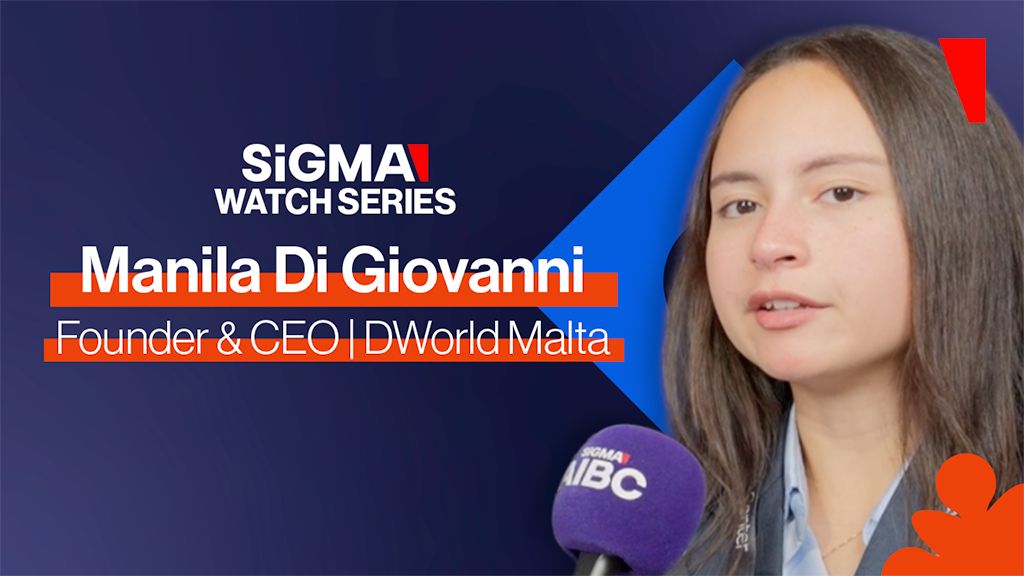
Speaking at SiGMA Central Europe 2025, Manila Di Giovanni, Founder & CEO of DWorld Malta, offers insight into how this shift is unfolding, and what it could mean for nations that embrace it.
Drivers of national growth
Di Giovanni believes that the strength of a country’s digital ecosystem increasingly determines its ability to scale innovation and economic opportunity. She notes that successful digital transformation relies on two core ingredients: the right regulatory environment and strong investment in human capital.
“There are different incentives for a startup to grow and to scale up,” she explains. “Some of the key factors to support the digitalisation of a nation are the willingness to put in place the right regulations and investment in human capital formation.”
She highlights Malta as an example of an advanced digital ecosystem, where DWorld is helping to build a national metaverse training programme aimed at equipping citizens with future-ready digital skills. This strategy supports the development of new projects and startups while also attracting foreign talent seeking to participate in Malta’s evolving virtual economy.
“Our role is to be that bridge between the public sector and the enterprises, the citizens and the foreign talents that want to take part in this whole new digital economy,” she adds.
Collaboration and long-term vision
Introducing technologies such as the metaverse or Web3 at a national scale requires unprecedented levels of collaboration between government, industry and society. According to Di Giovanni, the most important factor in successful cooperation is mindset.
“Well, the mindset of the people that you are interacting with,” she says. Governments that think beyond short-term cycles hold a clear advantage.
“The vision of a country to see forward, not just within the first two or three years, but way more forward, like in 2040, 2050, even 2070, is a key competitive advantage.”
She observes a growing global race among nations aspiring to become smart cities of the future. Those willing to take calculated risks and challenge traditional approaches to digital innovation are better positioned to lead.
From awareness to implementation
Having worked with multiple governments, Di Giovanni emphasises that effective adoption requires reframing how stakeholders understand the value of these technologies. Early in her career, she avoided using the term metaverse because it often generated confusion.
“I always use the term virtual economy because you need to make different stakeholders understand the actual potential of the technology,” she explains. For DWorld, the priority is demonstrating tangible economic and social value. Their platform allows countries to promote themselves through virtual counterparts of entire nations, enhancing tourism, attracting talent and creating new revenue channels.
Enterprises can establish a presence within these virtual nations, moving beyond passive two-dimensional websites to immersive environments that reshape user experience. “That is where extra sales can be made with a solution that is borderless,” she notes, highlighting how virtual ecosystems bypass physical limitations and open access to global audiences.
Regulation, innovation and inclusivity
As digital twins and metaverse platforms gain traction, countries face the challenge of balancing innovation with regulatory safeguards. Di Giovanni stresses that regulation should serve as an enabler, not an obstacle.
“In Europe, regulation should not hinder innovation but enable it,” she says. She commends Malta for its early leadership in regulating blockchain and crypto assets, giving startups room to experiment without fear of excessive sanctions.
A collaborative culture between public and private sectors is essential. Di Giovanni advocates for wider use of sandboxes that allow startups to test ideas, make mistakes and refine solutions before broader deployment. “It is very important to have a collaborative mindset in order to bring forward the next digital economy,” she concludes.
Step inside the world’s biggest iGaming community. Join HERE for weekly updates from the world’s iGaming authority and unlock subscriber-only offers.


