

Dominican Republic weighs cruise casino licences worth up to DOP 1.5 million

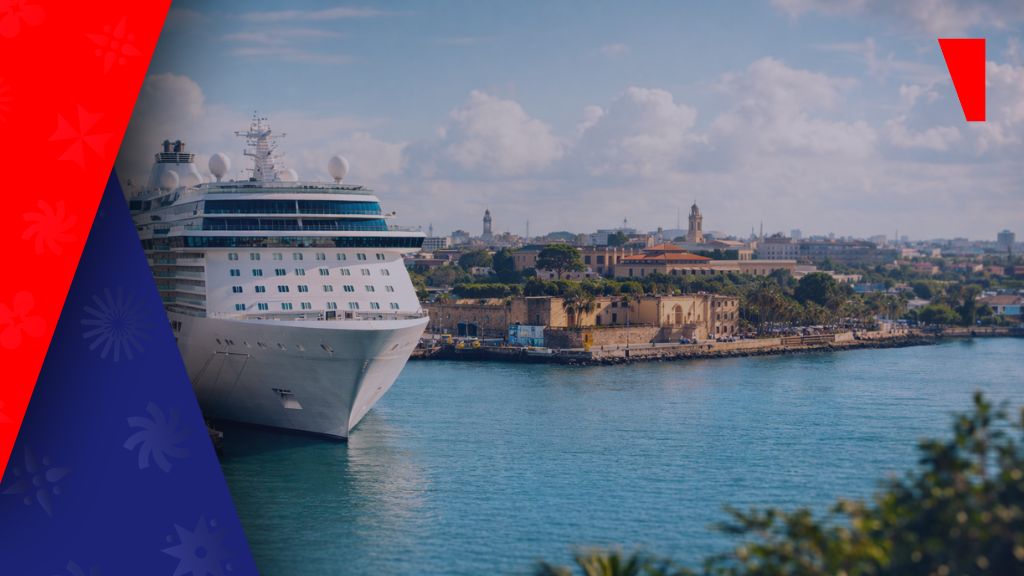
The Dominican Ministry of Finance and Economy has proposed that first-class cruise ships offering casinos pay specific licensing fees to operate in Dominican waters. The draft regulation also sets a compliance bond of DOP 20 million (roughly $319,000) and a tiered annual fee structure. In practical terms, cruise operators will need to revisit their business models if they intend to keep onboard gambling active while sailing through Dominican territorial waters.
First regulatory step in cruise tourism in the Dominican Republic
According to the draft, which is now available for public comment, all first-class cruise ships, defined as those that have a casino or gaming area and can accommodate more than 2,000 passengers, must apply for a Dominican licence. The rule applies when the vessel remains in national waters for at least six hours. In practice, onboard gaming would no longer be treated as a mere leisure amenity but as a formally authorised activity.
This marks the Finance and Economy Ministry‘s first measures directed specifically at the cruise tourism segment. According to official figures, 788 ships with 2,815,732 passengers docked in the country in 2025. Overall, the government is targeting a growing sector with an increasingly visible role in the tourism flow.
The ministry justifies the new rule by citing risks tied to the potential misuse of cruise ship casinos for illicit purposes. The document argues these venues deserve the same regulatory treatment as high-end hotel casinos operating in Dominican maritime territory.
“Countries must require designated non-financial businesses and professions (DNFBPs) to identify, evaluate, and effectively mitigate their money laundering and terrorism financing risks, implementing AML/CFT programs accordingly,” the draft states.
One licence per ship, valid for five years
The proposal defines a first-class vessel as one carrying more than 2,000 passengers. Each licence would cover a single gaming room per vessel, with no extensions to other vessels by the same operator. In other words, each ship offering casino services would require its own individual authorisation.
Once granted, the licence would remain valid for five years and could be renewed at 50% of the current rate. Authorisation is limited solely to that casino facility while the ship sails or docks in Dominican waters. As a result, operators would need to plan their financial and contractual timelines around those five-year cycles.
Economically speaking, the scheme blends a security bond with issuance fees scaled to each ship’s size. The compliance bond is set at DOP 20M ($319,000) and must be deposited with the Directorate of Casinos and Games of Chance. That figure narrows the field to operators with financial backing and appetite for the regulatory and reputational risk of offering gambling at sea.
Tiered annual rates by number of gaming tables
Licence issuance fees start at DOP 1M ($15,960) for ships carrying between 2,000 and 3,499 passengers. The rate rises to DOP 1.5M ($23,940) for vessels with 3,500 passengers or more. Ultimately, the cost of entry into Dominican waters scales with the ship’s size and capacity.
On top of that come the annual operating fees, tied to the number of gaming tables. Casinos with 1–20 tables will pay DOP 600,000 ($9,577) per year; those with 21–40 tables, DOP 700,000 ($11,170); and from table 41 onward, DOP 800,000 ($12,770) annually. The logic is clear: larger setups pay more, and every operator has to weigh the number of tables against the cost curve.
The regime also caps each licensed vessel at 15 annual entries into Dominican waters. Each additional port call will cost another DOP 15,000 ($240). As a result, the frequency of those stops becomes a tangible cost factor for cruise lines running active casinos.
Public consultation on onboard casino licenses
The proposed resolution is now open for public consultation from Thursday, January 22 2026, through Thursday, February 19 2026. The government expects industry stakeholders to submit technical feedback before the final approval. In essence, this window offers cruise lines a last chance to tweak operational or administrative plans before the rulebook is set.
Looking ahead, the draft demands strict documentation from applicants. Foreign cruise operators or concession holders must submit certified, apostilled, and court-translated documents in Spanish, with signatures legalised by the Office of the Attorney General.
All fees will be indexed to 100% of the Consumer Price Index. Put simply, operators must factor inflation adjustments and renewal deadlines into their long-term profitability models if they plan to keep their casino floors open in Dominican waters.
This article was first published in Spanish on 9 February 2026.
Join the world’s biggest iGaming community with SiGMA’s Top 10 News countdown. Subscribe HERE for weekly updates, insider insights, and exclusive subscriber-only offers.


