


Exclusive: Ricardo Bianco Rosada on building a more mature iGaming market in Brazil

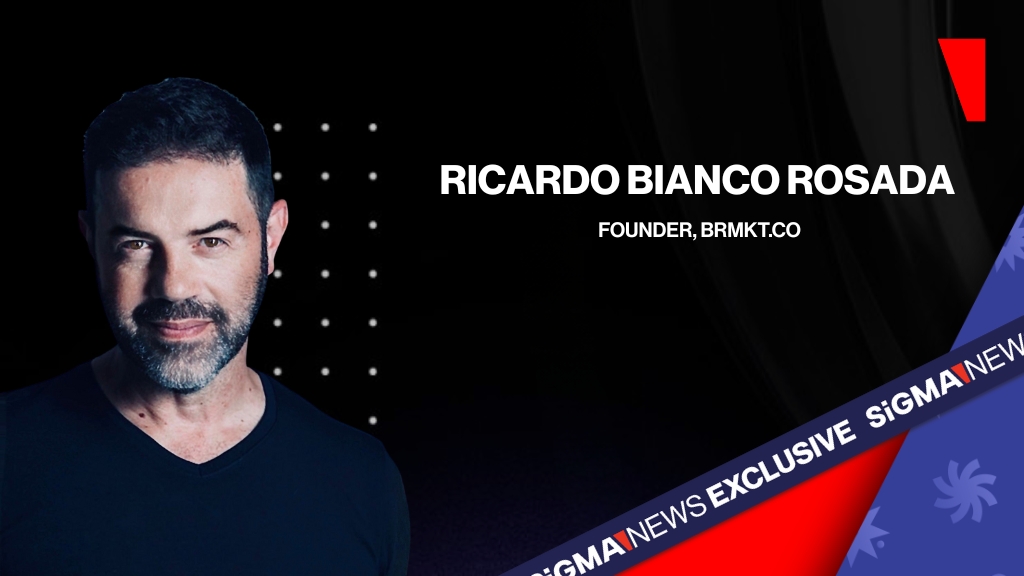
In a market experiencing enormous growth, rapid acceleration, and regulatory maturation, few executives and professionals in the field accumulate as much practical experience and strategic vision as Ricardo Bianco Rosada. Founder and Head of Strategy at brmkt.co and Co-CEO, Board Member and Co-Founder of Bell Ventures, Ricardo has worked for over two decades in strategy, marketing, product, and business development. Presently, his focus is on iGaming.
Today, his work is about reducing uncertainty. Throughout his career, Ricardo has worked with more than 50 major brands in sectors such as financial services, technology, industry, retail, and gaming. His experience ranges from global brands like Itaú, Bosch, Heineken, and Coca-Cola to iGaming brands such as Betboo, Bodog, galera.bet, and BandBet. In total, the projects led or advised by him generated more than USD$2.2 billion in revenue.
If he had to summarise his professional journey in one word, Ricardo would choose curiosity. From the founding of his first agency in 1999 to his current role as executive and adviser, he has maintained a constant learner’s mindset, studying, testing, failing, and adjusting. This cycle, according to him, can never stop. His relationship with iGaming began early. In 2001, when the sector was still in its infancy in Brazil, he participated in the development of brands such as Play Bingo and Play Video Bingo, under state licences. A few years later, he helped create Betboo, a brand that would be sold to GVC (currently Entain) and which, symbolically, returned to Brazil in the regulated market with the same name, more than 20 years later.
In 2017, after leaving the traditional agency, he founded brmkt.co, already with the aim of being a strategic consultancy focused on highly complex markets, such as finance, payments, technology, e-commerce, and iGaming, which he today defines as his passion.
Anticipating trends as a survival strategy
As co-founder, overseeing Marketing, Branding, PR, Customer Experience, and Business Development at galera.bet, Ricardo led a series of initiatives that at the time seemed excessive in an unregulated market, but which today are standard. All this was a great professional leap for him. Among these “excessive” initiatives is the implementation of KYC with CPF validation during onboarding, AML policies aligned with Central Bank practices, the use of PIX in a closed loop, as well as the creation of a 100% Brazilian customer service. Another important milestone was the development of the first open TV programme in Brazil focused on responsible gaming, in partnership with RedeTV.
For Ricardo, anticipating trends is not a luxury; it is survival. And this mindset would also shape the following chapters of his trajectory.
Regulation, compliance, and the fight against the illegal market
With federal regulation finally in place, the Brazilian iGaming market has entered a new phase. Data released by the Secretariat of Prizes and Betting (SPA) indicate that, in 2025 alone, the country had around 25 million players and an approximate GGR of R$36.9 billion. Even so, the illegal market is expected to remain almost the same size as the regulated market.
For Ricardo, combating illegality requires the education of players, legislators, the press, and the industry itself. Compliance, which previously lived in the back office, now occupies the forefront of strategy. Governance, auditing, behavioural monitoring, and intervention protocols have ceased to be accessories and have become part of the core of the business.
The new marketing: fewer bonuses, more legitimacy
The new advertising restrictions were not seen as a problem, but as a relief by Ricardo. He says he has never been an enthusiast of aggressive bonuses and empty offers, which inflated short-term metrics but did not build real value. With the end of the bonus as the main acquisition engine, the market was forced to mature. Media costs rose, the acquisition funnel needed to be redesigned, and marketing shifted from an artificial push to a process of building trust. Legitimacy became a performance asset.
“Nothing happens by chance. Every decision requires a balance between innovation, compliance, marketing, and responsibility. iGaming is a market that experiences a Black Friday every week. Operations never sleep. Competition is fierce. The client wants everything yesterday.”
Despite the frequently negative public discourse from society, Ricardo sees not a regulatory stigma but a social stigma fueled by misinformation. In his view, the sector has become a scapegoat for structural problems in the country, reinforced by simplistic narratives. The solution does not lie in defensive advertising, but in education, institutional coordination, and more unified communication from the industry. Branding, in this context, ceases to be purely aesthetic and becomes a brand stance.
“When a lie is repeated a thousand times, it starts to sound like the truth”, says Rosada. For him, this type of discourse works like sand in the eyes of a population that often does not have access to information or deeper analyses on how the sector works. The result is a shallow, emotional debate, poorly connected to data and regulation. Combating this stigma, however, is far from simple. And in the executive’s view, it is not solved with defensive advertising, generic press releases, or campaigns constantly trying to justify themselves. On the contrary, this type of approach tends to reinforce the perception of guilt or insecurity.
He highlights five fundamental pillars for building strong brands in Brazilian iGaming: positioning, authentic storytelling, education before conversion, memorable experiences, and purpose-driven innovation, points that also underpin Brazil’s Betting Report 2025, developed in partnership with Blask.
The first pillar is a clear and non-negotiable positioning. Brands need to make it explicit who they are, what they stand for, and where they do not compromise. In iGaming, this means making responsible gaming a central part of the value proposition, not a notice hidden in the footer of the site. Safety, predictability, and responsible entertainment need to occupy the centre of the narrative, surpassing the logic of aggressive promotions and empty promises.
The second pillar is authentic, not defensive storytelling. Brands that constantly try to justify themselves sound fragile and insecure. The path, according to Rosada, is to tell real, human stories connected to local culture. Showing positive experiences, long-term relationships with clients, and the role of conscious entertainment helps normalise the sector and create an emotional bond with the audience.
The third pillar is education before conversion. In a complex and still poorly understood market, educational content becomes a strategic brand asset. Explaining rules, limits, probabilities, risks, and best practices before the bet builds credibility. Those who educate before selling gain trust, and trust is the most valuable currency in iGaming.
The fourth pillar is the creation of memorable experiences, not merely transactional ones. Strong brands do not just offer bets; they create experiences. Exclusive events, recurring challenges, well-designed gamification, and loyalty programmes generate a sense of belonging. This belonging transforms users into a community, and communities tend to defend the brand organically, even in public debate.
Finally, Ricardo highlights purpose-driven innovation. Innovating is not just about adopting new technology, but using it intelligently and contextually. AI personalisation, more efficient journeys, products designed for the profile of the Brazilian player, and strategic partnerships demonstrate maturity. Innovation without purpose becomes noise; innovation aligned with responsibility becomes a competitive advantage.
The future of iGaming in Brazil
Looking at the next three to five years, Ricardo believes the market will not be defined by who has more media or bonuses, but by who builds structural advantage. Real brand differentiation, absolute focus on retention, regulatory maturity, excellence in user experience, and an inevitable wave of M&A should shape the sector.
“2026 will not reward those who spend more. It will reward those who think better, localise deeper, and retain longer.”
Finally, when speaking of legacy, he prefers to remember the practices he helped implement, the technical contributions to legislation, and the construction of relevant brands. His main goal is to leave a more professional, ethical, and sustainable market, where gambling is seen as responsible entertainment, not as a social villain.
And, as he himself mentioned, new chapters are yet to come. “Curiously, the more time passes, the more I want to build, learn, and provoke good discussions. This, for me, is the true legacy. And still speaking of legacy, I have two new ‘surprises’, stay tuned!” he says.
This article was first published in Portuguese on 4 February 2026.
Sign up HERE to receive the SiGMA Top 10 news list and the SiGMA weekly newsletter. Stay up-to-date with the latest iGaming news from the world’s largest iGaming community and take advantage of exclusive subscriber offers.


