


France: industry opposes online gaming, FDJ monopoly questioned

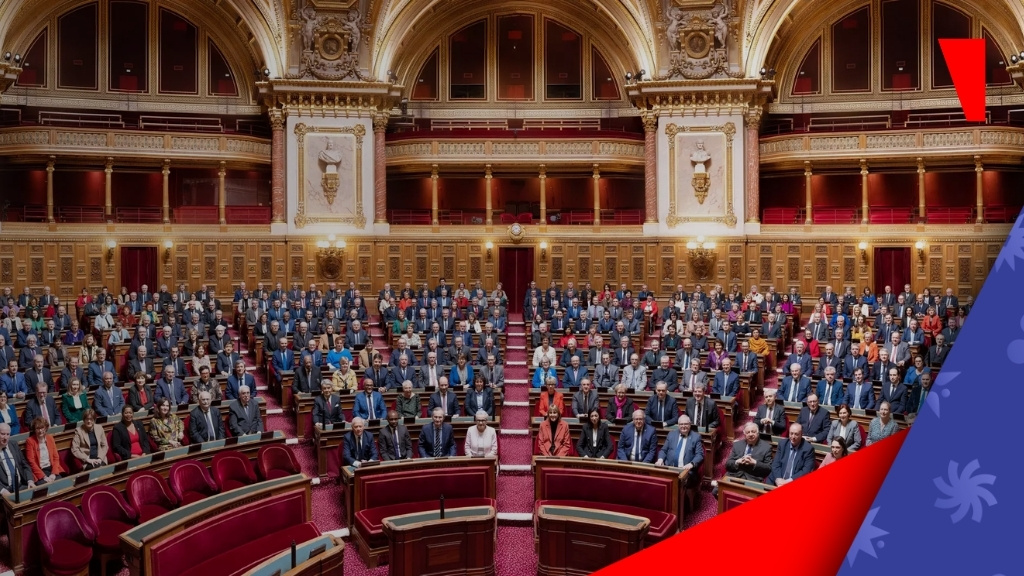
France’s gaming industry is increasingly concerned that aggressive taxation and the potential legalisation of online casinos could destabilise the sector. Meanwhile, senators and regulators have voiced warnings about monopolisation and growing market concentration. Speaking during a tense Senate hearing and roundtable, operators and lawmakers recently expressed growing anxiety over what they described as a “fragile equilibrium” under threat from rapid market changes and policy shifts.
“The gaming industry cannot absorb these new taxes”
The financial pressure on the sector has also intensified following a significant tax hike introduced in the 2025 Social Security Financing Law. Operators now face a 15% levy on online sports betting revenue and a 15% tax on marketing expenses, excluding sponsorship.
However, this tax increase, the industry argued, is not going to change consumer behaviour, nor will it discourage them from playing. “This is not behavioural taxation, as players are not affected in any way,” argued Stéphane Pallez, CEO of FDJ United. “It is a clear increase in the taxation weighing on the company.”
Pallez warned that the new fiscal burden has already taken a toll. “The year 2025 will be marked by an absence of growth, a first since 2019. The company lost around 20% of its market valuation when the impact of this measure was announced.”
Up to 67% taxation: industry sounds the alarm
Grégory Rabuel, president de Casinos de France, added: “Our sector is taxed on average at 58%, which represents more than 500 million euros in direct tax per year for the municipalities, to which is added more than 1 billion euros per year for the State and social security.”
Nicolas Béraud, president of the French Online Gaming Association (Afjel) and CEO of Betclic, echoed these concerns. “We have exceeded a problematic threshold where the financial sustainability of many operators is no longer guaranteed,” he told lawmakers. “The tax burden has risen to 67% for online sports betting, compared to between 10% and 35% in other countries.”
However, some lawmakers also defended recent policy shifts, arguing that stronger regulation and taxation are necessary to curb gambling-related harms and protect vulnerable players.
“We need to avoid adding new uncertainties,” Pallez urged, criticising recent tax increases and the prospect of further reforms proposed by the Council for Mandatory Levies (CPO), including a controversial idea to tax gambling winnings as part of personal income.
Despite these concerns, regulators and some senators pointed out that the French gambling market remains highly profitable, with total revenues reaching a record €14 billion in 2024, positioning France among the top gambling markets globally.
The online casino debate divides the gaming industry
Perhaps the most divisive topic is the possibility of legalising online casinos in France. While some argue this could help fight the illegal gambling market, others warn it would devastate existing operators.
Grégory Rabuel, president of Casinos de France, expressed concern about the competition this vertical could pose and did not mince words: “The illegal gambling persists in all countries that have legalised online casinos, which shows that this measure does not achieve the stated goal.”
Rabuel warned that authorising online casinos would be a “dramatic destabilisation” of the sector, estimating it could lead to the loss of 15,000 jobs and €450 million in tax revenues for the state and local authorities. “The ANJ has estimated that casinos could lose around 24% of their gross gaming revenue (PBJ) in this scenario,” he added.
“The online casino is probably the most addictive product in the entire sector,” added Falque-Pierrotin, cautioning that any legalisation would require “extremely strict regulation,” including caps on losses and potential restrictions for young adults aged 18 to 24.
However, Béraud argued that France could no longer afford to ignore the reality of the market. “The question is poorly posed because online casinos already exist,” he told senators. “Four million French people are already playing on these sites, generating an estimated €2 billion in gross gaming revenue.”
He pointed to countries like Denmark, where a regulated opening “has worked rather well” in reducing illegal gambling.
Monopoly fears and the FDJ’s expanding influence
Much of the discussion focused on FDJ United, formerly the state lottery Française des Jeux, which has significantly expanded its influence following the acquisition of Kindred, a major European online gaming operator.
“The acquisition of Kindred by the FDJ profoundly changes the scope of the company,” Falque-Pierrotin, president of the National Gambling Authority (ANJ), stated, stressing FDJ’s dual role, operating both a legal monopoly on lotteries and now competing in the online market.
“This development accentuates a major difficulty that we had already identified, namely the conflict of objectives inherent in the FDJ’s duality,” the ANJ president explained. “On the one hand, the monopoly requires limiting the gaming offer to better protect players. On the other, as a listed company, the FDJ logically pursues growth and profitability objectives for its shareholders.”
These concerns were echoed by several senators during the hearing. Christine Lavarde, Senator for Hauts-de-Seine and a member of the Senate Finance Committee, explained: “I was quite surprised that the merger between La Française des Jeux and Kindred, a European leader in online gaming, was authorised. We now face a single-player presence both in the online and physical gaming markets.
“As a result, does the State still have the tools to exert real pressure on such a giant? Before this deal, a form of competition existed, with operators encroaching on each other’s turf. That is no longer the case: one operator dominates the entire spectrum.
“In this context, to what extent do the favourable conditions granted to FDJ during its privatisation now hinder effective regulation? And don’t they also risk undermining the goal of protecting players, especially the most vulnerable?”
While FDJ openly embraces its growth ambitions, recently stating its goal to become “Europe’s leading responsible betting and gaming operator, based on a more diversified, more digital and more international business portfolio,” the newly restructured gaming giant is also reaffirming its commitment to responsible gaming and sustainability. The group has pledged to “continue to reduce the proportion of its revenue attributable to high-risk players, and to raise the level of its voluntary contribution to social and environmental causes to 5% of the Group’s reported net profit by 2030, compared with 2.7% in 2024.”
“The situation calls for a thorough overhaul”
The fate of the PMU, the historic horse racing betting operator whose declining fortunes concern lawmakers and regulators alike, was also discussed during the hearings.
Isabelle Falque-Pierrotin, president of the National Gambling Authority (ANJ), acknowledged the PMU’s precarious position. “The PMU remains a French gem, a form of national excellence,” she told senators. But she warned that its business model is “eroding” due to a “lack of investment” and an “ageing customer base”.
“The current situation calls for a thorough overhaul, not marginal adjustments,” Falque-Pierrotin added, confirming that the ANJ was ready to support the industry as it awaits the conclusions of an inspection by the General Inspectorate of Finance.


