


Report finds Gen Z turning to gambling for quick wealth


Inflation, growing housing expenses, student debt, and a competitive job market are all part of the uncertain financial environment that young Americans must navigate. The Northwestern Mutual 2026 Planning & Progress Study states that many members of Generation Z are investigating unorthodox methods of accumulating wealth, such as cryptocurrency, prediction markets, and sports betting. Almost one-third of young individuals between the ages of 18 and 29 are either considering or have already taken financial risks on these sites.
The study, conducted by The Harris Poll with 4,375 US adults in January 2026, paints a complex picture of Americans’ financial mindset. While financial confidence is gradually improving and more people report feeling secure than in previous years, many still worry about falling behind their goals.
Key statistics that reveal trend
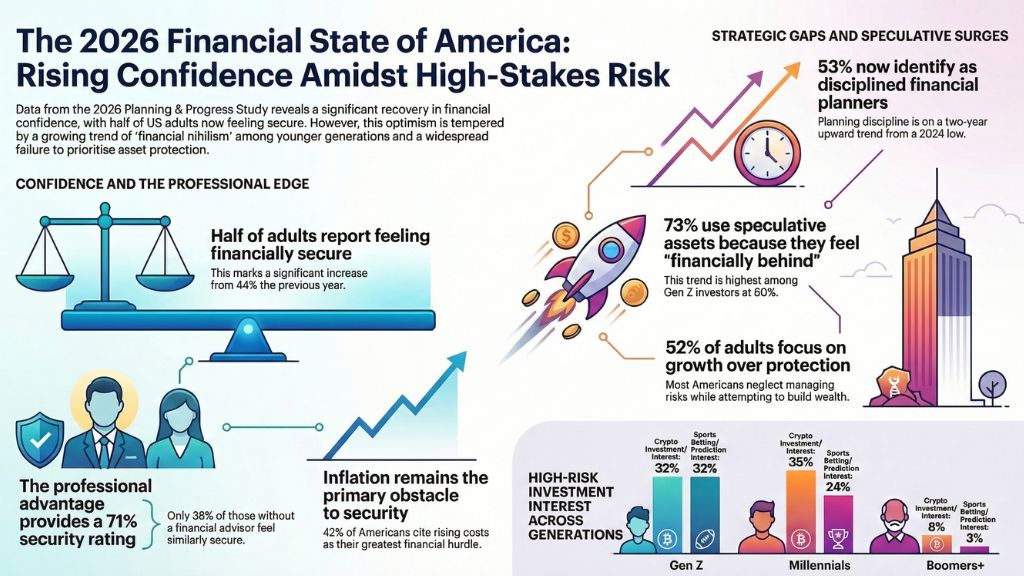
According to the report, over 32 percent of Gen Z participants stated they have engaged in or are thinking about investing in sports betting or prediction markets, viewing them as more than just entertainment. Among those using speculative platforms including betting, prediction markets, or cryptocurrency. 73 percent believe these options provide a faster route to financial goals, with that figure rising to 80 percent for Gen Z.
At the same time, broader financial confidence is improving. Half of American adults now report feeling financially secure, up from 44 percent the year before. Boomers remain the most confident at 57 percent, but Millennials and Gen X showed the strongest gains, reaching 53 percent and 48 percent respectively.
The study also found a clear gap between those who seek professional help and those who don’t: 71 percent of people working with financial advisers feel secure, compared to just 38 percent without one. Reflecting this, disciplined financial planning is making a comeback, with 53 percent of adults now identifying as structured planners, continuing an upward trend since 2024.
Rise of financial nihilism and speculative investing
Gen Z is increasingly treating speculative investments as part of their financial planning rather than just entertainment. Sports betting is being approached like a market, with odds and statistics analysed much like stock data. In contrast, prediction markets allow trading on real-world events such as elections or economic outcomes.
At the same time, nearly 39 percent of Americans are invested in or considering high-risk assets like cryptocurrencies, sports betting, options, and meme stocks. Many say this is driven by feeling financially behind, with 73 percent overall and 80 percent of Gen Z, believing these platforms offer a faster path to their goals than traditional methods.
Cryptocurrency remains the most prominent of these tools, valued for its accessibility and constant trading opportunities but also marked by extreme volatility. A similar feature in sports betting, prediction markets, and cryptocurrency is a change in perspective: risk-taking platforms are increasingly viewed as acceptable means of pursuing financial advancement, despite the fact that their unpredictability makes them unstable in comparison to conventional techniques.
Gen Z reshaping US iGaming
Gen Z is quickly becoming one of the most talked-about segments in the US online gambling conversation, and the numbers behind the market they’re entering are nothing short of staggering. As Blask reported, the US online gambling market reached ~$79.8B in 2025, making it by far the largest in the world by CEB. The country is home to over 121 million internet users, and 18.1 percent of the population is aged 14 or younger.
In terms of what’s capturing player attention, Live Dealer Online Casino leads interest at 12.9M, followed closely by Fantasy at 11.9 million and Online Casino at 9.3 million. The picture is clear: Gen Z isn’t just entering the US gambling market; they’re actively reshaping what it looks like.
Data from prediction market traders
Data from prediction market platforms shows that most traders fail to make lasting profits. Only about a third earn anything, and most of those gains are under $100, while nearly two-thirds lose more than they invest. Surveys, however, point to a more general problem: more than half of respondents acknowledge that they prioritise accumulating wealth over safeguarding assets, with Millennials and Gen Z showing the biggest disparity.
Unlike traditional investing, which builds on steady growth over time, speculative markets rely heavily on timing and luck. Even proficient traders find it difficult to maintain gains, and advisers frequently liken this type of investment to poker, where some players win but the majority lose.
Return of financial optimism
Surveys in 2026 highlight several financial trends. Over half of Americans (53 percent) now identify as disciplined planners, showing growth in budgeting, saving, and diversified investing. 71 percent of people working with advisers feel secure compared to 38 percent without.
Homeownership remains central, with 75 percent viewing it as essential for building wealth. Optimism among non-homeowners rose to 42 percent, up from 33 percent last year, especially among Gen Z (54 percent) and Millennials (47 percent). Parents are prioritising housing support, with 74 percent planning to help their children buy homes, and 29 percent ranking it above college funding.
Be part of the action! Join the world’s biggest iGaming community with SiGMA’s Top 10 News countdown. Subscribe HERE for weekly updates, insider insights, and exclusive subscriber-only offers.


