


AI and the new mantra for responsible gaming: empower

Artificial intelligence (AI) is fast becoming the backbone of responsible gaming, not only driving engagement but also safeguarding fairness, transparency, and player wellbeing. According to Statista, the worldwide online gambling market was worth approximately $78.7 billion in 2024 and is expected to reach $153.6 billion by 2030, demonstrating how technology is impacting both growth and responsibility in the business. As operators adapt to tighter regulations and evolving player expectations, AI tools are helping detect behavioural risks, automate compliance, and promote safer play environments.
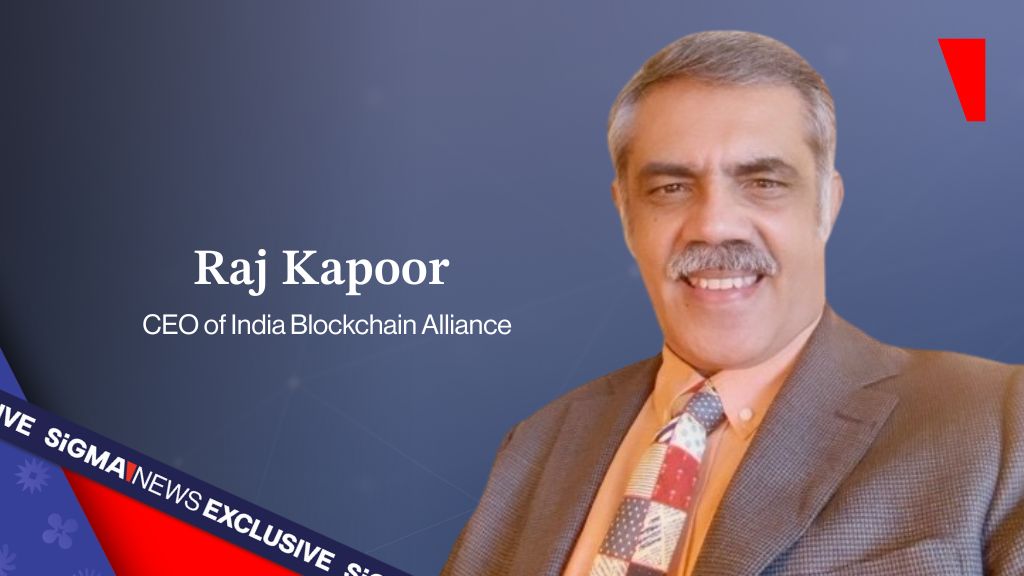
In an exclusive conversation with SiGMA News, Raj Kapoor, Founder of the India Blockchain Alliance, discusses how AI is powering the next phase of responsible gaming – from behavioural analytics and algorithmic fairness to data governance and digital trust.
AI and the rise of responsible personalisation
SiGMA News: With rapid advances in AI and emerging tech, the gaming and gambling industries are entering a new era of innovation and oversight. How do you see AI reshaping the future of online gaming in terms of personalisation, compliance, and responsible engagement?
India Blockchain Alliance’s Founder & CEO Raj Kapoor: AI is ushering in a seismic transformation across the gaming and gambling industries, turning what was once a game of chance into a hyper-personalised, data-driven, and ethically intelligent experience. The future of online gaming is now about creating deeper, safer, and more meaningful player engagement.
At the heart of this revolution lies personalisation. AI-driven algorithms now have the power to understand player behaviour at a granular level, analysing preferences, emotional responses, and even micro-decisions in real time. Games can dynamically adapt difficulty levels, recommend tailored missions, or offer curated rewards, ensuring every player feels seen, understood, and continuously engaged. In gambling platforms, AI can personalise bonuses, suggest responsible bet sizes, and predict burnout before it happens, transforming the user journey into one that feels more like a conversation than a transaction.
On the other hand, machine learning systems are redefining oversight and automating Know Your Client (KYC) and Anti-Money Laundering (AML) checks, spotting suspicious behaviour, and generating transparent audit trails in real time. From identity verification using facial recognition to blockchain-backed recordkeeping, AI is emerging as the silent regulator ensuring fairness, transparency, and integrity, even in the most fast-paced digital casinos.
But perhaps the most profound shift lies in the arena of responsible engagement. With AI’s predictive and behavioural analytics, gaming platforms can now distinguish between recreational excitement and early signs of addiction. Subtle nudges, timed cooling-off messages, or gameplay pauses can intervene before problems escalate, thereby creating an ecosystem where ethics and entertainment finally coexist.
Ethical & innovation-friendly frameworks
SiGMA News: Many countries, including India, are revisiting their online gaming frameworks to balance innovation with consumer protection. From a global perspective, how can technology leaders work with regulators to design frameworks that are both ethical and innovation-friendly?
Kapoor: The world stands at a fascinating crossroads where innovation meets introspection, and few industries embody this tension more vividly than online gaming. As nations like India, Singapore, and the UK revisit their digital gaming laws, the challenge is no longer whether to regulate, but how to regulate smartly, in a way that safeguards players without suffocating innovation.
For technology leaders, this is the moment to step up as collaborators, not disruptors. The future will belong to those who engage regulators not as gatekeepers, but as partners in progress. They must bring transparency, traceability, and trust to the conversation—three words that define the new social contract between tech and governance. Blockchain-based audit trails, AI-powered age verification, and real-time risk monitoring can help regulators see what they once feared: that technology itself can be the most powerful tool for protection.
To design frameworks that are both ethical and innovation-friendly, leaders must champion “regulatory sandboxes”—controlled environments where new models can be tested safely without stifling creativity. It’s where agility meets accountability, and experimentation happens under the watchful eye of compliance. These sandboxes allow ideas to evolve organically, helping policymakers witness innovation in action rather than react to it post-crisis.
Equally important is embedding ethics by design, ensuring that algorithms, monetisation mechanics, and engagement loops are built with fairness and player wellbeing at their core. Imagine a world where self-exclusion systems are AI-activated, where data privacy isn’t an afterthought but a default, and where profit doesn’t come at the cost of principle. That’s the sweet spot where innovation thrives responsibly.
The next wave of global gaming frameworks won’t be written in isolation by bureaucrats; they’ll be co-authored by technologists, ethicists, and policymakers working hand in hand. The mantra must shift from “regulate to restrict” to “regulate to empower.” When technology and governance walk in step, innovation doesn’t just comply—it inspires.
AI as the guardian of player wellbeing
SiGMA News: You’ve long advocated for Responsible AI. In the context of gaming, how can AI systems be designed to identify addictive behaviour or risky play patterns, without crossing into invasive surveillance or data misuse?
Kapoor: Responsible AI is about protecting with empathy and precision. In gaming, where dopamine meets design, the line between engagement and addiction is razor-thin. The challenge is to help players play smarter, not to make machines smarter at exploiting them. The future of ethical gaming lies in building AI systems that understand intent without violating integrity.
In my opinion, to achieve this, developers must design “human-centred intelligence” systems that analyse patterns, not people. Instead of hoarding personal data, AI should monitor anonymised behavioural signals: abrupt spikes in playtime, erratic bet sizes, missed self-set limits, or emotional volatility inferred through interaction speed. The goal isn’t to intrude but to interpret, identifying red flags through contextual analytics rather than constant surveillance.
Let us also address privacy-preserving design. Techniques like federated learning and edge AI allow algorithms to learn from player behaviour on-device, without ever exporting sensitive data. Insights stay local; only anonymised trends are shared. This keeps the system intelligent, yet the player invisible, which, in fact, is a perfect blend of insight and restraint.
It is important, however, that the intervention must feel empowering, not punitive. When AI detects risky play patterns, it shouldn’t sound alarms or lock users out cold. Instead, it should nudge gently, surfacing reminders of limits, offering cool-down options, or directing users to support resources. The messaging should be compassionate, never condescending. Ultimately, Responsible AI in gaming is about balance, designing systems that see enough to care, but not so much that they control. The holy grail is an ecosystem where data serves humanity, not the other way around; where the algorithm becomes a silent ally in wellbeing, ensuring that play remains a choice, never a compulsion.
Smarter compliance & growth through AI
SiGMA News: In emerging markets like India, where legislation around online gaming is evolving, how can AI-driven risk management or digital identity solutions support compliance while enabling growth for legitimate operators?
Kapoor: In emerging markets like India, where innovation is sprinting ahead of regulation, AI-driven risk management and digital identity solutions could become the ultimate balancing act between growth and governance. The country’s gaming industry is booming, yet it stands at a regulatory inflection point: how to encourage innovation without inviting chaos. This is precisely where AI steps in, not as a disruptor, but as a digital stabiliser.
At its core, AI can serve as the industry’s early warning system. Through predictive analytics and behavioural modelling, it can flag suspicious play patterns, detect proxy betting, or identify syndicate-linked activity in real time. For operators, this means compliance doesn’t have to be reactive; it becomes proactive. Instead of waiting for a regulator’s audit, platforms can self-police, demonstrating “algorithmic accountability” that builds trust with both authorities and users.
Then comes digital identity, which truly is the holy grail of responsible gaming in India’s diverse ecosystem. With the rise of Aadhaar-based eKYC, AI-powered verification tools can authenticate users instantly while maintaining data privacy through tokenised identity layers. Imagine a world where every player’s legitimacy is verified, yet their personal data never leaves their control. This is compliance with conscience, verification without violation.
AI also makes dynamic risk scoring possible, adjusting transaction thresholds, bet limits, or withdrawal caps in real time based on a player’s behaviour and risk profile. For regulators, this creates a living, breathing compliance ecosystem that evolves faster than static rules ever could. For legitimate operators, this is a blessing in disguise. AI-powered compliance not only keeps the bad actors out but also enhances player trust, streamlines onboarding, and reduces friction in payment processing, fuelling sustainable growth.
In essence, the future of online gaming in India won’t hinge on how strictly it’s regulated, but on how smartly it’s regulated. And AI, coupled with digital identity infrastructure, is poised to make compliance not a roadblock, but a runway for innovation.
The next frontier of responsible innovation
SiGMA News: You have often spoken about ethics and governance in technology. What does “ethical innovation” mean in the gaming sector, and how can businesses translate that into tangible practices, not just corporate statements?
Kapoor: “Ethical innovation” in the gaming sector is all about steering it with purpose. It’s the belief that technology should amplify human joy, not exploit human psychology. In an industry that thrives on engagement and emotion, ethics becomes both a compass and a competitive advantage. At its core, ethical innovation means building with empathy, transparency, and accountability embedded into the design, not added on as an afterthought. It’s about asking, “Should we?” as often as “Can we?” For gaming companies, that means moving beyond loud marketing statements to embedding tangible, measurable actions at every level of product development and governance.
The first step is ethical-by-design architecture, ensuring algorithms are tuned to enhance experience, not addiction. AI should recognise when a player needs a break, when spending crosses healthy limits, or when emotional fatigue sets in. This is not surveillance—it’s stewardship. The second pillar is data dignity, creating systems where players control how their data is used, and where privacy is treated as a right, not a resource.
I strongly recommend that businesses must establish Ethical Review Boards consisting of cross-functional panels of technologists, psychologists, and ethicists that audit new features, reward structures, and monetisation models before launch. These boards serve as internal conscience keepers, ensuring that “responsible play” is coded into the DNA of the platform. Equally vital is transparency in communication. Companies should publish clear, accessible reports outlining how AI systems make recommendations, what data they process, and what safeguards are in place. Ethical innovation thrives in sunlight and not secrecy.
Finally, the true test of ethics is consistency. Sponsoring a “responsible gaming” campaign means little if design choices still push users toward compulsion. Integrity is when a company chooses long-term trust over short-term monetisation. In the end, ethical innovation in gaming is about creating experiences that respect the player’s mind as much as they excite it, where fun and fairness coexist, and where technology doesn’t just entertain but elevates the human experience.
Step inside the world’s biggest iGaming community. Join HERE for weekly updates from the world’s iGaming authority and unlock subscriber-only offers.


