


The AI revolution in iGaming: Player experience and innovation

At the crossroads of artificial intelligence (AI) and iGaming, startups are rapidly reshaping the way the industry approaches personalisation, compliance, and product development. The global AI in gaming market was worth around US$3.3 billion in 2024 and is forecast to grow to over $51 billion by 2033, with a compound annual growth rate of about 36 percent. Meanwhile, Europe’s AI gaming market generated approximately $795 million in 2024 and is expected to surge to over 10.3 billion by 2033.
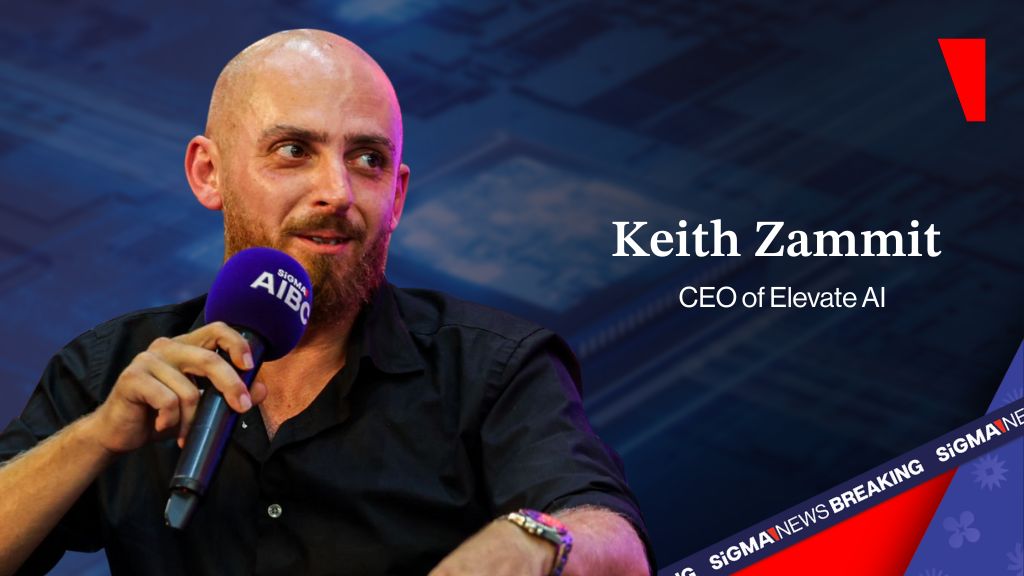
To understand these shifts, SiGMA News caught up with Keith Zammit, CEO of Elevate AI, during the sidelines of SiGMA Euro-Med in Malta. Our discussion explored how AI adoption differs across Europe and Asia, the cultural and regulatory hurdles faced by developers, and which regions are proving most fertile for innovation in player experience, compliance and monetisation.
SiGMA News: Across Europe and Asia, how are iGaming operators adopting AI differently, and what regional trends are you noticing in player engagement and product development? Do you also see opportunities for expansion or collaboration between these regions?
Keith Zammit, CEO of Elevate AI: Europe is a more mature market. What we are seeing is that AI is being adopted with a focus on efficiency and optimisation. Specifically, when we look at hyper-personalisation and Customer Relationship Management (CRM) flows, increasing lifetime value, and also using AI for responsible gambling, which I think is a very big niche in the industry. In product development, AI is used for testing and retesting within the operator space.
In the Asian market, it is much different. It is more based on high velocity, and on personalising not on a macro scale but on a micro scale. There is also AI-powered social and community building, which is really picking up in the Asian market, and more experimental product development using AI within the games themselves, which in Europe would probably be regulated against, but in the Asian market it is still accessible.
We at Elevate AI are actually working with Asian clients at the moment, looking to bring this hyper-velocity style of development to the European market, and also share knowledge from Europe with Asia to increase player lifetime value. Our initial focus is Southeast Asia, particularly the Philippines and Malaysia. We also have some contacts in Japan, although this is more in the social and mobile gaming space.
SiGMA News: What are the main obstacles when tailoring AI-driven iGaming solutions for culturally and linguistically diverse markets?
Zammit: I believe the true challenge is not translation, but cultural nuances. It is easy to teach an AI a language, but very difficult to teach it a culture. This is where we are seeing certain companies training specifically for these nuances. Linguistic subtleties, certain phrases, or words used in a culture might not be found in the news or in training data, yet they are common in everyday conversation.
There are also cultural symbolisms. For example, in China, red represents luck and prosperity, whereas in Europe, red is a warning or something negative. Most of the AIs available publicly are trained with American or European data, with fewer trained on Asian sources. Combining these different datasets is one way to move forward. Finally, there is behavioural data. Some startups we work with have large amounts of data from the European market, but the behavioural patterns of a European player may be very different from those of an Asian player, and vice versa.
SiGMA News: How do startups and operators manage compliance in regions with vastly different iGaming regulations, from Europe to Asia?
Zammit: I think when we bring in the principles of AI development itself and build modular systems, this is how we can work towards AIs supporting compliance. Modular systems and modular frameworks are essentially ways of enabling AI tools to learn the changes and differences that occur within the compliance space. We can then utilise those tools to adapt the way we approach different markets.
SiGMA News: Which AI applications are proving most effective in personalising player experiences and improving retention across diverse markets?
Zammit: I will focus on the European market for this. The most significant applications we are seeing right now are dynamic lobbies. We have had dynamic lobbies before, where CRMs could do this at a macro level, grouping players into segments and filtering them accordingly. With AI, we can achieve hyper-personalisation by creating a lobby tailored to each individual player.
Similarly, AI improves predictive capabilities. It can proactively identify problem gambling, fraud, or money laundering, whereas previously these issues were handled reactively. Finally, there is the rise of AI-driven CRMs, which I expect to play an increasingly important role in the market.
SiGMA News: How is AI being used to identify problem gambling behaviors or prevent fraud in international markets?
Zammit: One of the most interesting tools I have seen recently for responsible gaming is an AI system that analyses how a player behaves and interacts with both the website and the game. Using hundreds of different data points, it can predict whether a player is angry, sad, excited, or anxious. Instead of reacting after the fact—when, for example, a player has lost a few thousand euros and only then receives support—the AI can act in real time. It can identify those behaviours instantly and direct the player towards responsible gambling agents or customer support for immediate help.
The same applies to fraud and money laundering. At present, most systems are reactive: transactions are reviewed at the end of the day, often taking 24 to 48 hours. An AI tool, however, can monitor transactions as they happen and flag suspicious activity immediately.
SiGMA News: Are you seeing AI-driven innovation shaping the types of games being developed, and does this vary by region?
Zammit: Absolutely. AI is being used at many stages of the game development cycle. You have companies like XGENIA building from concept to prototype in minutes. Others, such as Flutter Group, have entire in-house AI teams using the technology to optimise their games. Then there are smaller startups analysing which games perform well, why they work, and attempting to replicate that special formula or “secret sauce” that successful titles tend to have.
The advantage of AI is speed and scale. Where we would previously need hours, if not days, of poring over data, an AI can process it rapidly, identify the common factors, and provide insights that can then be applied to building better games.
SiGMA News: How are startups determining the right business models for different markets, particularly when player behavior and monetisation vary widely?
Zammit: This is something that Elevate AI, my accelerator programme, focuses on. One of our priorities is choosing the right monetisation method for whatever is being developed in AI. The three main trends we are seeing are: sticking to the traditional percentage of Gross gaming revenue (GGR), i.e., a revenue share model; success-based models; and the newer model, which most AIs are moving towards, usage-based.
The idea behind this is that there cannot be a one-size-fits-all approach with AI. Certain AI products are more demanding than others, so a credit and usage system makes sense. For AI companies or startups that are confident in their product, a revenue share model may be the best fit. Over the next few years, I expect these three branches to converge into mixed models, combining usage and revenue share, or usage and monthly fees. As every tool and product becomes more personalised, the business model will likely follow suit, leaning towards either a revenue share or pay-per-use approach.
SiGMA News: How does Elevate AI manage growing demand for AI solutions, and what strategies do you use to balance client needs with startup capabilities?
Zammit: What we are doing, as the intermediary between the startup world and the corporate world—operators and platform providers—is to understand both what the client needs and what the startup world can offer. Through that dialogue, we can identify meaningful middle grounds.
It can sometimes be challenging. Many companies prefer to work on a revenue share basis because it reduces risk. At the same time, at a macro and global scale, most companies are now realising that if you can on-ramp and off-ramp AI services quickly—spinning them up when needed and scaling them down when not—you can better control costs. With revenue share models, costs can sometimes end up being higher than expected.
SiGMA News: What are the benefits and challenges of integrating AI solutions with established iGaming platforms in multiple regions?
Zammit: Integration is the common theme. I see three main challenges: simple integration, data fragmentation, and resistance to change. These are the core issues.
Although integration has long been a challenge in the industry, AI technology today is extremely fast at accessing API documents and completing integrations. The major limitation now is data fragmentation. You might have an idea or want to build a product or tool to solve a specific problem, but your data is scattered across multiple sources. This creates the risk of losing or exposing data. Using proper technologies and structured frameworks, particularly solutions built for your specific needs or secured correctly, can help mitigate these risks.
SiGMA News: Which regions do you see as the most promising for AI-driven iGaming growth, and why?
Zammit: As a Maltese person, and with Elevate AI also based in Malta, we are driving AI innovation locally. However, the most promising opportunities I see are in pre-regulated markets such as North America, Latin America, and Africa. We are also working to expand AI innovation in Southeast Asia.
In these pre-regulated regions, there is greater freedom to launch AI products without regulatory restrictions that might limit the use of certain data. These markets also allow us to test and validate the technology, ensuring it is secure and effective. Once proven, we can then engage regulators in Europe and Southeast Asia to bring that innovation to more established gaming markets.
SiGMA News: How do you foresee AI transforming the iGaming landscape globally over the next five years, particularly in terms of user engagement, compliance, and innovation?
Zammit: I’m going to say over two years, when it comes to user engagement, it’s going to be individualisation. It will no longer be about using set formulas; every user will have an individual approach. The AI will understand each user’s behaviour and can target them to provide the optimal experience, ensuring they enjoy themselves, whilst also protecting him actively.
On the compliance side, I believe it will shift from reactive compliance to proactive protection. Compliance and responsible gambling teams will be empowered by AI to identify and protect at-risk players, greatly reducing the chances of anyone slipping through the net.
In terms of innovation, I see it moving towards generative creation—putting the power of creation into the hands of users and internal teams. Many teams in the gaming industry already use “vibe coding” to customise platforms and tools. With increased AI adoption and a startup-driven culture, micro-teams within companies will build their own products and systems that merge into the main stack, fostering what I hope will be intra-company innovation.
Zammit concluded the discussion by highlighting the ongoing focus at Elevate AI on supporting innovation within the iGaming sector. He emphasised the challenges of building AI tools and hiring specialised talent, noting that the accelerator helps companies de-risk this process by connecting them with startups already developing in the space. Typically, collaborations last four to six months, after which companies may integrate these teams or products in-house. He also encouraged greater individual participation in AI innovation, observing that Europe still lags behind the US and Asian markets in this regard. By providing access to industry networks and frameworks, initiatives like Elevate AI aim to help startups and individuals build successful products and contribute to the evolving iGaming landscape.
Step inside the world’s biggest iGaming community. Join HERE for weekly updates from the world’s iGaming authority and unlock subscriber-only offers.


