


Clarke Carlisle knows what it means to live two lives. One is the public world of stadiums and spotlights. The other is the private world that grows behind closed doors, where pressure becomes identity and identity becomes a trap. He understands that hidden space better than most because he has lived it twice. First as an elite footballer, then as a man recovering from gambling harm in sport, a form of harm that rarely looks serious from the outside.
This feature is the latest in our SiGMA News European Safer Gambling Week exclusive series, bringing together lived experience, regulation, psychology and sport to reveal what the industry often misses. Yesterday, Lauren Vickery showed us how pressure shapes coping. Today, Clarke Carlisle shows us where those patterns come from and how elite sport mirrors the psychology behind gambling risk.
Carlisle says it quietly, and with absolute clarity. “I would never have said I problem gambled.” Not because the behaviour was small, but because the rewards and rhythms of football disguised the reality. Harm becomes invisible when the exterior looks successful. It is the same silence that keeps many athletes unseen, and the same silence that stops people from recognising when pressure has crossed into something darker.
What makes Carlisle’s insight rare is the dual perspective. He has lived in the culture of professional football, where performance defines worth. He has lived the compulsive mental churn of gambling, where the mind runs at a hundred miles an hour. He has lived the long road of recovery where consequences last years, not weeks.
His voice sits at the centre of this feature because understanding what happens behind the door is the first step to preventing what grows there.
How early identity in sport shapes hidden harm later
The foundation of harm is laid early. When a child is told they are destined for greatness, performance becomes the proof that the praise was justified. Validation becomes conditional. By the time Carlisle reached elite football, that mindset had hardened into something absolute.
He puts it plainly:
“All of me was tied to what I did.”
A good game made him feel like a good human. A bad game meant the opposite. “If I had a bad game of football, I would go home feeling like I was a bad person.”
That fusion of identity and performance is not unique to football. It is the same psychological pattern that drives many people towards hidden harm, including those affected by gambling harm in sport. When identity depends on outcomes, every loss feels personal, every mistake feels catastrophic, and every escape becomes strangely justified.
Hidden harm begins exactly there. In the gap between how an athlete performs and how they feel, and in the silence, they learn to keep going long before anyone realises something is wrong.
The incessant debrief that becomes a hidden escape
For Clarke Carlisle, pressure did not end when the whistle went. It simply changed shape. Saturday evenings became the most dangerous hours. After matches, he carried the emotional residue of performance into silence, into rooms where nobody could see what the game had taken from him.
He explains it with absolute clarity:
“My brain was running at a hundred miles an hour.”
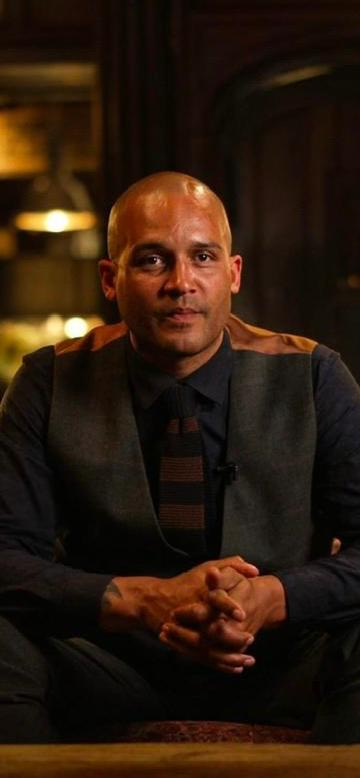
The pressure does not dissipate. It mutates into fear. In that space, escape starts to feel like relief. Alcohol came first. Gambling followed. What began as a post-match release very quickly became routine.
“I gambled prolifically in that period,” he says, not because it looked like harm, but because it felt like silence. It quietened the noise. It numbed the debrief.
The gambling itself mirrored the mental state. Win, lose, lose, win, up, down, down, up. Every outcome carried a consequence.
“If I win two more, then that means I can pay John the money I owe him,” he describes the calculation. If he lost, the mathematics shifted instantly. The cycle became obsessive.
This is the unseen link between high-performance pressure and gambling harm in sport—both create internal storms that nobody on the outside recognises. Both push people into cycles of pressure and self-assessment that feel unbearable when left to their own devices. Both teach people to survive by hiding.
It happened behind closed doors because that is where pressure settles when performance ends.
The financial trap nobody sees
The aftermath of gambling is rarely visible. The behaviour stops long before the damage does. Clarke Carlisle is blunt: “The impact of those lasts for years and years,” especially when defaults, bad credit and CCJs block every attempt at rebuilding.
During his career, the money masked the reality. Wages arrived, debts were patched, and nothing looked serious from the outside. It was only when he stepped back from football that he realised how deep the financial harm had gone. This is the hidden cost of gambling harm in sport—the gap between the moment someone stops and the years it takes to recover.
The damage persists long after the gambling stops. Landlords say no. Banks say no. Even small things become harder—a train fare to a job interview, a basic credit application, a rented room. The harm is lived every day. People can be months or years into recovery and still be paying the price for decisions made in crisis. They are doing everything right and still standing in the same wreckage.
Carlisle is also clear about the pressure this creates. When you are trying to rebuild and there is no immediate route out of debt, the promise of a quick financial fix becomes dangerously persuasive. Not because people want to gamble again, but because they cannot yet see another way to move forward.
The financial trap is not the behaviour. It is the aftermath. It is the part the public never sees, and the part recovery programmes often underestimate.
Why support systems fail both athletes and gamblers
Clarke Carlisle has seen two worlds up close. One is professional football, where support exists but reputation is everything. The other is gambling recovery, where support exists but shame keeps people silent. The outcome is similar. Both groups learn to hide the very things they need help with.
In football, the consequences of speaking up are immediate. Clarke says:
“You are constantly judged as a human being.”
A whisper about personal problems can shape selection, contracts and how managers view you.
Gamblers face a different barrier, but the effect is the same. Shame closes the door. Advertising keeps knocking. “I still get at least a message a day from a gambling organisation,” Clarke says, even years after stopping.
When someone is trying to rebuild and their phone keeps reminding them of their past, silence becomes a defence. This is why gambling harm in sport persists, not because people lack willpower, but because the systems around them actively discourage disclosure.
Support fails when it arrives too late or sits too far away. Carlisle and his wife, Carrie, have proposed a different model: independent, mandatory, confidential support teams embedded in every club. “They are not badged up in club colours.” Everyone engages with them, so nobody is singled out. The support becomes part of the culture rather than a signal that something is wrong.
When help becomes the norm rather than the exception, early conversations become easier. People speak sooner. Red flags appear earlier. Silence loses its power.
The capability paradox: Why facing your challenges makes you stronger
Clarke Carlisle is clear about one thing. Recovery did not weaken him. It did not mark him out as fragile. It did the opposite.
“I sit here today the most well that I have ever been in my life.”
The years of work he put into understanding his thoughts, patterns and responses made him more capable than he had ever been.
This matters because it reframes what recovery actually means. It is not a retreat from responsibility. It is the rebuilding of capacity. People who have faced their challenges become steadier under pressure, more able to regulate themselves and more able to make decisions without fear. Gambling harm in sport thrives in environments where mental health work is seen as a weakness. Carlisle’s lived experience proves the opposite.
Carlisle’s message to the industry is unmistakable. When people engage with support, they return stronger, not weaker. He even makes a point that is often uncomfortable for operators to hear.
“You create people who probably can gamble responsibly.”
In other words, healthier people make healthier choices. Recovery is not a risk to the system. It is the thing that stabilises it.
The women’s crisis is the real test of industry commitment
If there is one part of the system Clarke Carlisle considers the hardest to ignore, it is the lack of support available to women experiencing severe gambling harm. The numbers alone tell the story. Government research estimates that 39,293 adults in England may benefit from intensive residential treatment this year. Yet Gordon Moody is the only organisation in the UK providing gambling-specific residential care. Since 2021, it has operated the world’s only residential treatment centre dedicated exclusively to women with gambling disorders.
Carlisle does not soften the point.
“How much work has been done on the safe spaces for women?”
He asks this because he has watched the industry lean heavily into the feminisation of gambling marketing, from soft social bingo imagery to the proliferation of instant win slots. The front end has expanded. The back end has not. Support has not kept pace with risk. This is the defining gap in how gambling harm in sport affects women—targeted marketing with zero targeted support.
He is equally direct about the realities these women face. “Women feel marginalised,” both by the way harm is discussed and by the lack of services designed specifically for them. When women reach a crisis point, the consequences cut through financial stability, parenting responsibilities and personal safety all at once.
This is where the debate widens into a broader moral question. Operators have invested millions in campaigns and sponsorships. Yet the only dedicated women’s residential clinic faces uncertainty as the statutory levy moves into place. Gordon Moody is at significant risk of not being commissioned by the NHS because it is not an in-community service.
Carlisle offers a practical solution. “Four million pounds is what it takes to run Gordon Moody for a year,” with roughly half that securing the women’s residential programme alone. Against the scale of collective operator profits, the numbers speak for themselves. It is not a financial impossibility. It is a test of will.
The real measure of Safer Gambling Week is not campaigns or messaging. It is whether the industry chooses to protect the people with the least power and the highest risk.
What the gambling industry chooses to protect next
Clarke Carlisle’s message to the gambling sector is rooted in lived reality—pressure, silence and consequence. He has seen how support fails when it is optional. He has seen how harm grows when people hide. He has seen how long the aftermath lasts, and how easily the most vulnerable fall through the gaps.
The next step is not another awareness campaign. It is the decision to build real infrastructure that protects people long after the headlines fade. That means funding services that already work. It means treating support not as an add-on, but as part of the system.
His challenge is simple: “Will they commit to that this year collectively?”
It is the clearest question operators will face during Safer Gambling Week. Not an accusation. A test of intent.
If the industry wants credibility, it proves it by safeguarding the services that stand between people and crisis. If it wants trust, it shows it in the places the public never sees.
Behind closed doors. Where recovery actually happens. Where harm is prevented. Where the difference between a setback and a collapse is decided.
This SiGMA News exclusive European Safer Gambling Week featured Grainne Hurst from the Betting and Gaming Council, opening with consumer protection, Craig Cornforth from EPIC Global Solutions on lived experience as operational intelligence, and Liz Karter MBE examining clinical reality. Tomorrow, former footballer Dominic Matteo shows what recovery looks like when all these insights come together.
Be part of the conversation shaping safer play. Subscribe HERE to SiGMA’s Top 10 News countdown for stories shaping iGaming’s future, exclusive interviews, and industry insights delivered straight to your inbox. Don’t just read the news, stay ahead of it.


