


Lived experience in safer gambling turns punters into protectors

Lived experience in safer gambling has moved from a side-stage testimony to a recognised source of industry intelligence. It offers something that data will never fully translate: why behaviour changes, not only that it changes. People who have felt the pull, the denial, the secrecy, and the loss bring a perspective that cannot be replicated through dashboards, policy decks, or risk-band models. They understand how shame distorts disclosure, how rational plans collapse under compulsion, and how harm can remain invisible while still advancing.
For operators, regulators, and sports partners, this is not an emotional accessory. It is a missing dimension of insight. Lived experience sharpens prevention, deepens empathy, and challenges assumptions that appear logical on paper but fail when applied to people in distress. In a sector where safety must be predictive rather than reactive, this perspective has become part of the evidence base, not a motivational interlude.
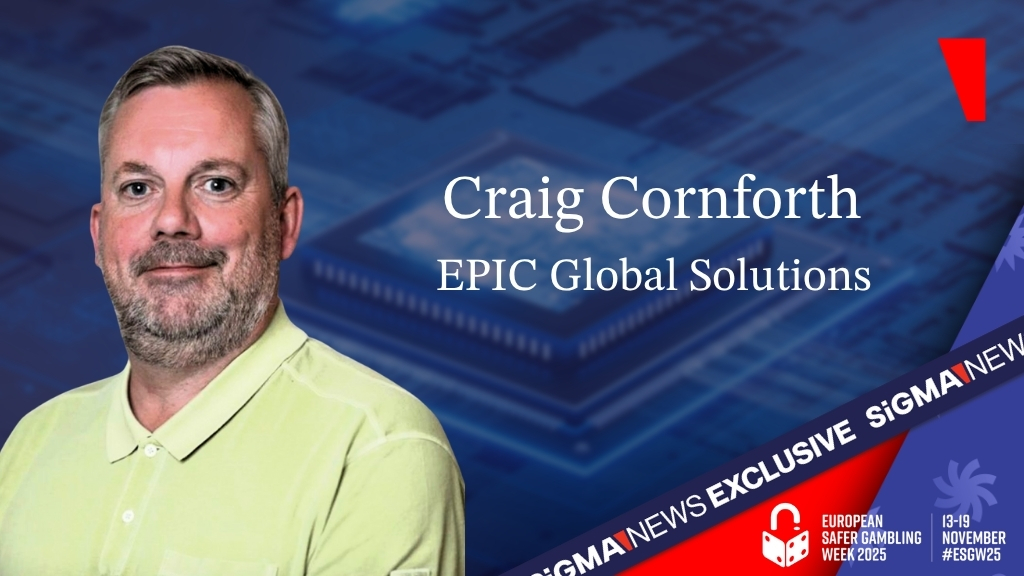
Yesterday, Grainne Hurst, CEO of the Betting & Gaming Council (BGC), opened our European Safer Gambling Week exclusive series with a call to industry-wide accountability. Today, in this second instalment of our SiGMA News European Safer Gambling Week exclusives, we speak with Craig Cornforth, Senior Business Development Manager at EPIC Global Solutions, about what this transformation looks like and why it matters for every stakeholder in the iGaming ecosystem.
The moment recovery became prevention
For Craig, there was no cinematic turning point. No clean line between harm and rebuild. What changed was not the past, but the purpose. He explains that the assumption many make is deeply flawed: that people in lived experience roles soften, dilute, or sanitise their story to keep the industry comfortable. That belief is not only wrong. It is insulting.
“It has never happened once in four years. Hundreds of hours. Hundreds of sessions all over the world. People don’t ask me to water it down. They ask for more detail.”
This matters because it speaks to legitimacy. Lived experience in safer gambling is not public theatre. It is risk-informed testimony with operational value. And, as Craig stresses, nobody is better positioned to understand harm pathways than those who followed them step-by-step.
What eventually redirected him was the realisation that recovery could either end as a personal victory or ripen into a public contribution. “I realised that recovery, if I wanted it to be just my own, would end with me feeling better. But it could also end with other people never having to get where I got.”
He refuses to frame his story around product blame or industry villainy. Instead, he speaks in full context: pattern, behaviour, compulsion, secrecy and escalation. His journey included decades of safe play before addiction manifested.
“It is very hard to get addicted to something you never enjoyed in the first place. That is why I talk about making gambling safer, not tearing it down. People like me loved it before it turned on us. I didn’t directly blame the product. It was what I created by misusing it, lying to people, and chasing it long after it stopped being fun.”
This is why lived experience in safer gambling now carries operational weight, not just emotional resonance. It translates how harm feels into how early support must function. Recently, the European Committee for Standardisation (CEN) approved a project for a new standard on harm indicators.
Craig frames it simply but powerfully:
“There’s no success in doing this with selected markets. Everyone who touches a customer journey needs to be part of it.”
Lived experience is not a testimonial or confession. It is data with blood in it, and the industry has only just begun to understand the power of that data.
From story to system in safer gambling
If the first half of Craig’s journey was one of survival, the second is one of translation. His role today is not to retell the past for sympathy, but to convert experience into structural design, where operators and stakeholders can act earlier, faster, and with fewer blind spots.
He makes one thing absolutely clear: lived experience in safer gambling is not the end of a story. It is the start of a strategy. Those who have walked through addiction do not simply reflect; they decode. They can articulate motive, trigger, risk, escalation, and silence — the five elements every safeguarding strategy tries to pre-empt. Craig says:
“I’m not here to shock people, I’m here to help shape decisions that prevent someone from becoming the next version of me.”
This operational shift matters because many organisations have historically positioned lived experience as awareness, rather than as a foundational architecture. Craig rejects that model completely. “Don’t pay people like me to share our stories if you’re not prepared for those stories to be part of your framework.”
His work focuses on applying lived experience in safer gambling to real-world friction points such as affordability conversations, tone-of-voice frameworks, CRM suppression logic, customer care scripts, and post-harm reviews. It removes guesswork and replaces it with pattern-based insight, where harm indicators are not solely financial.
Craig explains that technology alone cannot close the gap. “Algorithms will only ever see behaviour. They cannot see shame, secrecy, or isolation,” he says. “Data tells you what is happening. Lived experience tells you why it is happening.” The sector needs both if it wants to detect risk early rather than tidy it afterwards.
This is the evolution of lived experience in safer gambling, from narrative to navigational tool, where operators are challenged not to feel something, but to do something.
He summarises it with a single, uncompromising line:
“My job is not to make people emotional. My job is to make people operationally uncomfortable enough to change.”
And yet, knowledge alone is never enough. A strategy fails if the culture does not move with it, and this is where Craig believes the real test of leadership begins.
What real change looks like inside the room
Craig has seen two types of response when lived experience enters a workplace. One group listens with care and curiosity. The other hears a story and carries on as if nothing has changed. He believes the test is simple. Action must follow insight.
EPIC delivers training across elite sports, education, finance, and regulated gambling.
“If people leave with emotion but without a plan, it was a theatre show. Real success is when someone in the room changes how they work the very next day.”
Some operators still treat lived experience in safer gambling as a one-off awareness session. Others bring it into the teams that make daily decisions. Craig says the second group learns quicker and builds smaller gaps between warning signs and intervention.
He offers a simple measure for lived experience in safer gambling. If teams start asking what frightened the customer, who they trusted, and why they hid their behaviour, then progress has begun.
“You cannot build a safer system if you only ever talk about behaviour. You have to understand the shame that hides behind it.”
Change is not loud. It usually begins with one better question, asked at the right time. System change is vital, yet it only works when leadership supports it with trust, time and training.
From training exercise to cultural standard
The lived experience movement began as something many operators saw as inspirational storytelling for away-days. Today, it is shaping how organisations speak to their customers, how they design their scripts and how they train their new starters. The people who once shared their lives in silence are now shaping the rules that keep others safe.
Craig sees the turning point in simple, human observation. “If it ends with applause and nothing changes, then it is theatre. Real impact is when people ask what needs to be different in their building tomorrow.”
He speaks with the discipline of someone who has seen two worlds at once, the dark room of addiction and the bright boardroom of prevention. In his view, the biggest shift in lived experience has been its refusal to stay as a story and its commitment to becoming a skill.
“We have to move from telling people what happened to asking how systems can change so it does not happen again.”
Real culture change is slow, quiet and unseen at first. It shows up in smaller decisions long before it appears in bigger ones.
“The light bulb moment is not applause. It is hearing an agent use a technique you suggested, weeks later, to keep a customer safer and keep them as a customer for longer. That is when you know culture is shifting.”
A challenge for the next chapter of safer gambling
Craig believes the sector is close to something important, but not finished. He frames his message not as a warning, but as an invitation to improve. He wants operators and regulators to replace seasonal momentum with permanent accountability. This sits at the heart of lived experience in safer gambling and why it matters now more than ever.
The scale of this movement is no longer marginal theatre. In the past year, EPIC Global Solutions has delivered education and awareness sessions to over 109,000 people across more than 47 organisations, including approximately 27,000 student-athletes in the United States. These are not keynote audiences. They are front-line decision-makers.
Operator commitment is also becoming more visible. Speaking about EPIC’s education programme for SPFL players, staff, and supporters – embedded into William Hill’s sponsorship of the competition, Per Widerström, CEO of Evoke, states, “The education programme is a fundamental element of our sponsorship. It is important to balance the passion of players and fans with gambling responsibly, and I am delighted to see such good progress during our first year.”
Craig’s challenge is clear. “Player protection is still seen as a cost in too many rooms. It should be seen as an investment that protects people and strengthens long-term business.”
He argues that the industry already trains its people in leadership, compliance and customer service. The same energy should be placed into prevention. Craig does not claim that lived experience can solve every problem. It cannot. What it can do is offer a different type of intelligence that understands how harm feels as well as how it behaves.
“We were never against gambling. We are against preventable damage.”
Why lived experience matters before the crisis begins
With the right mindset, lived experience becomes more than storytelling. It becomes an internal compass that reminds leaders whose lives their decisions touch.
Lived experience is not a headline or a guest presentation. It is a resource that helps the sector understand how harm can grow in silence and how support can be offered before a crisis. Craig Cornforth’s journey shows that prevention is not a theory. It is a practice shaped by real memories, real regret and real hope.
His work with EPIC Global Solutions proves that people with hard-won insight can influence culture, training and policy. The lesson is simple. Safer gambling is stronger when those who have lived through harm lead the way for others.
Progress is already visible. The next step depends on whether operators, affiliates, regulators and treatment networks are willing to treat lived experience as a leadership voice rather than an afterthought. When that happens, the industry will move from compliance to care and from procedure to trust.
Craig leaves one final truth on the table. “I have been lost forever as a customer. I will never place another bet. If someone had stepped in earlier, that would not have guaranteed a change, but I would at least have had a choice. Nobody ever gave me that choice.”
Tomorrow, in our SiGMA News European Safer Gambling Week series, we delve into clinical depth with Liz Karter MBE, who has spent twenty-five years working with women affected by gambling harm. Her insight reveals why many pathways into harm are quiet, emotional, and hidden, long before money becomes the story.
Be part of the conversation shaping safer play. Subscribe HERE to SiGMA’s Top 10 News countdown for stories shaping iGaming’s future, exclusive interviews, and industry insights delivered straight to your inbox. Don’t just read the news, stay ahead of it.


