


Why silence remains the biggest risk to mental health in gambling

Some people grow up breathing pressure the way others breathe air. Winning becomes belonging, silence becomes armour, and identity becomes tied to whatever earns applause. That story reads heroic from the outside, but it can become a quiet crisis when the cheering stops. This is the hidden doorway between performance and mental health in gambling, where people turn inwards because they have been trained to endure rather than express.
In part three of SiGMA News European Safer Gambling Week exclusives, Liz Karter MBE highlighted the clinical reality of gambling harm and its gendered impact. Now, in part four, sport psychotherapist Lauren Vickery, who works at the intersection of performance, identity, and emotional regulation, captures the psychological root pattern with clarity:
“Worth becomes linked to winning and pushing beyond limits long before people build their own sense of self.”
“There’s a reason they’ve made it to the top,” Lauren notes. “Pressure didn’t just surround them, it shaped them – it became identity long before identity became choice.”
For some, Lauren says, that pressure becomes a source of validation; for others, it is a way to build confidence or hide painful emotions. It creates an identity built around control, discipline, and achievement.
Sometimes the habits that once built resilience become the same habits that hide vulnerability. What begins as discipline can quietly turn into emotional self-exile.
How coping becomes camouflage
When people are taught to push, perfect, and perform rather than pause, soothe, or seek support, they often reach for coping strategies that feel familiar rather than healthy. Lauren explains that people do not randomly fall into harmful patterns; they gravitate towards behaviours that mirror the emotional rhythm they have lived inside.
“When a person isn’t taught how to emotionally regulate or reach out for support, that’s when we can see people reach for coping mechanisms.”
People do not randomly fall into harmful patterns.
“Both athletes and gamblers often seek behaviours that recreate familiar emotional rhythms: risk, adrenaline, focus, and a clear win or lose outcome,” she notes.
They gravitate towards whatever feels closest to the familiar patterns they already know, not what is healthiest in the long term.
Gambling can therefore offer the same intense focus, distraction, numbing, and quick internal regulation that high-pressure performers have relied on for most of their lives, proving why mental health in gambling cannot be separated from emotional conditioning.
“Gambling can offer the same quick hit of dopamine, distraction, or control,” Lauren explains, especially in moments of emotional overload.
“People try to find external solutions for internal problems, which is why, in the long term, they don’t always help.”
These mechanisms are not chosen for pleasure. They are chosen for relief, familiarity, and emotional survival.
Why silence feels safer than honesty
People do not stay silent because they lack courage. They stay silent because they believe their world cannot hold what they need to say. That belief is learned long before any bet is placed. Silence becomes the emotional equivalent of wearing body armour. It protects the identity a person has built, even if it slowly harms the person beneath it.
Lauren has seen this repeated pattern across sports and gambling. Some grow up coping alone, surrounded by environments where vulnerability is unfamiliar, discouraged, or judged. When a life has been shaped around control, results, reputation, and “holding it together”, vulnerability feels like a threat rather than a lifeline. And this is why mental health in gambling is still so difficult to address: silence is the easiest response, and shame is the most effective silencer.
“Shame is deeply isolating,” Lauren explains, adding that low self-worth becomes a quiet filter, convincing people that others deserve help, but they do not.
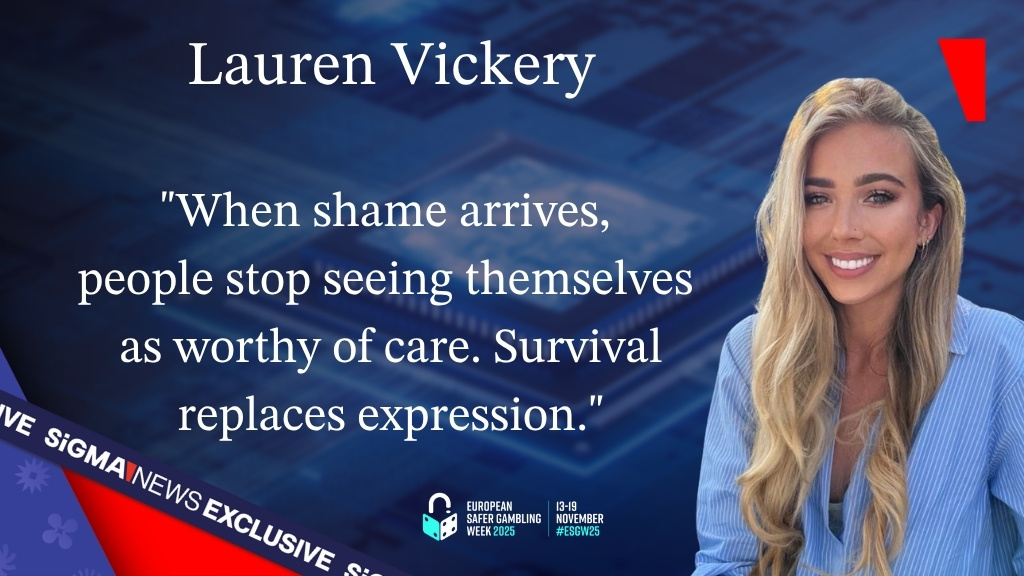
“When shame arrives, people stop seeing themselves as worthy of care. Survival replaces expression.”
Silence becomes a familiar room. Speaking feels like a door that might not lead anywhere safe. If someone has spent their life proving they can cope alone, asking for help feels like breaking a lifelong contract with themselves.
But the same pattern that silences people also offers a route out. “What helps people finally speak is often the opposite of what kept them silent,” she says.
When struggle is normalised instead of pathologised, when responses are steady rather than shocked, and when asking for help does not risk identity or opportunity, safety returns. People open up when they believe their admissions will not change who they are in others’ eyes. Silence is not the wound. It is the bandage that was never meant to stay on forever.
The blueprint that backfires
Coping is rarely random. The body remembers what worked long before the mind understands why. When pressure becomes identity, people often reach for habits that feel like control, rather than safety. In sports and gambling, this can mean chasing focus, distraction, or a quick sense of order when emotions feel too overwhelming to handle.
Lauren explains that when a person is not taught to emotionally regulate or reach out for support, they are far more likely to turn to coping mechanisms that offer quick relief rather than long-term safety. These behaviours mirror learned survival patterns: intensity, reward, hyper-focus, and short-term relief.
This is why gambling can fit the emotional blueprint so seamlessly. The problem is not enjoyment or recklessness. Gambling can offer a quick hit of dopamine, distraction, or control in ways that temporarily numb internal noise. It is not that people want to gamble; it is that gambling matches the state they are trying to escape, manage, or mute.
These are not reckless decisions. They are familiar decisions. The danger is not the feeling itself. It is the belief that the feeling must be handled alone.
When behaviour looks healthy until it hurts
What looks like strength on the outside can quietly give way to self-abandonment on the inside. The mindset that once built medals, careers, or admiration does not disappear when life becomes uncertain. It simply adapts, often in ways that appear disciplined, productive, or even admirable.
Overtraining becomes coping.
Control becomes safety.
Silence becomes routine.
Gambling becomes a private reset button rather than a reckless thrill.
Lauren notes that these patterns form long before harm is visible. They are learned through repetition, rewarded through praise, and reinforced by identity, not desire.
“Knowing when to push and when to pause” becomes blurred when a person has been taught that pausing looks like weakness and vulnerability looks like failure.
People do not chase chaos. They chase regulation, clarity, and a brief sense of order. This is why mental health in gambling must be understood long before money or losses enter the story.
“Sustainable resilience lives in the long game, pacing, insight, boundaries, recovery, and honest connection,” Lauren says. Harm begins when the mind believes endurance is the solution and emotion is the threat.
The question quietly shifts from
“How do I keep going?”
to
“How do I stay whole without disappearing inside the silence?”
Rebuilding identity without the scoreboard
Identity built on performance is powerful, but fragile. When worth has been measured by outcomes, applause, or discipline, the silence that follows can feel like freefall.
Lauren explains that rebuilding identity after a high-pressure life doesn’t begin with achievement. It starts with rediscovery. It means working out who you are without the metrics that once told you your worth. She describes the process as shifting from external worth to internal truth.
That involves exploring interests beyond outcomes, reflecting on strengths that are not tied to winning, and building relationships where the measure is connection rather than performance. “Exploring interests and values outside performance” becomes not a hobby, but a lifeline.
Lauren notes that self-compassion sits at the centre of this transition. “Practising self-compassion and self-validation” helps people recognise that effort, growth, and courage count, even when no one is watching.
A grounded identity becomes multidimensional, flexible, and human, allowing someone to face uncertainty without reverting to old survival patterns. This is where mental health in gambling finds its strongest prevention: not in rules alone, but in helping people build a sense of self that does not fracture under pressure.
What effective support must look like in real life
“Support cannot depend on crisis, confession, or courage. It must exist before any of those moments arrive,” Lauren says. This is a line that resets the industry clock from response to prevention.
Support cannot begin at the breaking point. It must exist early, quietly, and without requiring someone to prove they are struggling. Lauren describes effective support systems as safe, consistent, and human-centred, built on the belief that people deserve care before a crisis, not because of a crisis.
True safeguarding includes confidential spaces, normalised conversations, and access to specialist support that is easily accessible, not hidden within policy pages. She explains that “accessible, specialised care,” combined with environments where “struggle is normalised, not judged,” encourages early disclosure rather than a hidden decline.
It also means replacing individual resilience myths with collective responsibility structures. Prevention grows when people know they can ask for help without risking identity, status, or opportunity. When organisations treat wellbeing as part of their operational model rather than a reputational add-on, people move towards help before harm.
This is what the next era of mental health in gambling requires: support that is proactive, relational, and visible, not conditional, private, or performance-based. Safety is not achieved by those who cope alone, but by cultures where help is expected, not feared.
Why prevention must start long before the crisis
Prevention cannot rely on financial thresholds, visible decline, or last-minute rescue. People reach a crisis because they were never taught how to recognise struggle in themselves, or because they believed seeking help would cost them belonging.
For Lauren Vickery, mental health in gambling will only be protected when emotional education arrives years before any bet, not after the warning signs begin. She explains that support must help people understand how they feel, not only how they behave. Prevention succeeds when people know that asking for help strengthens identity rather than threatens it. As she puts it,
“People under pressure thrive not because they can push through endlessly, but because they know they are seen, supported, and valued as whole human beings.”
Prevention is not a rescue mission. It is a language, a culture, and a place where honesty feels safe long before harm begins. When performance-driven identities finally hear that support does not require failure, healing stops being a secret, and care stops arriving too late.
The quiet truth beneath mental health in gambling is simple: people break in silence, and they are rebuilt in connection.
This SiGMA News exclusive European Safer Gambling Week featured Craig Cornforth from EPIC Global Solutions discussing lived experience as operational intelligence, explaining how prevention begins long before harm becomes visible, while Grainne Hurst from the Betting and Gaming Council opened the series with a clear look at consumer protection, early intervention, and the reality behind public narratives on gambling harm.
Be part of the conversation shaping safer play. Subscribe HERE to SiGMA’s Top 10 News countdown for stories shaping iGaming’s future, exclusive interviews, and industry insights delivered straight to your inbox. Don’t just read the news, stay ahead of it.


