


From dreamers to doers and how operational innovation is reshaping iGaming

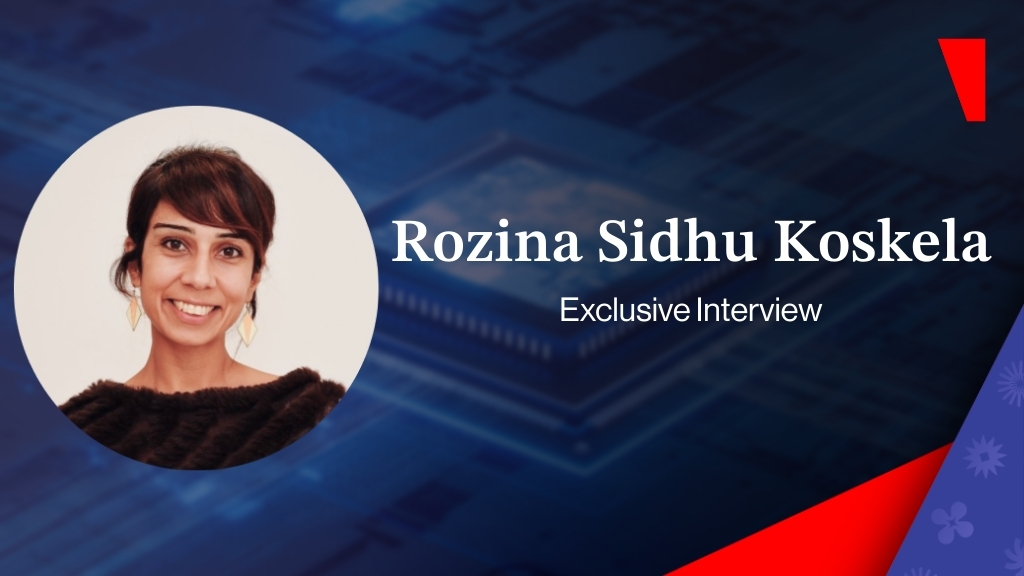
Operational innovation in iGaming doesn’t just come from new tech. It starts with a shift in how teams think, plan, and solve problems together. For Rozina Sidhu Koskela, Founder and CEO of The Garage, innovation is less about buzzwords and more about co-creation, alignment, and applied creativity, especially in industries under pressure.
At a recent workshop, Rozina led participants through the Disney Method. In this framework, teams shift between Dreamer, Realist, and Sceptic — seeing the same problem through three futures at once. For example, when tackling something like player onboarding friction, the Dreamer imagines a seamless sign-up with zero admin pain, the Realist checks feasibility across systems and KYC, and the Critic stress-tests for compliance gaps or user drop-off points. It challenges the “stay in your lane” mentality that often holds back real progress.
“It’s not just ideation for solutions. It’s about encompassing the problem from different angles,” Rozina explains. “That gives you a wider perspective and allows you to move toward solutions that are grounded.”
What the Disney Method unlocks for iGaming teams
Rozina’s approach is purpose-built for complex sectors like gaming and finance. Before building The Garage, she applied these tools inside organisations, including in iGaming, to shift stale mindsets and create genuine behavioural change.
“We never go into a session wearing a solution hat,” she says. “A lot of people go out with solutions because they think there’s a need, but what problem is that solution actually solving?”
That distinction, starting with problem exploration rather than pre-baked answers, is central to Rozina’s method. When panic meets pressure, iGaming teams can fall for shiny fixes, but chasing trends rarely solves the root of the problem. Rozina cautions against designing for assumptions rather than evidence, noting that without clear insight into the real issue, even well-meaning solutions can miss the mark. In her view, operational innovation in iGaming means replacing those blind spots with approaches grounded in real insight and tested in practice.
For teams juggling regulation, retention, and responsible gambling demands, her approach offers something rare: a low-risk way to explore high-value transformation, grounded in real-world challenges rather than speculation.
It turns innovation from a buzzword into something teams can act on, cutting through the usual resistance to change. Teams are encouraged to trial ideas in micro-settings, such as a single-user journey, a one-compliance-touchpoint, or a feedback loop, before scaling them up. It makes change tangible, not theoretical, and reduces the emotional resistance that ‘innovation’ agendas so often provoke.
“In a regulated industry like iGaming, it’s hard to think outside the box,” she admits. “But even within red tape, there’s space for creativity. It just depends on how much you’re willing to stretch it.”
What’s really holding iGaming teams back from change?
Rozina is clear that it’s not always the rookies holding things back.
“The hardest people to shift are the ones who’ve been doing things the same way for 30 years,” she says. “They know the system and they don’t want to be told what to do.”
Her solution? Start small. Build momentum with advocates. Create safe spaces for experimentation.
“We work in small-knit groups. Your cheerleaders. And once they believe in the method, that enthusiasm spreads. That’s how you slowly infiltrate legacy structures.”
It starts with small, protected groups, not big launches. Identify one or two respected team members open to trying new approaches, and equip them with a framework that feels practical, not performative. When those internal advocates see results, they become the cultural bridge between leadership strategy and on-the-ground delivery. As Marvin Cuschieri told SiGMA News recently, modern iGaming leadership follows the same principle—hiring talent wherever it is and trusting teams to do their best work in the rhythm that suits them.
Team misalignment is the real operational blind spot
One of the most striking themes in Rozina’s work is just how misaligned teams can be, especially at the operational level.
“You’d be surprised how many people don’t know what their company’s actual vision is,” she says. “The top talks strategy, but the people delivering don’t even know why they’re doing what they’re doing.”
This lack of transparency and communication often leads to duplicated work, inefficiencies, and avoidable redundancies, all of which are symptoms of an innovation-starved system. In iGaming, where customer service, compliance, and player engagement intersect daily, that misalignment is expensive. In regulated markets, operational innovation in iGaming often begins with breaking down silos and improving cross-team visibility.
Rozina notes that in many cases, the misalignment isn’t malicious. It’s habitual.
“In many cases, the misalignment isn’t malicious; it’s just habit,” says Rozina. “People often don’t realise someone else is already doing the same thing, so duplication happens.”
Teams get stuck operating in isolation, often duplicating efforts without realising it. The real issue? Leadership assumes that alignment is happening just because strategy has been declared from the top.
“You might find someone doing a task that’s already being done by someone else,” she said. “And when that’s discovered too late, it can lead to job cuts that feel sudden, but the warning signs were there.”
In iGaming, where compliance, customer care, marketing, and tech all collide daily, the lack of horizontal communication costs real money. It delays fixes to broken player journeys. It triggers inconsistent responsible gambling flags. And it slows reaction time when regulatory demands shift.
Rozina’s advice? Don’t just publish a strategy. Align it. Explain it. And ensure that every team understands how their daily work contributes to the company’s progress toward its goals.
“Operational innovation in gaming doesn’t just mean new tools,” she adds. “It means alignment, clarity, and ownership across the board.”
Balancing innovation with risk in the iGaming space
Rozina doesn’t romanticise creativity. She acknowledges risk. But she argues that innovation is no longer optional, and risk must be measured, not avoided.
“If you want to maintain a competitive edge, you have to allow for some level of risk,” she says. “It’s a question of how much you’re willing to forego and what the potential gains are.”
In iGaming, the tightrope between invention and obligation has never felt thinner. AI isn’t coming; it’s already rewiring the rulebook. In such a landscape, rigid rule sets quickly become outdated unless teams design them to adapt to operational realities. Thus, for many operators, operational innovation in iGaming means finding that balance between compliance and agility.
“Frameworks like ours are going to be crucial. The regulation might have to adapt, too, not abandon its role, but evolve alongside the tools we’re using.”
From firefighting to futureproofing
So, how do you move from misalignment and risk aversion to meaningful change? For companies stuck in perpetual crisis mode, managing tech rollouts, patching compliance gaps, and reacting to player complaints, the bigger shift is mental, not mechanical. It starts with permission. When asked what she’d say to a constantly “firefighting” iGaming company, Rozina doesn’t hesitate:
“Sit back. Plan. Know your North Star. Then make small, incremental changes toward it.”
It sounds simple, but done right, it’s transformative.
Operational innovation in gaming doesn’t begin with the next tool or tech layer. It begins with the courage to imagine something better, the structure to test it safely, and the discipline to make it real.
And for those still waiting for someone else to act first.
“I’ve been speaking to people across the industry, and it’s the same conversations over and over again,” she says. “People keep saying we should do things differently, but very few are actually doing it.”
For Rozina, progress doesn’t come from recycling the same ideas. It comes from executing on the ones we already have. The gap between dreamers and doers isn’t just growing. It’s becoming a competitive fault line. As the system sharpens its edges, those who hesitate may find themselves outpaced before they realise they’ve stalled. Ultimately, operational innovation in iGaming is about turning ideas into delivery without losing sight of strategic goals.
The Garage is built on a simple mission: to make innovation accessible, inclusive, and part of every organisation’s DNA, so people can confidently solve real problems and shape the future.
“Quality comes from doing things the right way. By staying ahead of the trends, not just catching up to them.”


