


Iowa proposes companion bills targeting illegal gambling

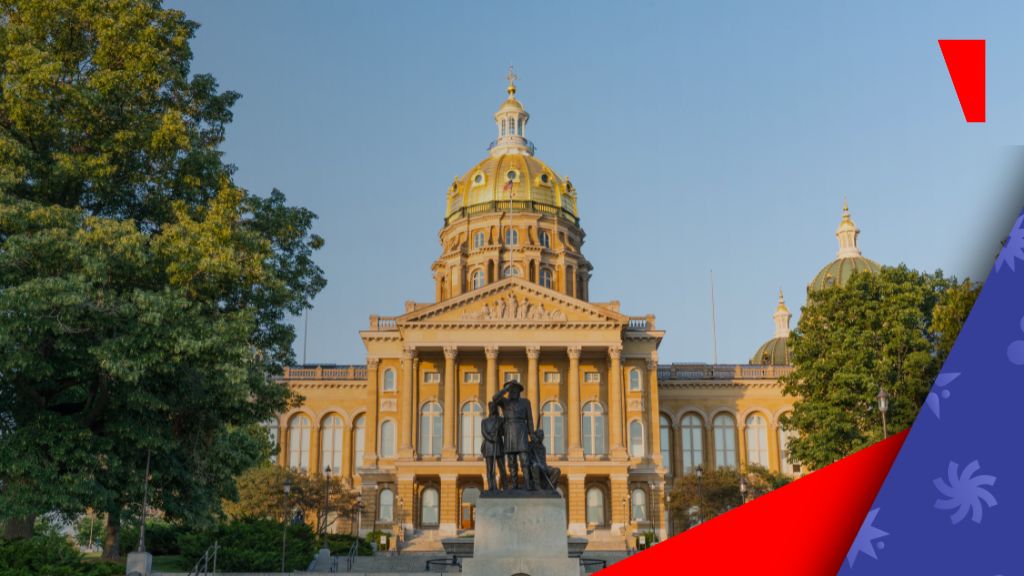
In 2026, Iowa introduced House Study Bill 586 (HSB 586) and Senate Study Bill 3040 (SSB 3040) to address sweepstakes casinos and unlicenced gambling. These measures, which give regulators greater authority to act and shift enforcement power away from existing legal gaps, are part of a wider national trend to end the uncertainty surrounding such platforms.
Lawmakers in Iowa are responding to the growth of unauthorised online gaming sites, particularly dual-currency sweepstakes casinos. Regulators view these platforms as unlicenced gambling, despite providers’ claims that they are legitimate. As legal sports betting and casino gaming expand, the focus has shifted from definitions to enforcement, making unregulated platforms more visible.
Understanding HSB 586 and SSB 3040
HSB 586 and SSB 3040 aim to expand the authority of the Iowa Racing and Gaming Commission (IRGC). SSB 3040 was introduced by the Senate State Government Committee, followed by HSB 586 from the House State Government Committee on 20 January. Both bills remain in their respective committees, reflecting ongoing legislative progress. As companion bills, they move in parallel, one in the House and one in the Senate, improving the likelihood that a version will reach the governor’s desk.
Under Iowa Code Chapter 99F, gambling is overseen by the IRGC. However, when it comes to unauthorised online platforms, particularly those presenting themselves as sweepstakes. New legislation is needed because enforcement has often relied on slow procedures, warnings, or criminal provisions that are not suited to modern online gambling, given the absence of clear authority.
Expansion of IRGC enforcement powers
HSB 586 and SSB 3040 are intended to strengthen the authority of the Iowa Racing and Gaming Commission by granting it explicit power to act against unlicenced platforms offering games of chance, gambling, sports wagering, or sweepstakes without proper approval. By removing ambiguity in the law, these bills aim to make enforcement more straightforward and effective.
HSB 586 and SSB 3040 give the IRGC explicit authority to act against unlicenced gambling, including sweepstakes casinos. The bills allow the Commission to issue cease-and-desist orders and seek injunctions against anyone offering games of chance, gambling, sports wagering, or illegal sweepstakes. By explicitly including “illegal sweepstakes,” the legislation removes ambiguity and places these platforms directly under regulatory oversight, enabling faster and clearer enforcement.
Enforcement tools introduced
HSB 586 and SSB 3040 focus on civil enforcement rather than criminal charges. The bills give regulators the ability to issue cease-and-desist orders for immediate shutdowns and seek injunctions that allow courts to force platforms offline. These measures provide a quicker and more practical way to address unlicenced gambling compared with relying on criminal prosecution.
Nevada expanded regulatory authority over sweepstakes casinos last year rather than imposing an outright ban, leading most major platforms to leave the market voluntarily. Iowa’s current approach with HSB 586 and SSB 3040 reflects a similar strategy, aiming to strengthen enforcement and achieve comparable results.
2026 legislative wave against sweepstakes
In 2026, Iowa’s action against sweepstakes casinos reflects a broader national trend. States are moving beyond debates over definitions and focusing instead on enforcement, giving regulators clearer tools to address unlicenced gambling rather than relying on ambiguous terminology.
Sweepstakes casinos are becoming prohibited or subject to stricter enforcement in several states. Florida is expanding its definition of illegal gambling to include simulated casino games, while Maine is considering civil enforcement. Maryland is concentrating on interactive games with dual-currency systems, while Indiana is examining statutory classifications that categorise sweepstakes as gambling.
Oklahoma is redefining illegal gambling to include these platforms, Utah is formally classifying sweepstakes casinos as fringe gambling, Mississippi is updating its enforcement laws to cover sweepstakes-style gaming, and Virginia is linking the legalisation of online casinos with sweepstakes prohibitions.
Variations in state enforcement strategies
States are adopting different approaches to address sweepstakes casinos and unlicenced gambling. Some are redefining gambling laws to make these platforms explicitly illegal, while others rely on civil and administrative enforcement to allow regulators to shut them down more quickly. Increasingly, liability is also extending to payment processors, affiliates, and software providers. Overall, the trend shows regulators acting sooner and more directly, which is gradually reducing the presence of unregulated online gambling.
Subscribe HERE to SiGMA’s Top 10 News countdown and SiGMA’s weekly newsletter to stay up to date with all the latest iGaming News from the world’s iGaming authority, and benefit from subscriber-only offers.


