
Japan’s Hokkaido governor flags concerns over lone IR approval

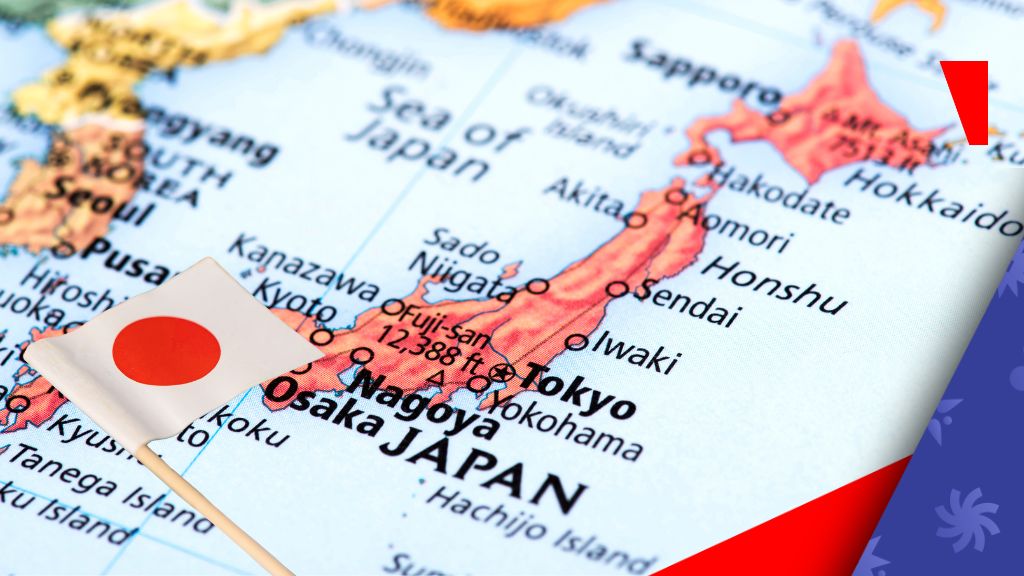
The governor of Hokkaido, Naomichi Suzuki, has urged Japan’s national government to examine why the country’s first round of applications to host an integrated resort with a casino produced only one approved project, in Osaka. Speaking on Friday (16 January 2026), Suzuki said the outcome raised questions that should be reviewed before the next application round opens in 2027.
His comments came a day before Hokkaido held the first meeting of its newly formed IR expert panel, which is tasked with guiding the prefecture on whether and how it should approach the next national bidding process. Friday also marked the final day of public consultation on the central government’s proposed timetable for the next round, which is scheduled to run from 6 May to 5 November 2027.
Concerns over limited outcomes
At a regular media briefing, Suzuki said Hokkaido had submitted opinion comments to the national government on the new application round, including a request that officials consider what integrated resorts in regional areas should be, which could differ from those in major metropolitan areas.
Referring to the first round, which ended in December 2023, Suzuki said that Osaka was the only approved applicant, Nagasaki was rejected, and Yokohama and Wakayama did not apply, and said the national government should look into the reasons for this result.
Hokkaido itself had shown interest ahead of the first round but withdrew from consideration in late 2019, before formal applications began.
Osaka remains the sole approved project
The sole project to come out of the first application process is MGM Osaka, a large-scale development on Yumeshima Island with a projected investment of JPY1.51 trillion (US$9.57 billion), where construction started in 2024 after land preparation in late 2023, and the resort is due to open at the end of 2030.
Under Japan’s Integrated Resorts Act, up to three integrated resorts can be approved nationwide, leaving two licences still available, although momentum has been uneven, with officials in Wakayama and Fukuoka indicating in December 2025 that they were unlikely to take part in the 2027 application round.
Hokkaido develops a regional approach
Suzuki said Hokkaido would continue work on establishing its “Basic stance on IR of Hokkaido prefecture” and a separate “Hokkaido-Style IR Concept”, while exchanging views with municipalities, companies and related organisations. He stressed that any integrated resort proposed for Japan’s northernmost main island would likely differ from projects designed for major cities.
The IR expert panel has been created to gather specialist input to help shape this approach. The panel consists of nine Hokkaido-based experts from fields including business, tourism, and gambling addiction research and prevention.
According to the prefecture, discussions will cover what integrated resorts in regional areas should look like, including their size and functions. At the first meeting, representatives from the Hokkaido Economic Federation and the local tourism industry shared their views on potential economic benefits, while specialists in gambling addiction treatment raised concerns, and a second meeting is scheduled for 3 February 2026.
National policy context
Suzuki’s remarks come as Japan continues work on its casino resort regulatory framework, with the cabinet earlier this month approving a draft budget that proposes a 5.4 percent year-on-year increase in funding for the Japan Casino Regulatory Commission in the 2026 financial year. The proposed budget totals JPY3.91 billion (US$25.0 million), reflecting the growing regulatory workload as the MGM Osaka project moves towards completion.
The regulator has already begun full licence examinations and oversight work, with its role expected to expand as additional integrated resorts are considered.
Asia’s undisputed regional heavyweight lands in Manila, 01–03 June 2026. Backed by PAGCOR and powered by 16,000 delegates, SiGMA Asia delivers two levels of game-shaping influence. If you’re serious about the region, this is the room for you.


