


Macau casinos reopen after Super Typhoon Ragasa passes

Casinos in Macau resumed operations in the early hours of 25 September following an almost half-day suspension caused by Super Typhoon Ragasa. The Gaming Inspection and Coordination Bureau (DICJ) confirmed that gaming floors could reopen, after cyclone signals and prevention measures were cancelled at 6:00 a.m.
The suspension was triggered when the No. 8 tropical cyclone signal was hoisted at 4:00 p.m. on 24 September. Under updated rules announced earlier this week, casinos must close once the signal is raised, with operators required to ensure staff and patrons vacate within two hours. The closure marked the first practical application of the revised policy.
Ragasa’s destructive path across Asia
Ragasa cut a swathe of destruction as it moved through the region. It crossed over the Philippines and Taiwan before reaching the Chinese mainland. In Taiwan’s Hualien County, at least 17 people died, with widespread flooding and landslides reported. In Hong Kong, the highest storm warning signal was issued as waves and gales battered the coastline. More than 900 residents took shelter, while damage to buildings and transport systems disrupted daily life.
The storm made landfall in Guangdong Province, forcing the evacuation of over a million people. In major cities such as Guangzhou and Shenzhen, flights and high-speed rail services were suspended as Ragasa’s heavy rains and winds paralysed transport networks.
Flooding and power outages in Macau
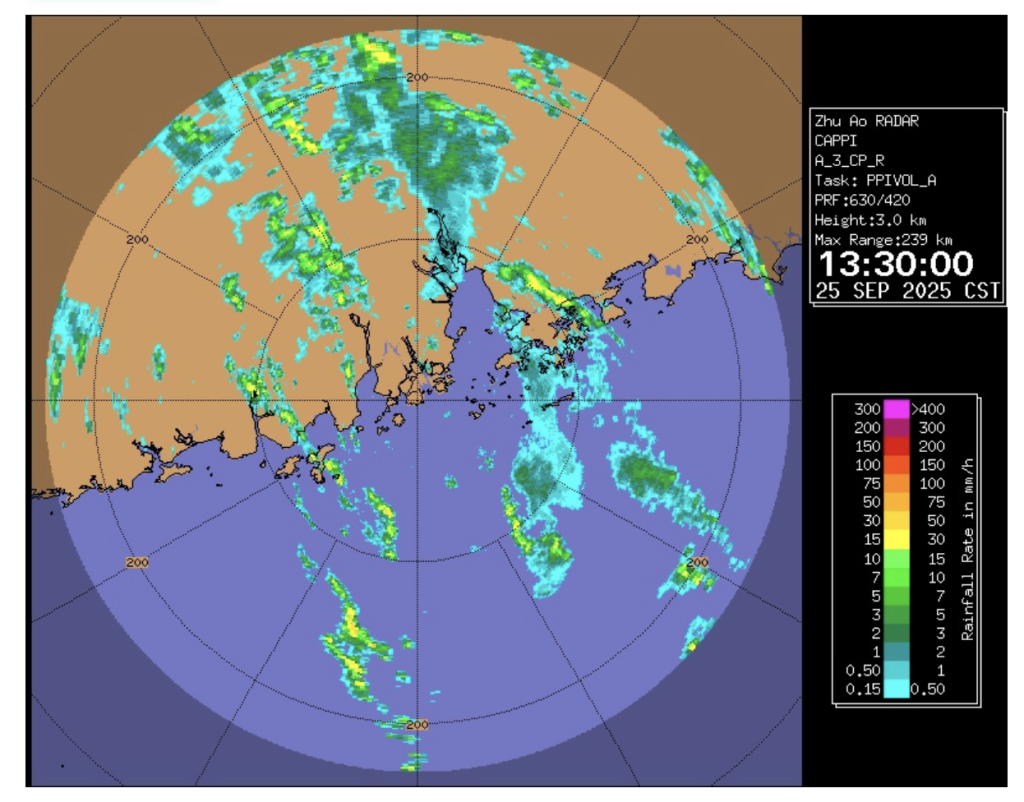
In Macau, torrential rain and storm surges hit low-lying districts. According to local reports, the Inner Harbour, a key commercial and residential zone, recorded water levels above one metre, with streets submerged and businesses disrupted. Around 16,000 households lost power at the peak of the storm, with authorities working to restore electricity once floodwaters receded.
Even as the Meteorological and Geophysical Bureau (SMG) downgraded warnings from No. 10 to No. 8 and then to No. 3, floodwaters lingered in some areas. Cleanup operations began immediately, with fallen trees, debris, and damaged infrastructure scattered across the city.
Transport links resume between Macau and Hong Kong
Local media reported that ferry services connecting Macau and Hong Kong restarted on 25 September. The first sailings from Hong Kong’s Sheung Wan pier to Macau departed at 7:30 a.m., while the first trips from Macau to Hong Kong began at 9:00 a.m. Services had been suspended before Ragasa’s landfall as storm surge warnings threatened coastal safety.
Historical precedent for closures
Macau has rarely suspended its casinos, but precedents exist. In 2018, Super Typhoon Mangkhut caused a 33-hour shutdown, marking the first such event in history. Typhoon Saola in 2023 led to a nine-hour closure, while pandemic restrictions closed casinos for 15 days in February 2020 and for an additional week in July 2022.
Preparedness measures have been strengthened since Typhoon Hato in 2017, which left 10 dead and injured more than 240. That disaster exposed gaps in civil protection, leading to reforms in disaster coordination between the public and private sectors.
Impact on gaming revenues
The financial fallout from Ragasa is already apparent. Citigroup cut its September 2025 gross gaming revenue forecast for Macau to MOP18.5 billion ($2.3 billion). The downward revision, the second this month, reflects both the suspension during the typhoon and weaker-than-expected gaming activity earlier in the period.
With casinos and transport services reopened, Macau is entering recovery mode. Authorities emphasise the importance of civil protection measures, while the gaming sector faces the challenge of maintaining operational continuity without compromising safety.
Step inside the world’s biggest iGaming community. Join HERE for weekly updates from the world’s iGaming authority and unlock subscriber-only offers.


