



Macau’s gaming sector outperformed expectations in 2025, with gross gaming revenue (GGR) rising above official forecasts despite broader economic and regulatory changes in the market.
According to figures released by the Gaming Inspection and Coordination Bureau (DICJ), as reported by local media, Macau recorded total GGR of MOP247.40 billion (US$30.9 billion) for the full year. This represents a year-on-year increase of 9.1 percent and comfortably surpasses the government’s revised forecast of MOP228 billion.
The latest results highlight the continued recovery of Macau’s casino industry following the pandemic, even as growth remains below pre-COVID levels. Full-year GGR in 2025 reached approximately 84.6 percent of the MOP292.46 billion (US$36.5 billion) recorded in 2019, the last full year before global travel restrictions disrupted the market.
A strong performance in December helped lift the annual total. Macau’s casinos generated MOP20.89 billion (US$2.61 billion) in GGR during the month, marking a 14.8 percent increase compared with December 2024. It was the city’s strongest December result since the Covid-19 pandemic, although it remained slightly below November’s GGR of MOP21.09 billion (US$2.63 billion).
The better-than-expected annual result comes after the Macau government cut its 2025 GGR forecast earlier in the year, citing global economic uncertainty, slower mainland Chinese growth and more cautious visitor spending patterns. The final figures suggest that tourism demand and mass-market play proved more resilient than anticipated, particularly in the second half of the year.
Structural shift in Macau’s gaming sector
The 2025 revenue outcome also coincides with a major structural change in Macau’s casino landscape. The city has now formally closed all of its satellite casinos following the expiry of a three-year transition period introduced under Law 7/2022.
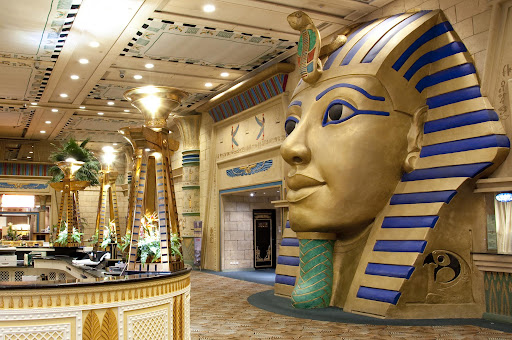
Macau’s last remaining satellite venue, Landmark Casino, closed on 1 January 2026. Under the revised legal framework, satellite casinos were required to restructure their operations or cease trading by 31 December 2025.
Satellite casinos were typically smaller gaming venues operated by third-party companies under the licences of one of Macau’s six concessionaires. At their peak, they played a visible role in older districts outside the Cotai Strip’s integrated resort developments. Their closure reflects the government’s push to consolidate gaming activity within large-scale, concessionaire-run resorts.
Gaming taxes remain central to public finances
Despite the closure of satellite casinos, gaming revenue continues to underpin Macau’s public finances. In its 2026 Policy Address, the Macau SAR government forecast MOP92.7 billion in tax revenue from public concessions next year, with the majority expected to come from gaming taxes.
If achieved, concession revenue would account for around 80 percent of Macau’s estimated total tax intake of MOP114.8 billion in 2026, although the figure represents a slight decline from the MOP93.3 billion projected for 2025.
At the same time, Macau is moving to tighten regulation in other areas of the gaming sector. In November last year, the government finalised a draft bill proposing a broad ban on gambling-related advertising, with limited exceptions for industry events and responsible gambling initiatives. The legislation reinforces existing rules that restrict gambling promotions to designated casino areas only.
Subscribe HERE to SiGMA’s Top 10 News countdown and SiGMA’s weekly newsletter to stay up to date with all the latest iGaming News from the world’s iGaming authority, and benefit from subscriber-only offers.


