


No EU funding for Malta-licensed gaming companies: The Commission’s position

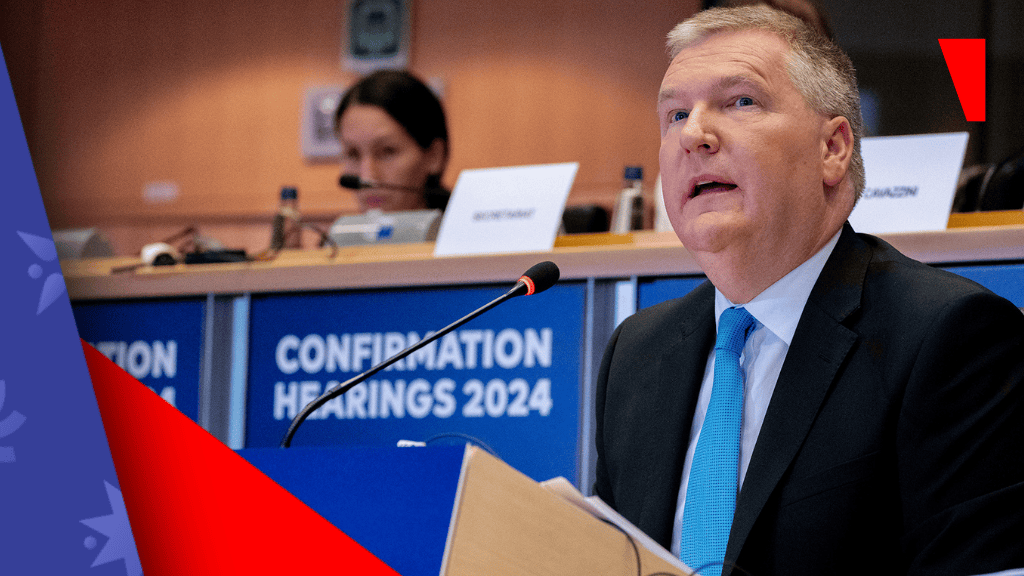
In a recent official response, European Commissioner Michael McGrath, responsible for democracy, justice, the rule of law and consumer protection, ruled out that gaming companies licensed in Malta have received European Union funds, either directly or indirectly. His clarification came in reply to a parliamentary question by MEP Daniel Freund (Greens/EFA), who raised concerns over potential EU financial support for major iGaming operators under Malta’s regulatory regime.
Malta as an iGaming hub and the “Bill 55” controversy
Today, Malta hosts 321 licensed operators, including major names such as Flutter (PokerStars), Bet365, 888, Betsson, Betway and Tipico. This figure underlines the island’s central role in the European iGaming landscape, having developed over the years into one of the most advanced regulatory centres.
At the core of the dispute is the 2023 introduction of Article 56A – commonly known as “Bill 55” – into Malta’s Gaming Act. The amendment allows local courts to refuse the enforcement of foreign judgments if these are considered to be in conflict with Maltese law or public policy. According to the European Commission, this provision undermines the fundamental principles of mutual trust between Member States’ judicial systems and the free circulation of judicial decisions within the Union.
In June 2025, the European Commission formally opened infringement proceedings against Malta with a letter of formal notice. The Commission argued that Article 56A deters foreign claimants from taking legal action in Malta, even in cases where the jurisdiction would normally fall under the Brussels I Recast Regulation.
Malta’s official defence
The Maltese government and the Malta Gaming Authority (MGA) responded firmly, arguing that Article 56A does not create new barriers but rather codifies an existing public policy principle already compatible with EU law. The authorities stressed that the measure is consistent with the “public order” exception foreseen under European legislation and is necessary to safeguard Malta’s regulatory model, which is based on a “point-of-supply” approach that allows cross-border services under Maltese oversight.
Imminent legal developments
As of 9 September 2025, the issue remains unresolved. Following the Commission’s letter of formal notice, the Maltese government has submitted its defensive arguments. Brussels is currently assessing this response and will decide whether to escalate the procedure to the next stage with a “reasoned opinion” – a final warning before potentially referring the case to the Court of Justice of the European Union.
If the Commission deems Malta’s reply unsatisfactory, the dispute may end up in Luxembourg. A ruling from the Court would set a binding precedent, directly affecting both the regulation of online gaming and judicial cooperation across the EU. For Malta-licensed operators, this scenario would bring the risk of facing more legal actions in other Member States, leading to increased litigation costs and greater regulatory uncertainty.
The outcome of this dispute will not be limited to technical considerations. It has the potential to redefine the balance between the legislative sovereignty of a Member State and the EU’s drive for uniformity in ensuring legal certainty within the digital single market. Unsurprisingly, the case is attracting close attention from both European institutions and the iGaming industry.
A regulatory crossroads for Europe’s iGaming industry
The confrontation between Malta and the European Commission is far from a minor issue: it represents a crucial test for the future of iGaming regulation in the Union. On one side lies the defence of national sovereignty by a Member State that has successfully built a competitive and robust ecosystem; on the other, the EU’s insistence on safeguarding the integrity of the single market and guaranteeing predictability for businesses and consumers alike.
In the coming months, the Commission’s decision on whether to escalate the infringement procedure will set the tone for the next phase of this dispute. If the case reaches the Court of Justice, its outcome could reshape the rules of engagement not only for Malta but also for any Member State seeking to retain regulatory autonomy in sensitive sectors. The European iGaming industry thus finds itself at a crossroads, suspended between the plurality of national models and the push towards greater EU harmonisation.
This article was first published in Italian on 9 September 2025.
All roads lead to Rome, from November 3 to 6, 2025.
SiGMA Central Europe will be a key event at Fiera Roma, bringing together 30,000 delegates, 1,200 exhibitors, and over 700 speakers. This is where legends are born and the future takes shape. Connect with the innovators driving change.


