


PAGCOR: E-wallet curbs hit legal gambling, threaten revenues

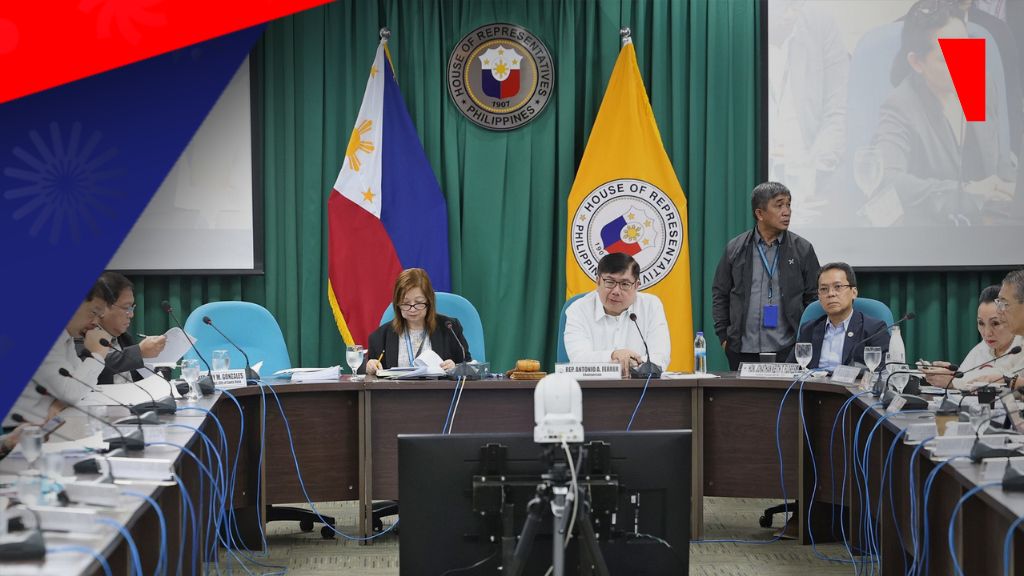
Government restrictions on e-wallet use for online gambling have cut the Philippine Amusement and Gaming Corporation’s (PAGCOR) earnings by nearly half, exposing the growing tension between curbing gambling addiction and sustaining a vital source of public funds, according to an official.
PAGCOR reported a “sharp decline” in income beginning in August 2025, following the delinking of online gaming platforms from e-wallet services and a slowdown in new player registrations. During a House Committee on Games and Amusements hearing, PAGCOR Offshore Gaming Licensing Department Assistant Vice President Jessa Mariz Fernandez said the agency’s revenues fell by as much as 49 percent in the second half of the year.
“Based on our projections for the first half of the year, it was expected to reach PHP60 billion ($1 billion). However, starting August 2025, we experienced a sharp decline in income, up to 49 percent,” Fernandez said during the hearing. “So, we are expecting that our earnings will be lower by the end of 2025.”
She added that PAGCOR’s policy of implementing a PHP500 ($8.53) minimum deposit for online gaming may have discouraged small-scale players from continuing on legal platforms. “Now that we are implementing the initial minimum deposit, we have felt that more players are refusing to continue playing with legal online gaming operators. Some players usually deposit or top up only between PHP100 to PHP500 ($1.71 to $8.53),” Fernandez said in Filipino.
The committee hearing centred on proposals to either strengthen regulations on online gambling or ban it altogether.
DEPDev claims iGaming’s economic contribution ‘minimal’
While PAGCOR defends its role as a revenue contributor, the Department of Economy, Planning, and Development (DEPDev) told lawmakers that online gambling’s contribution to the national economy remains small, accounting for just 0.37 percent of the country’s gross domestic product (GDP).
“The DEPDev supports either a complete ban or strict regulation of online gambling,” Desiree Narvaez, DEPDev Director, said. “This is considering its minimal contribution to the economy.”
PAGCOR, however, said that iGaming continues to serve as a key funding source for the government. Fernandez noted that nearly 60 percent of PAGCOR’s total income comes from online gaming operations, warning that a total ban would further reduce its remittance to the National Treasury.
Under the Universal Health Care (UHC) Act, half of the government’s share of PAGCOR’s income is allocated to PhilHealth for its benefit packages.
House Committee Chairperson Antonio Ferrer, however, maintained that the government can offset any shortfall in funding for the UHC. “We are fixing the budget now, so there’ll be more than enough funds if what we are worried about is funding for universal health care. There are many possible sources,” Ferrer said in Filipino.
PAGCOR steps up drive against illegal sites
Amid declining revenues from legal operators, PAGCOR said that it has intensified efforts to clamp down on illegal online gambling. Since September 2022, the National Telecommunications Commission (NTC) has blocked 12,562 sites or 93 percent of all illegal gambling websites reported by the regulatory body.
Retired General Raul Villanueva, PAGCOR’s Senior Vice President for Security and Monitoring, said the agency’s use of artificial intelligence (AI) technology has dramatically improved detection and reporting. Villanueva said the homegrown AI programme, developed by PAGCOR in partnership with the Cybercrime Investigation and Coordinating Center (CICC), has boosted reporting efficiency from 100 to 500 illegal sites weekly. Fernandez explained that the continuous blocking of websites has become an effective deterrent.
Debate over total ban continues
Meanwhile, lawmakers remain divided on whether to impose a total ban on online gambling. Lanao del Sur Representative Zia Alonto Adiong has expressed support for a complete prohibition, citing social costs such as addiction and mental health issues. On the other hand, Negros Occidental Representative Javi Benitez warned that an outright ban could push operations underground and displace thousands of Filipino workers.
Church leaders have also joined the debate. Bishop Pablo Virgilio David earlier called on the government to protect the youth from becoming “gambling addicts.”
While a legislative ban remains under discussion, Ferrer said during the House committee hearing that a technical working group is likely to be formed before year-end to consolidate proposed bills. “Most likely, there will be a TWG, but I cannot say if a bill will be finalised since it will still be subject to committee voting,” Ferrer said in Filipino.
Colombo’s ready for South Asia’s premier iGaming summit. Join 5,000+ delegates at SiGMA South Asia, 30 Nov – 02 Dec 2025. Network, scale, and grow in one of the world’s fastest-rising markets, where new markets meet new horizons.


