


Philippines mulls 30% licence fee for online gambling operators

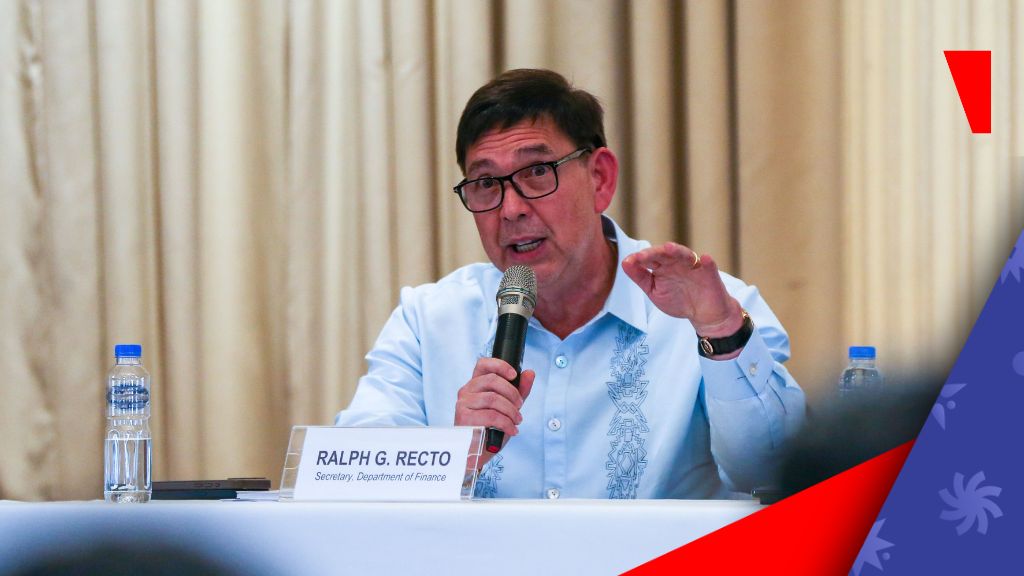
The Philippine government is considering raising licence fees on operators of electronic games & online gambling games or what we commonly referred to as e-games—to as high as 35 percent, in a move that could significantly reshape the nation’s online gambling sector.
Finance Secretary Ralph Recto (as depicted in the featured image) floated the proposal earlier this week, saying a rate of “thirty [percent]… or thirty-five [percent]” is under consideration.
“We’re studying that [licencing fees] because if it’s too high, it might lead to a rise in illegal operations,” Recto told reporters at a gathering in San Juan City. The Department of Finance is reportedly coordinating with the country’s gaming regulator, the Philippine Amusement and Gaming Corporation (PAGCOR), to investigate the matter.
Currently, land-based casinos that offer online gambling services pay a reduced 25 percent licensing fee, lowered from 30 percent on 1 January 2025. However, this structure applies only to online games delivered by physical integrated resorts. The new plan under discussion appears explicitly aimed at domestic e-games platforms, which form a separate and rapidly growing category.
The proposal comes at a time when the Philippines’ online gambling sector is surging. In the first half of 2025, the country’s gross gaming revenue (GGR) reached PHP214.75 billion (€3.31 billion), according to PAGCOR. That marked a 26 percent increase from PHP171 billion (€2.63 billion) recorded in the same period last year.
Electronic gaming—comprising e-Games, e-Bingo, and licenced Bingo outlets—led the industry’s growth, contributing PHP114.83 billion (€1.77 billion), or 53.47 percent of total GGR.
Online gambling now dominant
By contrast, licenced land-based casinos across Metro Manila, Clark, Cebu, La Union, and Rizal generated PHP 93.36 billion (€1.44 billion), amounting to 43.47 percent of the overall gaming market. PAGCOR’s own network of government-run casinos brought in PHP 6.56 billion (€101 million), representing a modest 3.06 percent share.
Despite the strong numbers, the sector remains politically sensitive. Expectations had risen that President Ferdinand Marcos Jr. would provide some clarity on the issue during his annual State of the Nation Address on 28 July 2025. However, the president made no mention of the online gaming industry.
Senate President Francis Escudero defended the omission, noting that several legislators have already proposed bills ranging from tighter regulation to outright bans. “In this context, it is unrealistic to expect the president to tackle every proposal,” he said.
Fresh calls to ban e-gambling
While PAGCOR officials stress the importance of responsible regulation, internal dissent is growing. Gian Samson, speaking on behalf of PAGCOR’s employee association, expressed support for a complete ban on online gambling. “It’s not contributing anything to our society, and it’s putting lives and savings at risk,” he stated.
The Catholic Church has also weighed in. Cardinal Pablo Virgilio David described gambling as a “moral and social crisis,” warning that it disproportionately affects the poor, students, and vulnerable groups.
Still, industry advocates argue that banning licensed online platforms could backfire by driving users toward illegal operators with no oversight or consumer protections. Such a move, they warn, could endanger jobs and remove key revenue streams used for national development projects.
In response to growing concerns, PAGCOR recently signed a memorandum of understanding with the Ad Standards Council to tighten control over gambling-related advertisements. It has also ordered all gambling ads in public spaces and on primetime television to be removed by 15 August 2025.


