


India’s esports dreams in jeopardy, expert urges recognition


Indian esports is riding a wave of global recognition, thanks to S8UL, a prominent Indian esports organisation and gaming content creation hub, which stunned the nation by securing qualification for the Esports World Cup 2025 in Riyadh, Saudi Arabia. It’s not just another tournament: the World Cup is considered the Olympics of esports, boasting a record-breaking $70 million prize pool.
But behind these headlines lies a stark reality. India’s National Sports Policy 2025 has officially left esports out of the picture once again. For many in the industry, this exclusion is a heavy blow. According to The Economic Times, India’s esports market is expected to reach $100 million by the end of 2025.
The energy is electric and @EWC_EN is delivering like never before. 😌#S8ULFTW #GameShuru #Gameशुरु #EWC2025 pic.twitter.com/hCwMRfUJYo
— S8UL (@S8ulesports) July 9, 2025
India’s esports need to think beyond short-term wins
The absence of policy support is felt on a daily basis, according to industry leaders. There is still no government-recognised central governing body for esports in India. The Esports Federation of India (ESFI) and other groups can put on events and choose athletes to represent their country. However, they are unable to ensure uniform contracts, equitable dispute resolution, or complete player protection in the absence of official recognition. With little knowledge of their legal rights or prospects for job stability, it exposes Indian esports players, teams, and investors to operating in a hazardous environment.
Revenant Esports’ founder and CEO, Rohit Jagasia, thinks the nation is at a pivotal juncture. He explained in an interview with SiGMA News the urgent requirement for official approval, varied revenue streams, and institutional reform in order to make Indian esports a genuinely worldwide power.
Jagasia warned, “Reliance on sponsorships alone is the Achilles’ heel of esports. Brand sponsorships are the backbone, but they are also the weakest link when budgets tighten.”
Long-term revenue in Indian esports
Jagasia points out that traditional sports achieved long-term resilience not just through sponsorships, but also by diversifying revenue streams, including stadium naming rights, athlete licensing, ticketing, and more. For esports in India, the path forward must mirror this model.
Jagasia believes the sector needs to lean heavily into direct-to-fan revenue, which could take multiple forms: ticketed live events that cater to localised fandoms, tiered subscription models that unlock exclusive content, merch drops tied to team lore, and branded collaborations that go beyond logos on jerseys. With India’s esports industry projected to hit $100 million by 2025, Jagasia is confident the scale is within reach.
Jagasia said, “Equally pivotal is owning our intellectual property. We need to create original gaming content that can be licensed, syndicated, or monetised via streaming rights. A futuristic revenue stream would be digital collectibles and NFTs. India’s esports industry is projected to reach $100 million by 2025. It proves that we can master the scale if we diversify strategically. When esports entities begin thinking like entertainment powerhouses instead of competitive teams, they unlock enduring revenue.”
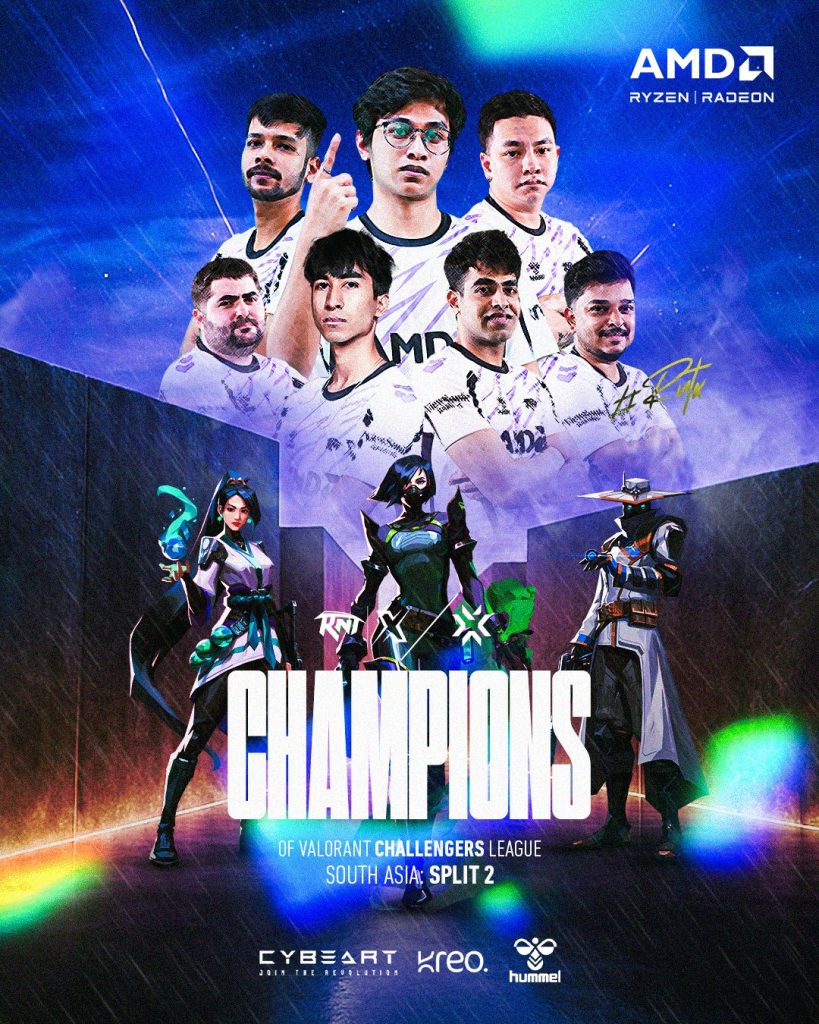
(Image Source: Revenant Esports)
Competing globally in a volatile domestic environment
For Indian teams to consistently compete with international counterparts, raw talent alone isn’t enough. “Competing internationally doesn’t just hinge on skills; it means matching the training standards and consistency of top-tier teams. It requires infrastructure, regulatory nuance, and operational steadiness,” Jagasia explained.
India has produced remarkable talent, but sustaining it requires government recognition of esports, reliable low-latency servers, and a clear regulatory separation from gambling. Stability of game titles is another factor that prevents teams from building professional rosters, as publishers may pull titles due to policy disputes.
He further emphasised, “Indian teams have showcased raw talent, but to sustain that, we need government recognition, reliable low-latency servers, clarity separating esports from gambling, and safe, long-term access to the titles we’re building rosters around.”
He cites Saudi Arabia’s meteoric rise as a lesson: with a projected gaming market size of $1.7 billion by 2029, a $70 million prize pool, and high-profile global icons, the country has positioned itself as a global esports’ hub. India, he insists, can do the same, especially with Krafton planning an Indian Premier League style franchise league.
“India must first shore up our base. It’s not impossible, but it’s harder than people think.”
~ Rohit Jagasia, Founder & CEO, Revenant Esports
Professionalism without a unified governing body
Jagasia is blunt about the gap between perception and reality. “Without a governing body, professionalism is merely a marketing term,” he said.
Although federations like Esports Federation of India (ESFI), All India Gaming Federation (AIGF), and Skillhub Online Games Federation (SOGF) have made efforts, none have official government recognition. Jagasia shared, “We’ve witnessed multiple federations, from ESFI to AIGF to SOGF. Yet none hold official government recognition, creating legal limbo for contracts, transfers, prize disbursement, or dispute resolution. We need a recognised apex body for standardised infrastructure for athlete welfare and to increase integrity. Only then can ‘professionalism’ shed its marketing sheen and become real.”
India’s esports on the cusp of transformation
The esports landscape in India is at a turning point. The nation reflects the early momentum of South Korea’s ascent in the 2010s, given its large youth population, high levels of internet engagement, and untapped gaming ability. Although there is no denying the enthusiasm and promise, the framework necessary to sustain sustained expansion is still insecure.
Despite these challenges, Jagasia is optimistic. He noted, “India’s esports stand on the cusp today. We have the raw talent and audience numbers to be a global force.” The absence of esports in India’s National Sports Policy 2025 underlines a deeper issue: without regulatory clarity and institutional support, the industry’s revenue streams remain volatile and its players vulnerable. It’s time to shift focus from short-term glory to sustainable success.
Jagasia cautions against chasing quick wins without building strong foundations. He concluded, “Skipping the foundation-setting step for flashy wins leads nowhere. We need to build sustainable careers, protect our players, and create a stable ecosystem. It’s what will make wins repeatable.”


