


Watch: SiGMA in conversation about understanding economics in the gaming sector

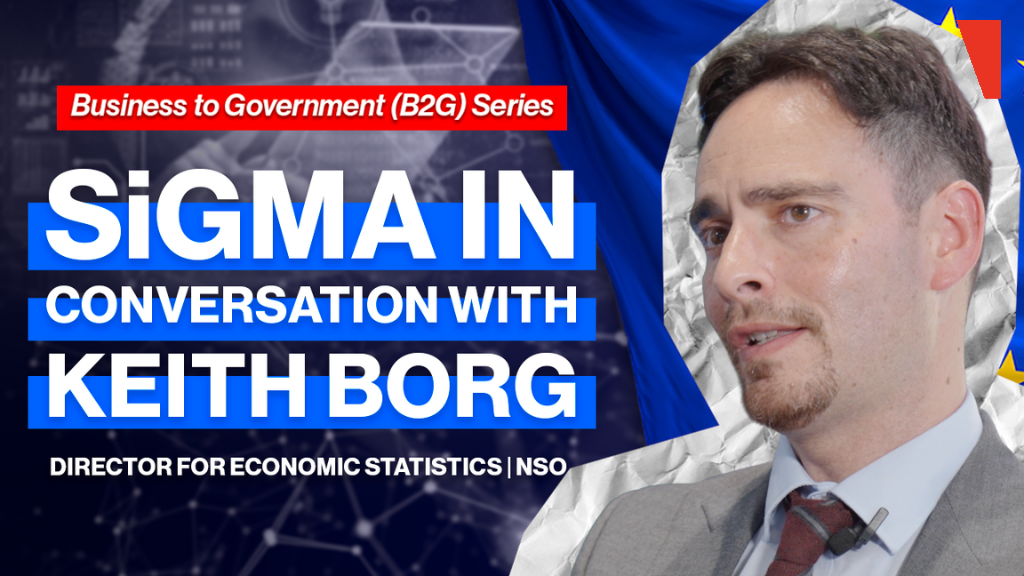
In a recent interview, Keith Borg, Director for Economic Statistics at the National Statistics Office (NSO), highlighted the fundamental role gaming plays in Malta’s economic structure. Borg explained that the sector, formally known as NACE 92, is deeply intertwined with NACE 62, which covers programming.
The NSO uses NACE to drive an understanding of the links, specifically NACE 92 (what we formally refer to as gaming, betting, and lotteries), and its structures are directly embedded within NACE 62 (programming, consultancy, and other computer services).
NACE, the European statistical classification of economic activities, is critical to understanding how these classifications are connected, primarily because gaming is integral to software, engaging in economic activity, and pursuing a social license to enable the growth of gaming within jurisdictions.
“Both sectors within the economy account for around 15% of the gross value added. Gaming accounts for around 7%, while the programming sector accounts for another 7%.”
The industry has been growing remarkably, with average annual growth of 16 to 17% since 1995. Borg stated that Malta’s strong and established ecosystem has ensured its place as a premier hub in Europe and guaranteed its long-term sustainability.
Shifting patterns in the European landscape
While Malta remains dominant on an international scale, Borg said he is witnessing changing patterns throughout Europe. Since 2021, the German market has undergone numerous regulatory changes and the acquisition of local licences, altering the industry’s composition.
“We saw kind of the gaming sector reaching more of a plateau, whereas NACE 62 increased its share over the past years.”
This change indicates a stronger focus on support services and software development, rather than direct gaming portfolio products, which means that the programming sector in Malta is expected to continue growing in the future.
Employment and productivity in gaming
The sector’s contribution extends beyond revenue, with employment opportunities spanning technical and operational roles. The Malta Gaming Authority’s latest report highlights that licensed gaming companies in Malta employ between 14,000 and 15,000 full-time equivalents.
Borg emphasised the sector’s productivity compared to traditional industries:
“The gaming sector and NACE 62 are known for being high-productivity sectors. Employees in relation to other sectors produce more in terms of gross value added.”
This efficiency underscores gaming’s strategic value as a significant economic contributor, despite employing fewer people relative to its overall output.
Online dominance over land-based operations
Borg clarified that when referring to “gaming,” the primary focus is on online platforms such as casinos and interactive games offered against payment. He noted that land-based casinos represent only a small portion of the sector’s gross value added.
“There is no doubt that the largest portion accounted for in terms of gross value added is coming from online gaming, not land-based.”
This dominance of digital gaming highlights Malta’s positioning as an online-first jurisdiction.
Innovation, resilience, and future growth
The gaming industry’s adaptability has been key to its resilience. Borg pointed out that hybrid models, which combine land-based and online elements, are likely to increase as new technologies are adopted, reassuring the audience about the sector’s future.
“The industry has proven that it is capable of integrating and adapting to new technologies easily. It will continue to absorb newer technologies, which will make it grow more efficient and therefore more profitable.”
Emerging innovations such as AI and digital assets are already influencing the sector, with even greater transformation expected in the years ahead.
“The opportunities there are infinite. It is not possible to quantify what the gaming industry will look like in five years, but it will most definitely gain momentum when it comes to the adoption of AI.”
Consolidating Malta’s position
While the NSO does not provide forecasts, Borg believes the current trends will continue. With gaming and programming forming the backbone of the Maltese economy, the country is poised to maintain its status as a European leader in digital entertainment.For further reading on gaming and its economic impact on Malta, see the SiGMA website.


