


California Governor bars state officials from profiting on prediction markets


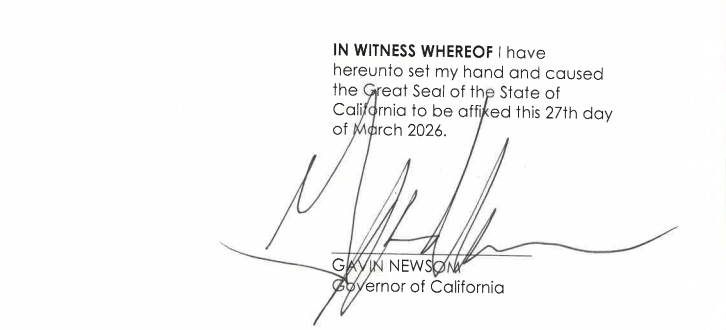
On 27 March, California Governor Gavin Newsom signed an executive order banning state officials from using non-public government information to profit on prediction markets, platforms where people bet on the outcomes of political, economic, sporting, and other events.
A few days before the order was signed, the US Congress saw the introduction of a bipartisan bill, the “Prediction Markets Are Gambling Act”. Senators Adam Schiff and John Curtis proposed banning platforms overseen by the Commodity Futures Trading Commission (CFTC) from listing contracts linked to sports betting or casino-style products. The authors argue that such contracts allow platforms to sidestep consumer-protection rules, tax regimes, and agreements with licensed operators.
What has been prohibited for officials
The order does not impose a blanket ban on participation in prediction markets. Instead, it draws an ethical boundary for public officials: from the moment the order took effect, they may not use non-public official information for profit. The prohibition is not limited to an official’s personal gain. It also covers situations where an insider advantage helps generate profit for relatives, former business associates, friends, or other third parties. Where there is uncertainty, officials are instructed to consult ethics officers or the administration’s legal counsel.
In effect, California has closed a grey area where standard conflict-of-interest rules could appear insufficiently clear. The order’s preamble states that the growth of prediction markets increases the risk that someone with access to sensitive information could monetise it before an event becomes public. The order confirms that the logic of anti-corruption rules, including the Political Reform Act of 1974, also applies to event markets.
Why the order was introduced
The immediate backdrop of the executive order was a series of high-profile stories involving bets on geopolitics. The governor’s press release cites a trader who placed tens of thousands of dollars just hours before reports of the detention of Nicolás Maduro and reportedly earned $410,000. The case is presented as an example of how seriously authorities view the risk of individuals profiting from insider information. It is important to note that this is not described as a proven episode of insider trading, but as a bet that raised suspicions and intensified political pressure on the sector.
“Public service should not be a get-rich-quick scheme. At a time when Trump’s Washington is riddled with ethical failures and insider profiteering, California is drawing a bright line: If you serve the public as a political appointee, you serve the public—period. We’re not going to tolerate this kind of corruption in California.“
Gavin Newsom, California Governor
At the same time, platforms themselves have begun tightening internal rules amid heightened scrutiny. Kalshi said it would bar politicians from participating in markets related to their own campaigns and athletes from sports-related contracts. Polymarket has also stated that it prohibits betting based on confidential information by anyone who could know an outcome in advance or influence it. These steps have coincided with pressure from Congress and state authorities, with this in mind, Newsom’s order is generally seen as being part of a wider trend in the US.
California’s earlier moves
Governor Newsom is known for his consistent stance against grey-market gaming models. In October 2025, he signed AB 831, which banned dual-currency sweepstakes in the state, promotions where users can win prizes by chance. Supporters of the law argued that sweepstakes operators used a two-currency structure to exploit legal loopholes. Players could buy ‘gold coins’, while ‘sweep coins’ could then be won and exchanged for real money. This resembled casino mechanics without the same level of oversight and responsible-gambling standards. California drew a hard line against that grey segment; the new executive order applies a similar logic to prediction markets, but through the lens of public-service ethics.
Global context
Comparable principles exist outside the United States. Canada’s federal Conflict of Interest Act explicitly prohibits public office holders from using non-public official information for their own benefit, for the benefit of relatives or friends, or to advance the interests of other persons. In addition, in March 2026, Alberta’s gambling regulator banned betting on political events in the province’s new online gambling market. The Alberta Gaming, Liquor and Cannabis Commission (AGLC) issued a bulletin stating that wagers on elections, by-elections, and internal party leadership races must not be offered.
The UK framework is broader, but the underlying logic is the same. The Ministerial Code requires that no conflict of interest, or even the appearance of one, should arise between a minister’s public duties and private interests. The Civil Service Code separately prohibits using one’s position or information obtained through official duties to advance personal interests or the interests of third parties.
Key takeaway
California is among the first to explicitly link conflict-of-interest rules to prediction markets. With the context of the Senate bill, platform-level restrictions, and the state’s earlier enforcement against grey-market models, the order effectively reads as a signal that authorities are increasingly working to ensure that digital products cannot be used to profit from insider knowledge, and are therefore moving towards tighter rules for prediction markets.
This article was originally published in Russian on 30 March 2026.
Step inside the world’s biggest iGaming community. Join HERE for weekly updates from the world’s iGaming authority and unlock subscriber-only offers.


