


The Danish government has submitted Bill L 127 to parliament (the first reform package, Spilpakke 1), proposing to ban gambling advertising on television and streaming services for 10 minutes before a live sports broadcast until 10 minutes after it ends. The initiative is being described as a “whistle-to-whistle” ban.
The wider European agenda is moving in the same direction: Ireland, Croatia and several other countries are introducing permitted time windows for gambling advertising, while some jurisdictions are debating near-total bans. Further details of the Danish legislative proposal are outlined below.
What the new bill proposes
The bill sets a restriction on gambling marketing during live sports broadcasts on TV and streaming. Under the draft text, advertising cannot be shown:
- in the 10 minutes before the event starts
- during the entire broadcast
- for 10 minutes after it ends
The ban also covers the display of live odds and more complex broadcast formats – for example, when a channel briefly switches to news and then returns to sport, or when multiple sports events run back-to-back.
It is important to note that the bill has only been introduced for parliamentary consideration, meaning the rules are not in force yet.
Why the focus is on sport
In a press release from Denmark’s Ministry of Taxation, the key rationale is the protection of children and adolescents. The ministry estimates that around 25,000 minors in the country show various forms of problematic behaviour linked to gambling.
“I have met people and families where gambling went from entertainment to a cause of addiction, debt, instability and broken relationships… that is why it is important to set clear boundaries – especially where children and young people are concerned.”
Ane Halsboe-Jørgensen, Denmark’s Minister for Taxation
A second reform package, Spilpakke 2, is also being prepared, focusing on new platforms and formats.
Denmark’s market in numbers
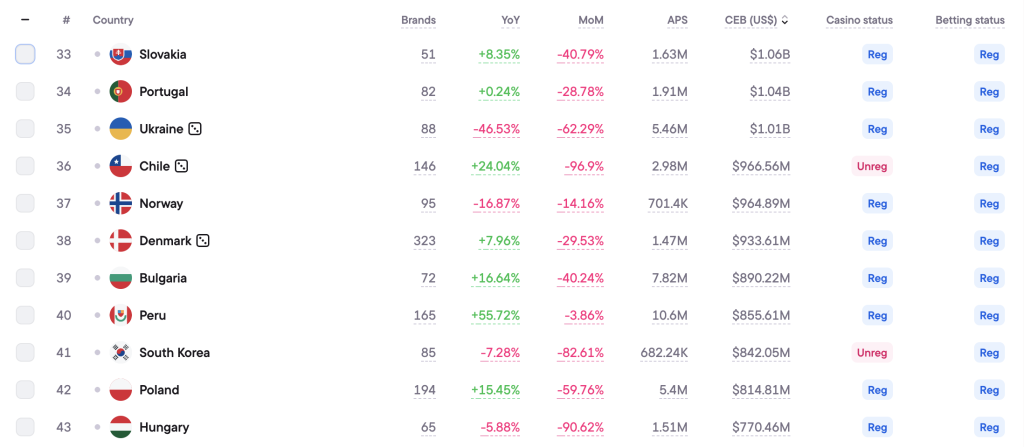
According to the Blask analytics platform as of 2 March 2026:
- Denmark ranks 38th globally by estimated iGaming revenue.
- The country has 323 registered brands, indicating a highly competitive market.
- Between 1 February 2025 and 1 February 2026, the market grew by almost 8% on the Blask Index – a metric intended to reflect market interest and attention volume for iGaming in a given country.
- However, from 1 January to 1 February 2026, the index fell by nearly 30%, indicating significant volatility in market interest.
Against that backdrop, any changes to advertising rules around sport become a factor in how visibility and competitive positioning are redistributed.
What else Bill L 127 includes
The “live sport” restriction is only one part of the package. Bill L 127 also proposes several restrictions on:
- gambling advertising in public transport, including stops and vehicles such as trains and buses
- advertising in the public area around schools and educational institutions – a 200-metre radius for institutions where the majority of students are under 18
- ad content and the use of imagery – advertising messages must not appeal to children or adolescents
The bill would prohibit the use of “authority figures” – public figures whose reputation could be interpreted as endorsing gambling. It would also ban the participation of people under 25 in gambling advertising.
If parliament approves Spilpakke 1, the new rules would take effect on 1 July 2026, with some provisions coming into force on 1 January 2027.
Sport as a trigger for restrictions
A similar logic is appearing beyond Europe as well. In late February, Mexico presented a draft bill to tighten controls on online gambling advertising during sports broadcasts. The country expects a surge in marketing activity ahead of FIFA 2026, and federal lawmakers are concerned that audiences – including young people – will be heavily exposed to misleading narratives about easy wins.
The broader trend is clear: sport is increasingly becoming the arena where governments tighten advertising control, and operators will need to track the news cycle closely and prepare for further restrictions.
This article was first published in Russian on 2 March 2026.
Stay in the loop and join the biggest iGaming Community in the world with SiGMA’s Top 10 news countdown. Subscribe HERE for weekly updates from the world’s iGaming authority and exclusive subscriber-only offers.


