


Exclusive: How William Bonalume sees the maturation of iGaming in Brazil

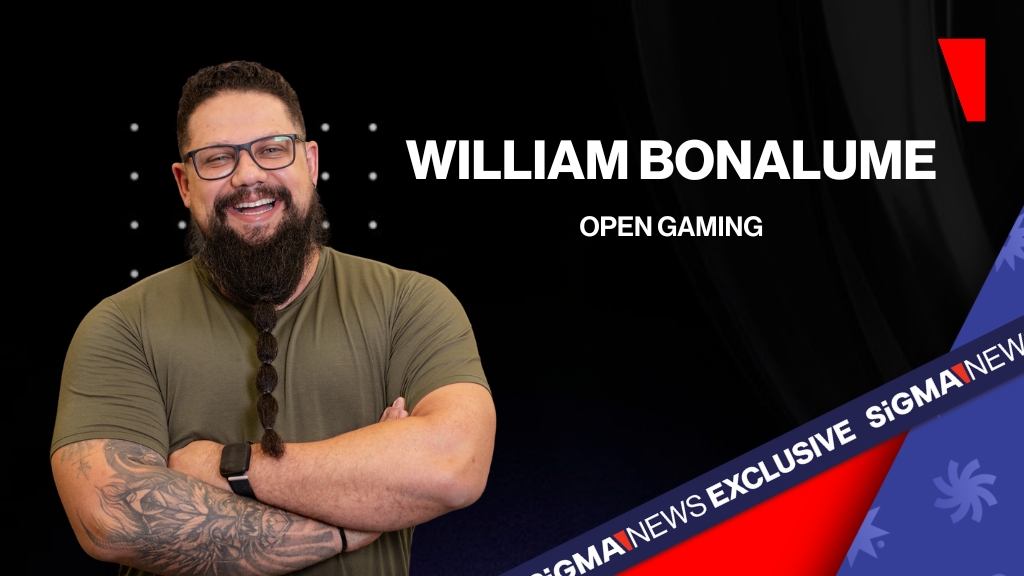
After years operating in a poorly structured environment, the gaming and betting sector in Brazil is now undergoing a transition to a regulated, more demanding and, above all, more professional market. Understanding how operations are adapting has become a key element in grasping the future of the sector. It is within this context that the perspective of William Bonalume, Chief Operating Officer (COO) of Open Gaming, becomes particularly valuable.
With more than 15 years of experience in compliance, fraud prevention, KYC and operational management, Bonalume has built a career marked by the intersection of technology, regulation and operational efficiency. Before entering iGaming, he worked in fintechs and neobanks and also held a strategic and trusted position at Meta, where he served as Statutory Director of Facebook Payments Brazil. In that role, he was responsible for the company’s payment operations in the country, for liaising with regulatory bodies (including the Central Bank), and for overseeing regulated products.
This background helps explain why his reading of the current moment of Brazilian iGaming avoids extremes. For him, the sector is simultaneously experiencing a period of regulatory instability and an inevitable process of maturation. This is not a paradox, but a natural transitional phase: moving from a newly regulated market, still undergoing fine adjustments, towards the construction of a more solid, professional and structured ecosystem.
Brazilian regulation: from water to wine
In Bonalume’s assessment, regulation has not only impacted legal departments or compliance teams, as many operators initially imagined. On the contrary, it has raised the level of demand across the entire organisation. What was once treated as a technical issue, restricted to lawyers and legal opinions, has come to influence decisions related to product, marketing, technology, customer service and risk management. According to him, this effect is one of the main signs of the sector’s maturation. Regulation forces companies to think in an integrated way, understanding that every decision — whether a promotional campaign, a change in the acquisition funnel or a new product feature — carries regulatory, reputational and operational implications.
In this new environment, improvisation ceases to be an option. Processes need to be designed to operate in a safe, efficient and scalable manner from the outset. It is precisely at this point that Bonalume focuses his work at Open Gaming, where he leads all operational areas of two of the 78 brands regulated in Brazil: donaldbet and bet.bet.
Operating two brands means operating two distinct worlds
Managing two brands simultaneously in a market like Brazil is a challenge that goes far beyond duplicating processes. For Bonalume, one of the most common mistakes is treating different brands as if they were extensions of one another. Each carries its own identity, audience, consumption behaviour and operational particularities.
Replicating campaigns, CRM strategies or product approaches without a deep data analysis is a risk that can be costly and jeopardise an entire brand. The answer to this challenge, according to him, lies in data-driven decision-making. Consistent studies on player behaviour, risk patterns, channel efficiency and operational performance make it possible to optimise time, reduce exposure to failures and lead to more accurate choices for each specific reality.
“Understanding that each brand has its own context, identity and player base is essential. Overcoming this challenge depends on data-driven decisions. Consistent studies make it possible to optimise time, reduce risks and lead to the best operational choices for each specific reality.”
This view reinforces that decisions based on guesswork simply do not work in a market as dynamic as iGaming.
The missing link between Marketing and Compliance
When asked about what still receives little attention but could significantly leverage the Brazilian market, Bonalume points to a sensitive and often misunderstood area: the integration between Marketing and Compliance. According to him, there is a mistaken perception that these areas operate on opposite sides. On one side, marketing focused on growth, acquisition and engagement; on the other, compliance as a restrictive, bureaucratic force and a handbrake. In practice, this separation is artificial and harmful.
For Bonalume, sustainable growth only happens when marketing and compliance move together. The integration between these areas strengthens brand reputation, protects the player and reduces regulatory risks that, in the medium and long term, can compromise the entire operation. In an increasingly supervised market, compliance ceases to be a cost and becomes a strategic asset.
Leading in a volatile market requires more than experience
Leadership, in the context of Brazilian iGaming, demands a specific set of competencies. For William Bonalume, some pillars are non-negotiable. The first is data analysis. In an environment where regulatory, behavioural and technological changes happen rapidly, decisions need to be anchored in reliable information.
Adaptability is another important point. The market changes, rules evolve and player behaviour transforms. Leaders who cannot adjust quickly are left behind. Added to this is a mature view of compliance, not as bureaucracy, but as a condition for survival, and clear communication, especially within global and multidisciplinary teams.
Finally, he highlights strategic vision. Every operational decision, no matter how small it may seem, generates ripple effects throughout the business. Understanding this interdependence is essential to running healthy operations in a regulated environment.
The mistake international companies make when entering Brazil
A recurring point in his analysis is the mistake made by international companies when attempting to operate in Brazil. According to Bonalume, many arrive in the country with ready-made global solutions, believing that it is enough to replicate models that have been successful in other markets. The result, in most cases, is frustration.
Brazil requires the localisation of product, processes and culture. Ignoring the local context, especially when it comes to player behaviour and the end consumer, is a shortcut to operational problems, low retention and regulatory risks. Understanding Brazil demands investment in local knowledge, people and genuine adaptation, not just the translation of interfaces or campaigns.
“Treating local challenges with ready-made global solutions is one of the mistakes made by foreign companies.”
A market under construction
Despite the challenges, William Bonalume does not adopt a pessimistic tone. On the contrary, he sees the current moment as a necessary adjustment phase, in which concepts are being consolidated, brands are strengthening and the market is moving — albeit with turbulence — towards a more professional stage.
The combination of regulation, data, operational efficiency and a culture of compliance tends to separate prepared operators from those that will not be able to sustain themselves in the long term. Even so, Brazil remains one of the most promising markets in global iGaming.
Sign up HERE to receive the SiGMA Top 10 news list and the SiGMA weekly newsletter to stay up-to-date with the latest iGaming news from the world’s largest iGaming community and take advantage of exclusive subscriber offers.


