


How can gambling operators stay compliant across markets? Experts weigh in

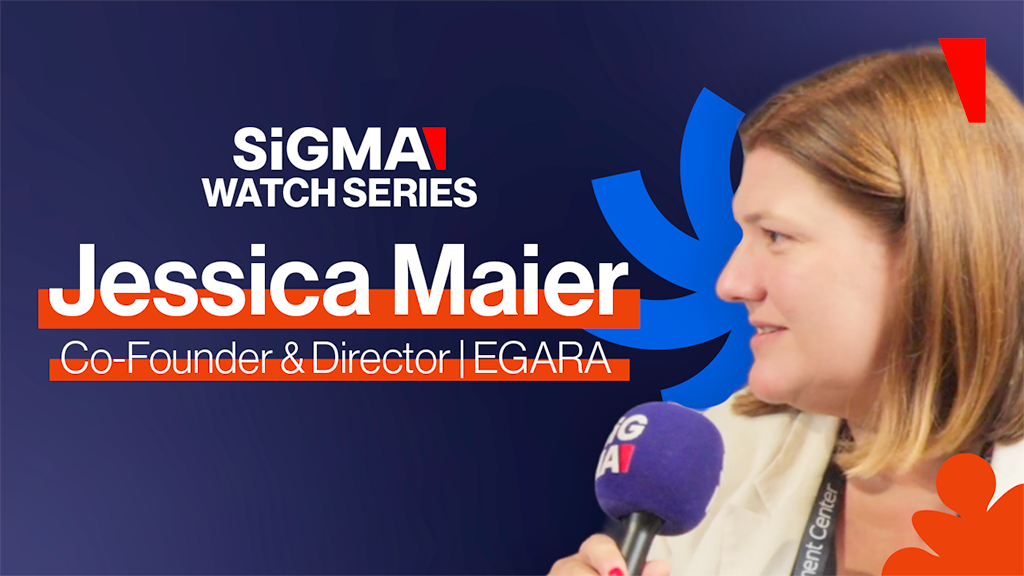
Speaking from Rome in an interview at SiGMA Central Europe, Jessica Maier, co-founder and director at EGARA, said international growth was exposing a basic tension in the industry: how to satisfy an increasingly demanding rulebook without freezing commercial decision-making.
Asked how companies could keep risk management consistent while navigating different regulatory regimes, Maier said the answer was “structured flexibility”.
“What you’ll be looking for is structured flexibility,” she said. “When a company enters a new market, it needs to be clear about what it already has in place, because more often than not there will be common elements in new regulations.”
Maier pointed to anti-money laundering requirements as an area where firms can reuse controls across jurisdictions. “There are general principles across Europe that apply everywhere,” she said. “Those principles are always there, alongside some market-specific requirements. Having a structure that allows flexibility for local markets is key to building a sustainable, scalable approach.”
Compliance as part of the commercial plan
Maier argued that the biggest obstacle to turning compliance into an enabler, rather than a brake, was cultural.
She described the distance that can open up between compliance and growth teams inside operators. “Often, commercial teams feel reluctant to speak to compliance because they assume the answer will be no,” she said. “That, in itself, points to a cultural problem.”
According to Maier, the “reputation” of compliance as the department that blocks ideas is rooted in habits that no longer work in tightly regulated markets. “There is a strong culture within the compliance community of avoiding risk by simply saying no,” she said. “But everyone, including compliance, should be looking for opportunities, because the goal is sustainable growth.”
For that to happen, she said, compliance must be involved earlier. “Compliance needs trust and needs to be involved very early in the process,” she said. “That structure only works if compliance is part of strategic planning, and that is crucial.”
AI, data quality and who carries the blame
Maier’s optimism was clearest when the discussion turned to new tools. Asked how compliance is changing as artificial intelligence, analytics and real-time monitoring become standard, she called the shift “very, very exciting and helpful”.
“It will take away much of the administrative burden, as well as repetitive and time-consuming data analysis work that currently occupies compliance teams,” she said. “Allowing AI to handle those tasks frees people to think about compliance in the more strategic ways we have discussed.”
She added that the longer-term prize was moving from reacting to problems to anticipating them. “It allows compliance to become predictive,” she argued.
The industry is already experimenting with technology to address those pressures. Since April 2025, the European Gaming and Betting Association (EGBA) has been exploring AI as a practical response to regulatory fragmentation. EGBA’s secretary general, Maarten Haijer, explained: “We are committed to promoting the highest standards of compliance across Europe’s online gambling sector,” while acknowledging that “With 27 countries in the EU, each with their own gambling laws and a myriad of requirements, harmonisation is a difficult path”.
The industry group said its planned platform would provide “real-time, expert-validated insights and automated regulatory news scanning,” and aim to create “a single, reliable source of information for compliance management.” Daniel Gambin, co-founder and chief executive of Letzz, the compliance technology company partnering on the project, echoed Maier’s optimism: “By transforming compliance from a challenge into a strategic business asset, we’re helping operators stay abreast of the latest regulatory changes”.
Caution over data and accountability
However, Maier also set out two warnings: one technical, one political.
“The challenge will be the quality of the data teams have to work with,” she said. “We need good data to produce good results.”
And, she said, regulators will still expect to see a person responsible for decisions made with the help of machines. “Regulators will expect teams and companies to understand what AI is doing and how it works, as well as how it is supervised and monitored by humans,” she said. “Accountability will still rest with an individual.”
“We are not at a stage where machines can be trusted to be accountable,” she said. “That will be absolutely key in the years to come.”
“A lot more consolidation” and a growing black market
Looking ahead five to 10 years, Maier predicted that tougher rules would reshape the market, starting with who can afford to operate.
“I think we’ll see a lot more consolidation because I do expect regulations to tighten further,” she said.
She warned that some interventions, particularly where they are “not supportive of a player led and self-controlled, say, responsible gambling approach”, could be having the opposite effect to the one intended. “They have backfired in a way,” she said, “by actually helping the black market grow.”
“We are seeing black markets grow,” Maier added, blaming “well-intentioned regulation, which isn’t quite working.”
Stay ahead of iGaming’s biggest stories with SiGMA’s Top 10 News countdown. The world’s biggest iGaming community brings you weekly insights and subscriber-only offers. Join HERE today.


