


Key to iGaming reform lies in regulation, not ban: Expert

The global iGaming industry is experiencing growth, with the market valued at $105.5 billion in 2025 and projected to reach $286.4 billion by 2035. This represents a compound annual growth rate of 10.5 percent, according to a report by Future Market Insights. The sector now accounts for approximately 12.5 percent of global digital entertainment spending, marking its shift from a niche segment to a mainstream digital force.
Despite this trajectory, the industry faces increasing regulatory pressure as governments worldwide attempt to manage its rapid evolution. The expansion has prompted a wave of legislative responses, with some jurisdictions embracing regulation and others opting for outright bans.
Global gaming faces regulatory shake-up
India’s Parliament recently passed the Promotion and Regulation of Online Gaming Bill, 2025, which imposes a complete ban on real-money gaming platforms. The legislation also criminalises celebrity endorsements, with penalties of up to two years’ imprisonment and fines reaching ₹1 crore ($113,900).
The crackdown is not limited to India. As of 2025, the Philippines has officially banned all Philippine Offshore Gaming Operators (POGOs), citing links to organised crime, financial fraud and human trafficking. Legislators are now debating full legalisation frameworks, while Thailand continues its action against illegal gaming websites, including a recent bust of a ₹56 million ($634,480) operation.
These coordinated efforts reflect what industry experts describe as a regulatory response, where governments respond quickly to sectors, they do not fully understand, often defaulting to prohibition instead of developing comprehensive regulatory frameworks.
Industry expert discusses sector evolution
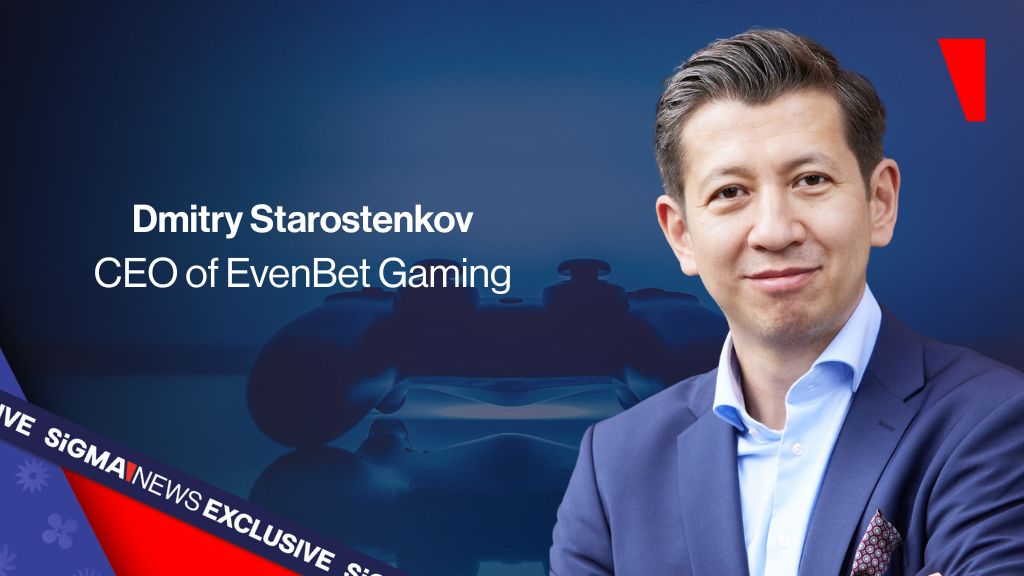
Addressing recent iGaming challenges, Dmitry Starostenkov, CEO of EvenBet Gaming, spoke exclusively with SiGMA News during the SiGMA Euro-Med 2025 event, held from 1 to 3 September in Malta. He outlined five key challenges facing the industry: tightening regulations in major markets such as India, Thailand and the Philippines; competition from unlicensed operators with lower compliance costs; ethical concerns around AI in identifying certain players; capital demands for AI development that may favour large tech firms; and the long-term profitability outlook amid regulatory scrutiny and market saturation.
SiGMA News: India has passed an iGaming bill that effectively bans most real-money gaming platforms. Thailand is experiencing political instability, and the Philippines is cracking down on illegal operators. What is the broader trend here?
Dmitry Starostenkov, CEO of EvenBet Gaming: What we are witnessing is a regulatory wave, with governments reacting quickly to something they do not fully understand. At present, the default response is prohibition. It is easier for regulators to ban platforms and ignore offshore operators than to design and enforce a robust regulatory framework. However, these bans are rarely effective in the long term. In India, for example, platforms are banned, yet players continue to access offshore sites.
Eventually, regulators will realise that banning does not eliminate the activity but merely pushes it underground. This will lead to the next phase: re-regulation. Governments will move towards legalising and regulating these markets to regain control, generate tax revenue and provide consumer protections. It will take time, but the long-term trend is towards formal regulation rather than permanent prohibition.
SiGMA News: With crypto gaming growing rapidly and regulatory crackdowns intensifying globally, how long can the industry maintain this balance between innovation and compliance?
Starostenkov: We are currently publishing our annual industry research report. We conduct surveys with stakeholders across the sector, from operators to providers, to identify the most pressing concerns. Compared to 2024, the sentiment has clearly shifted. Industry players are now more concerned about stricter regulations and increasing governmental barriers in various markets.
Consider what happened in India just weeks ago, a sudden and sweeping policy change. We expect similar developments in other regions. In response, crypto is increasingly being used as a tool to navigate this complex and rapidly changing environment. Regulatory tightening is likely to drive greater demand for crypto casinos, crypto-based operations and crypto payments. The pressure may accelerate crypto adoption in gaming rather than hinder it.
SiGMA News: Unlicensed operators have fewer compliance costs and often better margins. How can licensed operators justify premium pricing when illegal alternatives offer a similar user experience?
Starostenkov: There is no single, simple solution. If regulators attempt to enforce player-only access to licensed platforms, that alone will not resolve the issue. The answer lies in enhancing the overall user experience. How easy is it to register? How smooth is the payment process? Are taxes straightforward? Do users feel legally protected?
These small details contribute to the broader customer journey. Licensed operators must optimise every aspect of that journey. Regulatory enforcement is necessary, but it is only one part of the equation. The other part is delivering a consistent experience. Both enforcement and customer-focused innovation must work together for licensed platforms to remain competitive.
SiGMA News: AI can identify both high-value and vulnerable players. When these overlap, how should the industry balance responsible gaming with revenue optimisation?
Starostenkov: AI is a tool, and like any tool, it can be used positively or negatively. It can help detect vulnerable players and prevent excessive losses or churn. But in a behavioural economy, AI can also be used to manipulate users, encouraging them to spend more than they intended.
The key is in how operators choose to use AI. There is nothing inherently wrong with using AI to boost engagement, retention or even lifetime value, provided it is done responsibly. Controls must be in place. AI should also be used to protect players and uphold ethical standards. Ultimately, the industry must find a balance between commercial success and responsible gaming.
SiGMA News: AI development requires significant capital. Are we heading towards a future where only tech giants can compete, effectively excluding smaller gaming companies?
Starostenkov: Not necessarily. It is true that the largest tech firms, such as Google or OpenAI, will likely dominate the platform layer. However, they are not interested in covering every niche or industry-specific use case.
We are seeing the emergence of an ecosystem: tech giants providing foundational infrastructure, mid-sized companies developing industry-specific middleware and startups focusing on niche areas. This layered approach creates opportunities for smaller companies to innovate, particularly in specialised areas within gaming. So no, the future is not monopolised. It is collaborative.
SiGMA News: With regulatory tightening in countries like India, Thailand and the Philippines, combined with the high cost of AI and market saturation, will the gaming industry still be profitable by 2030, or will the grey market dominate?
Starostenkov: The industry will remain profitable in 2030. The real question concerns margins. Over time, gaming will become more competitive, similar to cinema or online streaming. Margins may shrink, entry barriers will rise and capital requirements for new entrants will increase.
But this is a natural progression. Profitability will persist, although only the most efficient and well-capitalised players will thrive. We may see fewer dominant operators, but the market itself will continue to grow, especially in emerging regions.


