


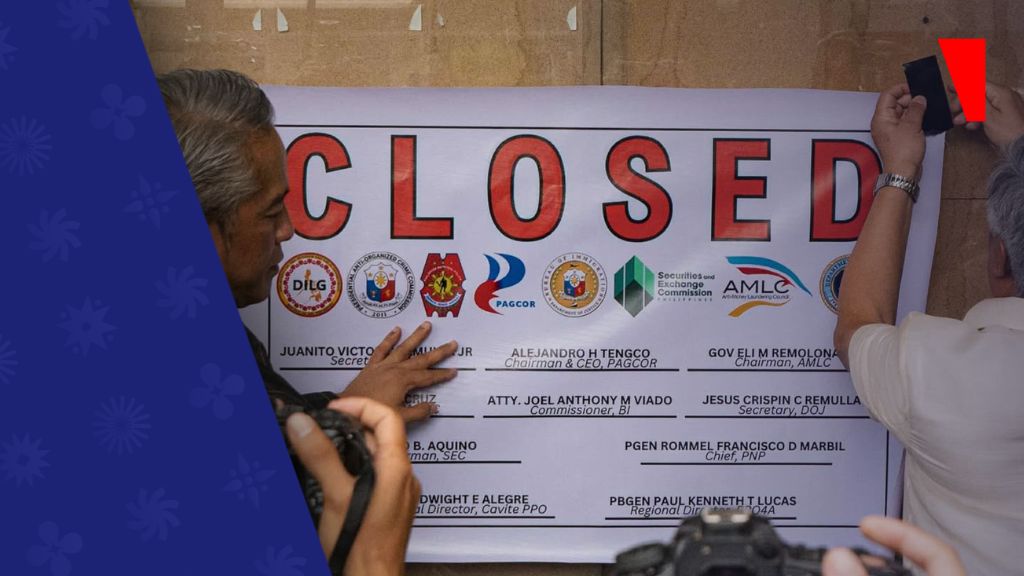
The Philippine government has declared the country free of Philippine Offshore Gaming Operators (POGOs), marking the end of an industry long associated with regulatory, security, and financial concerns.
Justice Secretary Fredderick Vida confirmed that no POGO hubs are currently operating in the country, following an intensified enforcement campaign led by the Department of Justice (DOJ). “There are no official POGOs left. Definitely, there are no illegal POGOs either. That is the policy of the government, no POGO operations in the Philippines,” Vida said, as reported by the local media, The Manila Times.
The announcement follows a sweeping crackdown that reportedly led to the closure of approximately 80 percent of operational POGO hubs within just one month of the government’s official deadline. Various government agencies have since moved to clear remaining sites, effectively dismantling the infrastructure that supported the once-thriving offshore gaming sector in the country.
Philippine President Ferdinand Marcos Jr. announced the ban on POGOs during his State of the Nation Address in July 2025. “Disguising as legitimate entities, their operations have ventured into illicit areas furthest from gaming, such as financial scamming, money laundering, prostitution, human trafficking, kidnapping, brutal torture, [and] even murder. The grave abuse and disrespect to our system of laws must stop,” Marcos said in his speech.
Government enforces full shutdown of POGO hubs
The DOJ Chief emphasised that the shutdown is part of a broader policy in the country aimed at protecting communities and addressing risks associated with the industry. These include concerns about transnational crime, financial irregularities, and social impacts linked to POGO activities.
The DOJ added that monitoring efforts remain ongoing. Law enforcement agencies in the country continue to track potential illegal operations. The government have also encouraged the public to report any suspected illegal POGO activity, reinforcing a nationwide zero-tolerance approach.

POGO ban linked to financial reforms and global standing
The dismantling of the POGO industry is closely tied to the Philippines’ broader financial reform agenda, particularly its efforts to strengthen anti-money laundering (AML) and counter-terrorism financing frameworks.
The POGO ban was previously identified by President Ferdinand Marcos Jr. as a key factor in the country’s removal from the intergovernmental organisation, the Financial Action Task Force (FATF), grey list in February 2025.
The Philippine government implemented reforms to address these gaps, including tighter regulation of high-risk sectors such as offshore gaming. The successful delisting from the FATF grey list has already been associated with positive economic expectations, including smoother cross-border transactions, increased foreign investment, and reduced remittance costs for Overseas Filipino Workers (OFWs).
Landmark case highlights criminal misuse of POGO structures
In November 2025, Former Bamban Mayor Alice Guo was sentenced to reclusion perpetua, or up to 40 years in prison. The former Mayor was found guilty of qualified human trafficking linked to a POGO-style compound in Tarlac.
The Pasig court ruled that the Baofu compound in Bamban operated as a front for forced labour and online scam activities, not legitimate offshore gaming. Authorities also ordered the site’s forfeiture. Lawmakers, including Senators Risa Hontiveros and Sherwin Gatchalian, hailed the verdict as a major victory against organised crime.
Don’t just read the news — stay ahead of it. Subscribe HERE to SiGMA’s Top 10 News countdown for stories shaping iGaming’s future, weekly insights from the world’s biggest iGaming community, and exclusive subscriber-only offers.


