


Problem gambling rates in Sweden show decline: Report

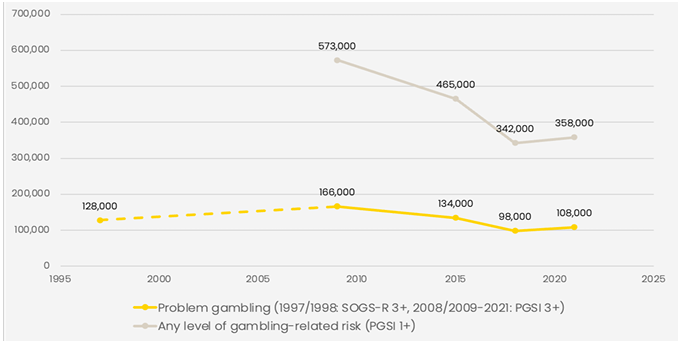
Problem gambling in Sweden has steadily decreased since the late 2000s, according to a report by economist Ola Nevander and commissioned by the Swedish Trade Association for Online Gambling (BOS).
This dip in numbers has occurred despite rapid growth in the online gambling market, marked by rising marketing budgets and greater technological accessibility.
Founded in 2012, BOS has become a central voice in policy debates and industry standards. Representing about 20 licenced operators under the Swedish Gambling Authority, the association serves as a bridge between policymakers and the gambling industry. It has consistently advocated for a uniform licencing system, moving away from the earlier monopoly model that restricted participation to a few operators.
Measuring gambling prevalence
The Problem Gambling Severity Index (PGSI) was used to track prevalence. Results show that the share of Swedish adults classified as problem gamblers (PGSI score 3+) fell from 2.2 per cent in 2008–2009 to 1.3 per cent in 2021, about 57,000 individuals, which is a 35 per cent reduction.
Sweden’s rates remain lower than in many European countries, though severe gambling has stayed relatively stable. Neighbouring Denmark and Norway report higher channelisation rates, while Finland lags behind with much lower regulated participation. The UK and Germany also show comparable or higher prevalence depending on survey models.
The broader category of at-risk gamblers (PGSI 1+) also declined, with an estimated 200,000 fewer individuals during the same period.
Stability in severe gambling cases
Severe problem gambling (PGSI 8+) has remained relatively stable, ranging between 0.3 and 0.6 per cent of the population. Among adults who gambled in the past year, prevalence dropped more sharply, from 12 per cent in 2008–2009 to about 4 per cent between 2018 and 2021.
Gambling participation remains high
Despite declining problem gambling rates, overall participation remains strong. A survey by Casinofeber found that one in six Swedes (18 per cent) played online casino games last year, while nearly one in four (24 per cent) placed online bets.
Demographic data from the American Psychological Association shows that problem gambling is more common among men, younger adults, and those with lower socioeconomic status. Rates are highest in the 18–24 age group, and men consistently report problem gambling at two to three times the rate of women. Regulators may need to tailor interventions toward young men, who represent the highest-risk group.
Channelisation rates across Scandinavia
BOS highlighted Sweden’s channelisation rate of about 85 per cent, slightly lower in online casino segments. Norway and Denmark report higher rates (91.5 per cent and 91 per cent, respectively) under stricter regulatory frameworks, while Finland lags at 48 per cent ahead of its planned licencing reforms.
Self-exclusion and unlicenced gambling
Sweden’s national self-exclusion programme, Spelpaus, registered 136,000 users as of March 2026, which is equivalent to 1.6 per cent of the adult population. Yet about half of self-excluders continue to gamble through unlicenced operators, as suggested by other surveys and helpline data.
The country also faces other challenges. For one, the emergence of technologies like cryptocurrency-based gambling, including unregulated crypto casinos and blockchain betting platforms. They could attract players seeking anonymity. Meanwhile, mobile accessibility also heightens risks for younger players, who may begin gambling earlier.
Policymakers will need to balance consumer protection with market competitiveness, ensuring regulation evolves as quickly as technology.
Stay ahead of iGaming’s biggest stories with SiGMA’s Top 10 News countdown. The world’s biggest iGaming community brings you weekly insights and subscriber-only offers. Join HERE today.


