


UK gaming ads trigger backlash: Lesson for global operators

The United Kingdom remains one of the world’s largest and most established gambling markets. For the year ending March 2024, the industry recorded a Gross Gambling Yield (GGGY) of approximately £15.6 billion (€17.4 billion), with online or remote gambling contributing around £6.5 billion (€7.5 billion), or roughly 43 percent of the total. Early figures for 2025 suggest the market has maintained its momentum, with quarterly data showing total GGY of £3.3 billion (€3.8 billion) between April and June 2025.
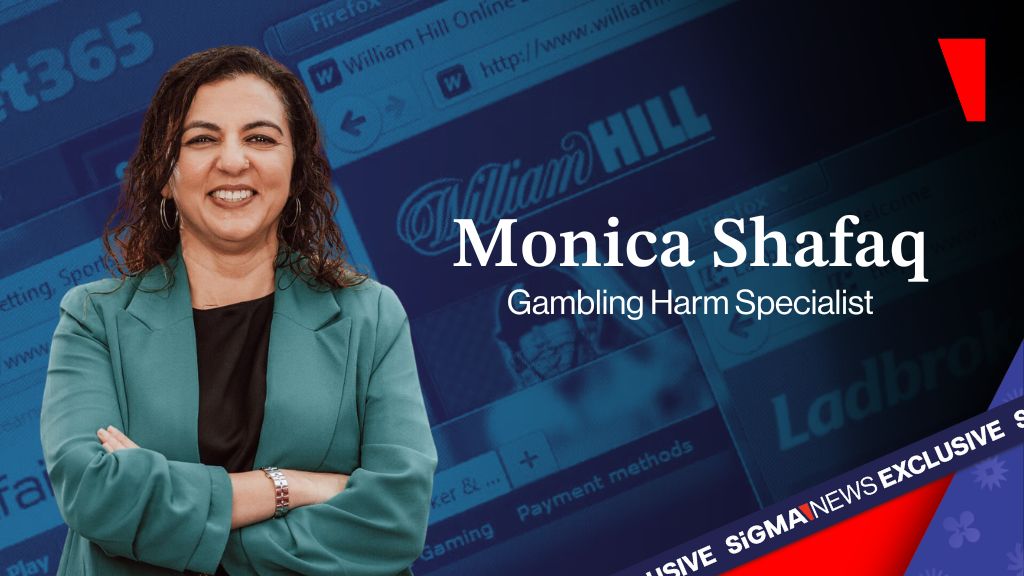
However, the scale and visibility of gambling advertising in the UK have reached a point where public discomfort can no longer be ignored. Multiple polls, political statements, and public debates increasingly point in the same direction. And so, addressing gambling harm must be a priority over relentless promotion, according to Monica Shafaq, a strategic consultant and former CEO of gambling harm charity Gordon Moody.
Calls for stricter advertising curbs
In an exclusive interview with SiGMA News, Shafaq said that gambling-related harm is not a new phenomenon. But the intensity and frequency of modern promotion, particularly across sport and digital platforms, have shifted public opinion in a fundamental way.
“Gambling harm has existed for decades, across very different regulatory environments,” she said. “Advertising has never been the sole cause of harm. But what has changed is the scale, frequency, and saturation of gambling promotion in everyday life. That discomfort has been building for years, and it has now become mainstream.”
Her comments come as fresh polling and industry data underline both the economic weight of gambling in the UK and the growing unease surrounding its social impact.
“Public sentiment, political scrutiny, and the voices of those with lived experience are all pointing in the same direction,“
– Monica Shafaq, Business Strategist & Gambling Harm Specialist
Surveys indicate that nearly half of UK adults, about 49 percent, engage in some form of gambling each month, including lotteries, sports betting, and casino games. Furthermore, sports betting remains a central pillar of the market, with almost 47 percent of the total users placing bets on sporting events.
Data signals problem gambling
Football dominates the sector. Of the estimated £2.4–£2.5 billion (€2.8–€2.9 billion) generated annually from sports betting, around £1.1 billion (€1.3 billion), roughly 45 percent, is linked to football alone. Young adults are particularly active, with more than half of 25–34-year-olds placing sports bets each month.
Yet alongside this commercial success, concerns over gambling-related harm continue to grow. The UK Gambling Commission estimates that around 2.7 percent of adults, approximately 1.4 million people, are classified as problem gamblers. When including those deemed “at risk”, that figure rises to around six percent of the adult population. Among 18–24-year-olds, more than one in ten gamblers show signs of adverse gambling behaviour.
For Shafaq, these figures cannot be separated from the visibility of advertising. “For people in recovery, or those experiencing vulnerability, gambling adverts are rarely neutral,” she said. “They can act as triggers, undermine progress, and reinforce the normalisation of gambling at exactly the wrong moments.”
She added that even among those who have never experienced gambling harm, unease is growing. “There is a sense that gambling promotion has become disproportionately embedded in shared cultural spaces — sport, social media, public transport, even everyday online activity.”
2/3rd Britons against advertising
The annual spending on gambling advertising in the UK is estimated at around £2 billion (€2.3 billion) in 2024, although the industry’s trade body, the Betting and Gaming Council (BGC), argues the figure is closer to £1.15 billion (€1.3 billion), with higher estimates including unregulated operators.
And so, public opposition appears strong. A fresh poll conducted by the think-tank More in Common, commissioned by the Campaign to End Gambling Advertising for its report Ending a Losing Streak, found that around two out of three Britons oppose gambling advertising and support tighter restrictions. More than a quarter of respondents favoured a complete ban on gambling companies advertising themselves.
The same research suggests broader scepticism toward the sector. Around 65 percent of respondents support tighter regulation overall, while just eight percent believe the industry should be encouraged to grow. Nearly half of adults said they would prefer an empty shopfront to a local gambling venue.
“How responsible behaviour is defined is the real question now,” Shafaq said. “In public health, harm is rarely explained by a single cause. It is shaped by exposure, vulnerability, environment, and cumulative risk over time. Focusing solely on whether advertising can be proven to ‘cause’ problem gambling misses the bigger picture.”
Pushing towards illegal operators
Concerns have also been raised by ministers that tighter advertising rules could drive consumers towards illegal operators. Shafaq acknowledged the risk but warned against overstating it.
“People do not usually move to unregulated markets because they see fewer adverts,” she said. “Movement happens when protections fail, harm escalates, or trust in the system breaks down. A strong, well-regulated market built on consumer safety is the best defence against illegal operators — not advertising volume.”
How did it all start?
The debate sits within a longer historical context. The Gambling Act 2005, introduced under Tony Blair’s Labour government, modernised Britain’s gambling laws and removed longstanding restrictions on advertising. For the first time, bookmakers and casinos were permitted to advertise widely across television, radio, print, and later digital platforms.
As a result, today, gambling adverts are everywhere, appearing across social media, smartphones, transport networks, and sporting sponsorships. While operators insist they comply with strict guidelines, government officials have acknowledged that protecting children and vulnerable people remains a persistent challenge.
Despite extensive political discourse over the years, advertising has largely evaded substantial reform. Governments have diminished stake limits on online slot machines, introduced a statutory levy to finance treatment for gambling addiction, and announced increased gambling taxes in the 2025 budget. However, critics argue that these steps have failed to meaningfully reduce overall exposure, particularly online.
Looking ahead, Shafaq believes tougher regulation is increasingly likely. “Self-regulation has delivered some progress, but its credibility now depends on outcomes, not intent,” she said. “If it cannot demonstrably reduce harm and respond to public concern, statutory limits become justified.” She added, “Any future framework must place public well-being at its core.”
All roads lead to the mother of all conferences in Rome from 02 to 05 November 2026. SiGMA World takes over Fiera Roma, bringing together 30,000 delegates, 1,000+ exhibitors, and 550+ expert speakers. This is where the right room can change your roadmap.


