


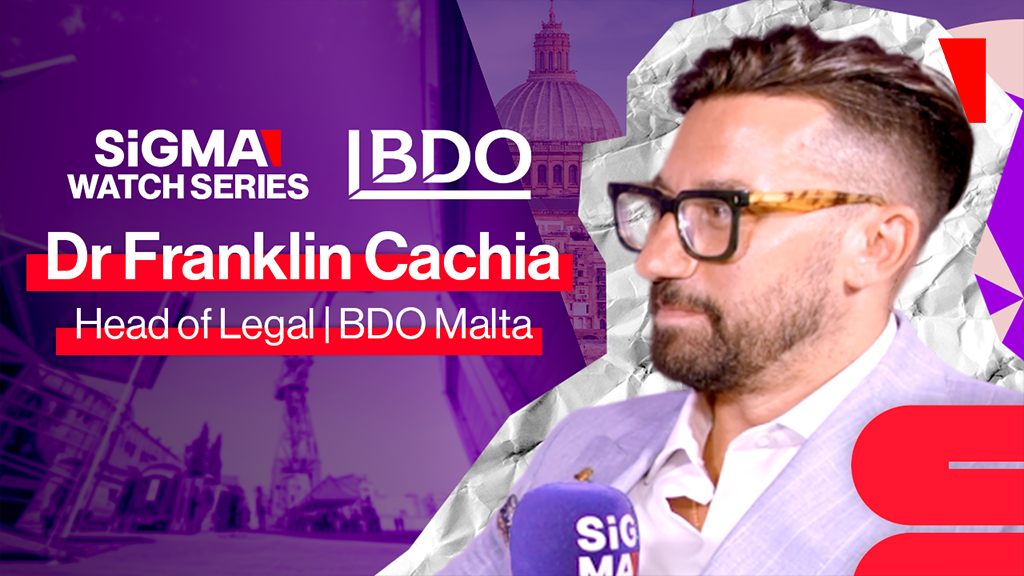
Artificial intelligence is transforming the iGaming sector. Yet the European Union AI Act’s imminent rollout promises to redefine how gaming operators use and manage AI technologies. Dr Franklin Cachia, Head of Legal at BDO, offers vital insights in an exclusive interview during the recent SiGMA Euro-Med summit, revolving around the legislation’s multifaceted impact and the critical steps operators must take to remain compliant whilst fostering responsible innovation.
The AI Act and gaming’s future
“The AI Act represents a revolution within Europe,” Dr Cachia explains, referencing its harmonised framework governing AI across sectors. Gaming companies employ AI for diverse purposes. Facial recognition and behavioural data analytics are common applications, which means “certain AI tools would require gaming operators to do a risk assessment,” he notes. High-risk AI systems face stringent scrutiny, particularly facial biometrics. Why? Because “face and voice can be easily manipulated by AI,” leading to fraudulent practices, Dr Cachia warns.
When facial recognition is deployed, “the customer or player would need to know about that and consent for the use of AI,” he clarifies. Where AI use carries heightened risks, enhanced compliance measures apply. This includes adhering to a universal code of practice currently being developed alongside the AI Act. Operators must navigate these requirements carefully to ensure lawful deployment without compromising innovation.
Compliance roadmaps for high-risk AI
Dr Cachia offers practical guidance for gaming companies preparing for the phased implementation. He advises drafting internal codes of practice for AI usage “using the model issued by the European Commission” as a foundation. Equally important is conducting an inventory of AI applications to classify risk levels appropriately. AI used internally to draft contracts might be deemed low risk. However, “if you are using AI for facial recognition, that is high risk,” requiring an “enhanced risk assessment,” he states.
Proactive regulatory interest is already visible. Authorities such as Malta’s Gaming Authority have begun “issuing surveys to industry licence holders on what AI they’re using,” Dr Cachia highlights. This signals a shift from future-looking caution to immediate action. It underscores the necessity for operators to start aligning their AI development roadmaps with the law today.
Balancing regulation with innovation
The EU AI governance structure comprises several bodies designed to both regulate and facilitate AI advancement responsibly. Dr Cachia details: “There will be an AI regulatory sandbox. A sort of light-touch regulatory regime for startups to offer AI as a service against payment”. This framework aims to prevent stifling innovation whilst securing player protection and trust.
The establishment of an EU AI office supports legislative evolution. It promotes ongoing dialogue among stakeholders, including AI providers and gaming operators. Dr Cachia encourages industry participants to expedite preparations notwithstanding the expected five to 10 years for full implementation. “We always recommend starting to get abreast, or at least draft some kind of internal code for the use of AI,” he says.
The EU AI Act will shape the use of high-risk AI within iGaming through clear compliance obligations and governance mechanisms. Operators are urged to take immediate steps: inventory AI tools, implement risk assessments, and develop codes of practice that prioritise transparency and responsible gaming principles.
SiGMA Central Europe, Rome is up next, taking place from 3 to 6 November. Catch more exclusive interviews on SiGMA TV during the summit.


