


Canada’s Rivalry suspends operations, cuts staff


Toronto-based sports betting and online casino operator Rivalry has halted all player activity and laid off most of its workforce as it explores strategic options.
In a statement on Friday, the board of directors approved a “significant reduction in operating activity,” citing performance volatility. Rivalry confirmed it is in talks with third parties about potential transactions but will scale back materially while assessing whether a deal or restructuring can move forward.
Market trends
Sports betting in the country has developed gradually through legislative reforms rather than a single landmark court ruling. Its legal foundation dates back to 1969, when the federal government amended the Criminal Code to permit provinces to conduct and manage lotteries—a pivotal step toward modern regulation, as noted in several media reports.
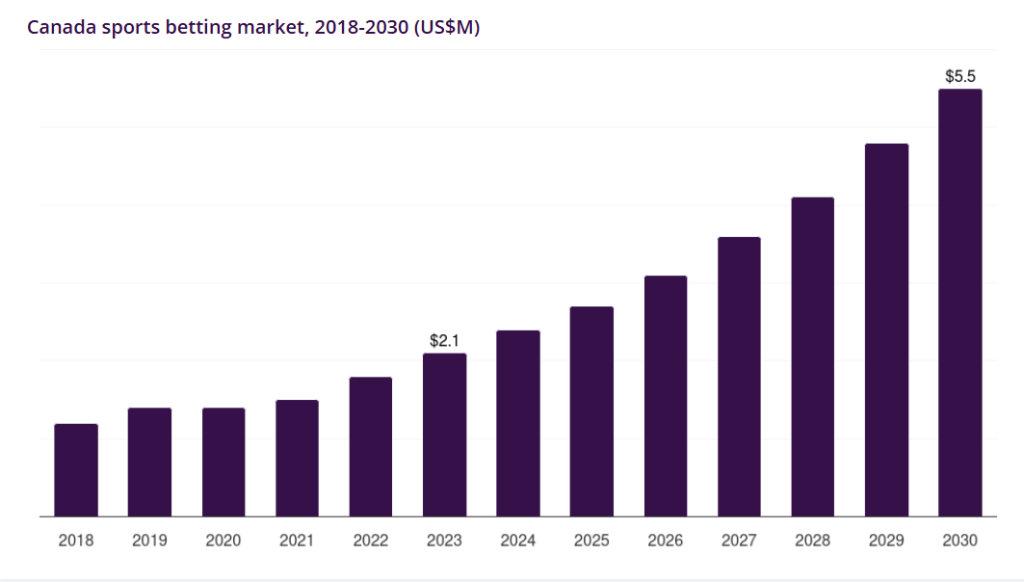
Canada legalised single-event sports betting in August 2021 through Bill C-218, allowing fans to wager on individual plays or games. Since then, adoption surged as the industry has expanded into a multi-billion-dollar market. Horizon Grand View Research estimates more than 7 million Canadians placed at least one sports bet in 2024—a 25 percent increase from 2022.
Ontario, with its open iGaming framework, has become the largest regulated market in the country, hosting 48 licenced operators by late 2025. Canadians wagered over CAD4.1 million ($3 million) in 2024, and the market is projected to reach $8.7 billion by 2030, growing at a 13.6 percent compound annual rate from 2025 to 2030.
Licencing and market presence
Ontario leads with a transparent licencing regime, while other provinces remain restrictive. Rivalry holds licences in Ontario and Australia and operates under the Isle of Man Gambling Supervision Commission in several Latin American grey markets. Effective immediately, however, all player activity has been paused, and customer funds returned.
This suspension stands in sharp contrast to the sector’s overall growth. Competitors remain aggressive in Ontario, making Rivalry’s retreat more conspicuous. Today’s market is younger, digital-first audiences—particularly those engaged with esports and cryptocurrency—are driving industry expansion, with mobile apps dominating betting activity rather than the usage of desktops.
Hockey, football, and basketball remain the most popular sports among Canadian bettors, reflecting the country’s sports culture. Additionally, AI-powered platforms and personalised odds are reshaping how consumers engage with sportsbooks. From personalised odds to predictive models, AI tools can analyse millions of data points per second from team stats, player fatigue, weather, and even psychological factors.
Cost-Cutting and restructuring
Rivalry is evaluating options ranging from asset sales and corporate deals to restructuring initiatives. Since 2024, the company has pivoted toward cryptocurrency, revamped its sportsbook, redesigned its casino, and launched a VIP rewards programme, according to several media outlets.
CEO and Co-Founder Steven Salz said the company restructured “every core element,” cutting half its workforce while executives took pay reductions. Despite multiple layoffs, Rivalry reported signs of recovery in late 2025.
The company posted three consecutive quarters of revenue growth, a record quarter in Ontario, a 240 percent year-on-year increase in deposits, and a 100 percent rise in wagers. Operating expenses fell 58 percent year-over-year, and net losses narrowed by 67 percent. Still, Rivalry ended 2025 with nearly CAD 2 million ($1.4 million) in losses.
Be part of the action! Join the world’s biggest iGaming community with SiGMA’s Top 10 News countdown. Subscribe HERE for weekly updates, insider insights, and exclusive subscriber-only offers.


